


Why Businesses Are Investing in Zoho Custom Application Services in 2026
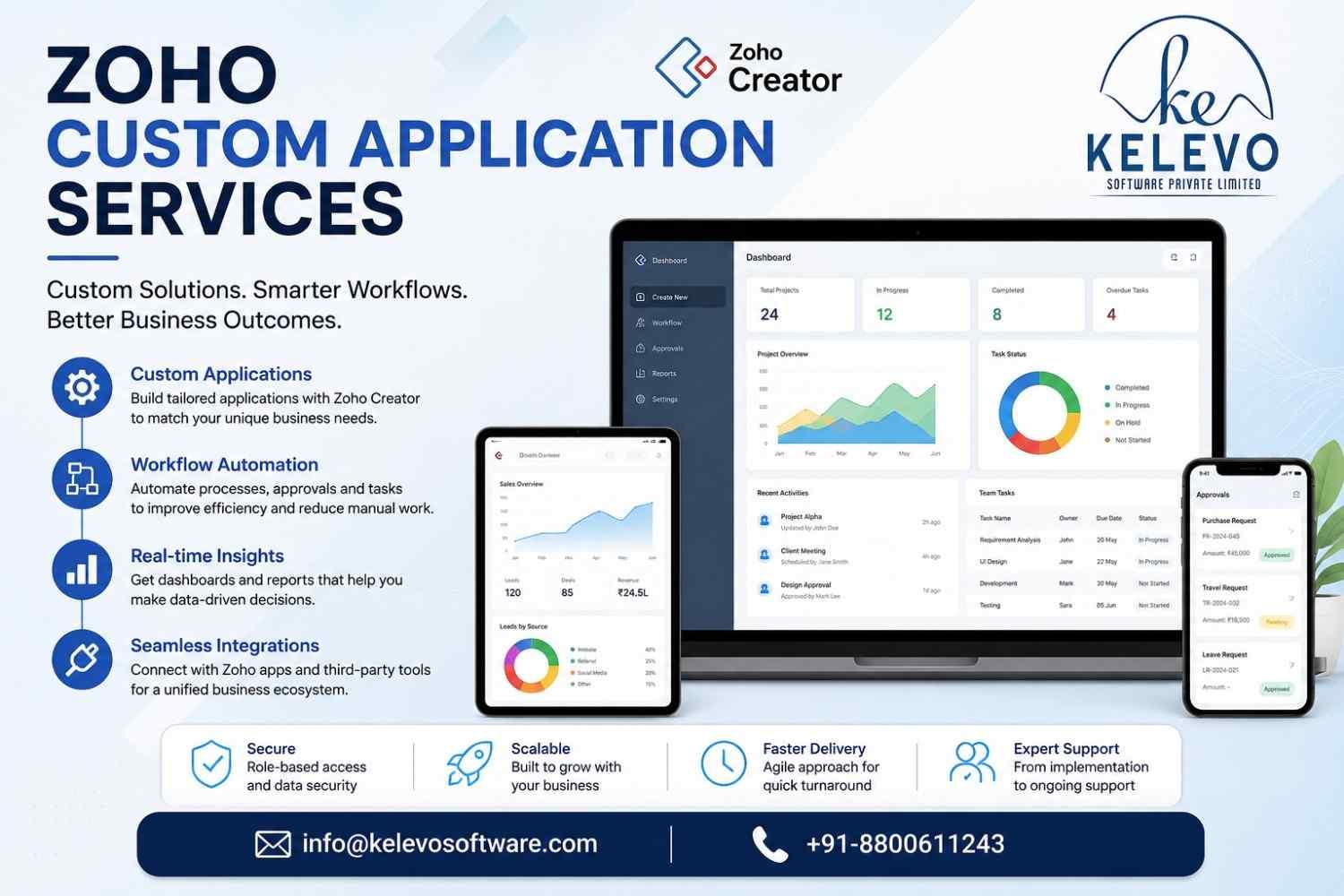
Most software projects begin with good intentions. Teams buy a CRM, automate a few workflows, create dashboards, and expect operational problems to disappear. A few months later, manual spreadsheets return, approval processes move back to email, and employees create workarounds outside the system.
That situation is more common than many software vendors admit.
This is where zoho custom application services become relevant. Not because standard software is inadequate, but because every organization eventually reaches a point where its actual processes no longer fit inside predefined workflows. The challenge is not building custom applications. The challenge is building applications that remain useful after real operational pressure begins.
Key Takeaways
-
Most software failures happen after deployment, not during development.
-
Custom applications should solve workflow problems, not create new ones.
-
Process clarity is more important than platform selection.
-
Poor customization decisions often create long-term maintenance issues.
-
User adoption usually determines project success more than technical functionality.
The Real Reason Businesses Move Beyond Standard Applications
Most organizations do not start with custom software requirements.
They usually begin with standard CRM platforms, accounting systems, project management tools, or workflow applications. Initially, these systems handle operational needs reasonably well. Problems appear when growth introduces exceptions.
Sales teams need approval workflows that differ across regions. Operations departments require process tracking that does not exist inside the default setup. Management wants visibility across multiple business units. Suddenly, spreadsheets begin filling the gaps.
This is usually where projects become messy.
I have seen companies invest heavily in software and then continue managing critical processes through disconnected files because nobody addressed the workflow mismatch.
Custom Business Apps Zoho Creator projects often emerge from these situations. The objective is not customization for its own sake. The objective is reducing operational friction where standard applications no longer support business reality.
The organizations that succeed typically spend more time understanding process failures than discussing technical features.
Why Custom Development Projects Frequently Miss Expectations
The technical work is rarely the biggest problem.
One thing many teams underestimate is how unclear their internal processes actually are. During planning sessions, stakeholders often describe how they think operations should work rather than how work is truly being performed.
Development begins based on those assumptions.
Months later, exceptions appear. Approval rules change. Departments request additional functionality. Reporting requirements evolve. What looked like a straightforward application becomes increasingly complicated.
This happens repeatedly because organizations treat software implementation as a technology initiative instead of a process improvement initiative.
A successful Zoho Implementation project usually requires operational alignment before development starts. Otherwise, the application becomes a digital version of an already inefficient process.
The strongest teams spend significant effort documenting dependencies, responsibilities, decision paths, and escalation points before writing a single workflow rule.
Where Zoho Customization Creates Real Business Value
Many businesses approach customization from the wrong direction. They focus on features rather than operational outcomes.
The most valuable customizations usually address problems such as:
-
Manual approval bottlenecks
-
Disconnected departmental workflows
-
Repetitive data entry
-
Poor reporting visibility
-
Delayed customer response processes
When implemented correctly, Zoho CRM Customization Services can eliminate operational gaps that standard CRM configurations often leave unresolved.
For example, a sales team may require different approval structures for enterprise accounts versus small business clients. Finance teams may need automated validation before quotations become active. Service departments may need custom escalation workflows that reflect internal support structures.
These are practical business requirements, not software features.
The difference matters because successful custom applications solve operational bottlenecks rather than simply adding functionality.
The Hidden Cost of Poor Custom Application Decisions
Many organizations focus heavily on development costs while overlooking maintenance costs.
This creates long-term problems.
I have seen businesses approve highly customized solutions without considering future ownership. Initially, everything works. Six months later, the original project team changes, business processes evolve, and documentation becomes outdated.
Minor modifications suddenly require significant effort.
In reality, implementation is often easier than long-term operational management.
A common mistake involves excessive customization without governance. Every department requests unique functionality. Workflows become increasingly complex. Reporting structures multiply. Eventually, maintaining the application becomes more difficult than using it.
Experienced teams approach Zoho Custom Development Services India projects differently. They prioritize simplicity wherever possible. Not because complexity cannot be built, but because complexity becomes expensive to maintain.
The best applications are often the ones users barely notice because processes operate naturally in the background.
Automation Is Valuable Until It Creates New Problems
Automation is one of the most requested requirements in custom software projects. Understandably so.
Nobody wants employees spending time on repetitive administrative work.
However, automation introduces its own risks.
I have seen organizations automate approval processes without considering exception handling. Everything functions smoothly until a non-standard scenario appears. Suddenly, employees cannot move transactions forward because automation rules were designed around ideal conditions.
Most planning timelines look reasonable until real execution begins.
This is why Zoho CRM Automation Solutions require careful operational planning. Effective automation should support human decision-making rather than eliminate necessary oversight.
The strongest implementations include flexibility. They account for exceptions, escalation paths, temporary overrides, and future process changes.
That approach may require additional planning upfront, but it usually prevents operational frustration later.
Organizations that treat automation as a business process exercise rather than a technology exercise tend to achieve far better results.
Conclusion
If there is one lesson repeated across custom software projects, it is this: software rarely fixes operational confusion.
Organizations often invest in customization before fully understanding their own processes. That mistake continues to create delays, rework, and unnecessary development costs.
My practical view is that the best custom applications are not the most sophisticated. They are the ones that remain useful two years after deployment.
Business processes will continue changing. Teams will grow. Reporting expectations will evolve. Companies that build adaptable systems instead of overly engineered systems will be in a much stronger position as operational complexity increases.
FAQs
1. What are Zoho custom application services?
Ans. Zoho custom application services involve designing and developing applications tailored to specific business workflows that standard Zoho products cannot fully address.
2. When should a business consider custom application development?
Ans. Usually when manual workarounds, spreadsheets, and disconnected processes begin affecting efficiency, visibility, or operational consistency.
3. Is Zoho Creator suitable for enterprise-level applications?
Ans. Yes, provided the application architecture, workflows, integrations, and governance are designed properly from the beginning.
4. What is the biggest risk in custom application projects?
Ans. Poor process definition. Many projects fail because teams automate unclear or inconsistent workflows.
5. How long does a Zoho customization project typically take?
Ans. It depends on workflow complexity, integration requirements, stakeholder involvement, and approval cycles. Requirements gathering often takes longer than expected.
الأقسام
إقرأ المزيد
The excitement of the Indian Premier League attracts millions of cricket fans every season, but most IPL bettors make the same mistakes repeatedly. They chase hype, follow random predictions, and place emotional bets without a structured plan. This is exactly why so many users fail to stay consistent on Dafabet India. Betting is often misunderstood as pure luck, but in reality, poor...

The myth of Mac invulnerability was never Apple's official stance, but rather a public misconception that gained traction over time. As OS X gains market share, it becomes a more tempting target for cybercriminals, spurring growth in both malware and security solutions. Snow Leopard has significantly elevated built-in security features, including stealth anti-malware tools that activate against...

America’s military newspaper serves as a vital channel for news, analysis, and historical documentation of U.S. armed forces. From active duty updates to veteran affairs, this publication bridges the gap between service members, policymakers, and the public. Purpose of America’s Military Newspaper The mission of America’s military newspaper is to provide accurate,...

The demand for reliable and energy-efficient air systems has been growing rapidly in modern industries, especially in highly developed manufacturing hubs like Singapore. One of the most searched and in-demand solutions today is the hydropac compressor in Singapore, which is widely recognized for its strong performance, durability, and operational efficiency. Businesses across various sectors...
Visit us now : https://ap2v.com/microsoft-azure-training-in-pune Microsoft Azure Cloud Course in Pune is a great opportunity for students, freshers, and IT professionals who want to build a successful career in cloud computing. As businesses increasingly move to cloud-based systems, the demand for Azure-skilled professionals is growing rapidly. This course helps learners understand cloud...