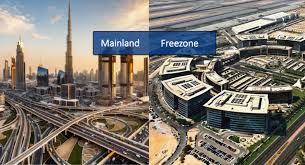
Choosing between a mainland and free zone company structure in the UAE is one of the most important decisions for any entrepreneur. The right choice depends on your business activity, target market, budget, and long-term growth plans. Both options are strong, but they serve different business needs.
A mainland company allows you to operate freely across the UAE market and internationally. It is regulated by the Department of Economic Development (DED) and is suitable for businesses that want direct access to local customers, government contracts, and unrestricted trading within the country. In contrast, a free zone company is set up in a designated economic area designed to attract foreign investment with benefits like tax advantages and simplified registration.
When planning a UAE mainland business setup, the biggest advantage is full market access within the country. You can trade directly with clients anywhere in the UAE without restrictions. This is especially useful for businesses in retail, construction, healthcare, hospitality, and services that rely on local customers. Mainland companies can also take on government projects, which can be a major growth opportunity.
Another benefit is scalability. Mainland businesses can expand across different emirates without needing separate licenses for each free zone. However, this flexibility comes with more compliance requirements, and in many cases, you will need a physical office space depending on your license type. Despite higher setup requirements, mainland remains the strongest option for long-term local expansion.
A freezone license in Dubai is often preferred by startups, freelancers, and international entrepreneurs who want a faster and more cost-effective setup. Free zones offer 100% foreign ownership, tax-friendly policies, and streamlined registration processes. Many free zones are designed for specific industries such as media, technology, logistics, and consulting.
Free zones also provide flexible office solutions, including virtual offices and shared workspaces, which reduce operational costs. The setup process is usually quicker compared to mainland registration. However, free zone companies are generally restricted from directly trading in the UAE mainland unless they work through a local distributor or agent.
Key Differences Between Mainland and Free Zone
The main differences between mainland and free zone structures can significantly impact your operations.
Market access is one of the biggest differences. Mainland companies can operate anywhere in the UAE, while free zone companies are limited to their designated zones and international markets. Ownership rules are mostly similar today, as both structures allow 100% foreign ownership in many sectors, but it may vary depending on business activity.
Cost is another factor. Free zones usually offer lower startup costs and bundled packages, making them attractive for new entrepreneurs. Mainland setups may involve higher costs due to office space requirements and regulatory approvals, but they offer wider business freedom.
How to Choose the Right Option
To decide correctly, you need to align your license type with your business goals.
If your priority is selling directly in the UAE local market, then a mainland setup is the better option. If your business is focused on international clients or online services, a free zone setup may be sufficient and more cost-effective.
Your industry also matters. Service providers, consultants, and trading companies often benefit from mainland licenses. Tech startups, media agencies, and e-commerce businesses often prefer free zones due to flexibility and cost efficiency.
Budget is another key factor. If you want a low-cost entry into the UAE market, free zones are usually more suitable. If you are planning long-term expansion and larger operations, mainland offers stronger scalability.
Advantages of Mainland Companies
Mainland companies offer strong market freedom. You can trade anywhere in the UAE, open multiple branches, and work with government entities. This makes it ideal for businesses targeting local growth and large-scale operations.
Mainland also allows a wider range of business activities and offers better opportunities for long-term expansion. However, it requires more documentation, compliance, and sometimes higher operational costs.
Advantages of Free Zone Companies
Free zone companies are designed for simplicity and speed. They offer fast registration, tax benefits, and full ownership. They are ideal for entrepreneurs who want quick entry into the UAE market.
They also provide flexible workspace options and are industry-focused, which helps businesses connect with similar companies in the same sector. The main limitation is restricted access to the UAE mainland market.
Common Mistakes to Avoid
Many entrepreneurs choose a license based only on cost without considering long-term goals. This can create restrictions later if the business needs local market access.
Another mistake is not understanding activity limitations. Each free zone and mainland license has specific permitted activities, and choosing the wrong one can delay operations.
It is also common to ignore future expansion plans. A setup that looks cheap initially may become limiting as your business grows.
FAQs
1. Which is better, mainland or free zone in UAE?
It depends on your business goals. Mainland is better for UAE local trade, while free zones are ideal for international operations.
2. Can a free zone company trade in the UAE mainland?
Not directly. It usually requires a distributor or local agent to operate in the mainland market.
3. Is mainland setup more expensive than free zone?
Yes, generally due to office space and regulatory requirements, but it offers more flexibility.
4. Can I switch from free zone to mainland later?
Yes, it is possible, but it requires approvals and restructuring of the company.
5. Do both options allow full ownership?
Yes, many business activities in both mainland and free zones now allow 100% foreign ownership.
Final Words
Choosing between mainland and free zone is a strategic decision, not just a cost comparison. Each structure has its strengths depending on your goals, industry, and target market.
Mainland is best for businesses focused on UAE market expansion, while free zones are ideal for international operations and cost-efficient setups. Understanding your long-term vision will help you select the right license and build a strong foundation for success in the UAE.