


Why Entrepreneurs Are Launching Turo-Like Car Rental Platforms Faster Than Ever
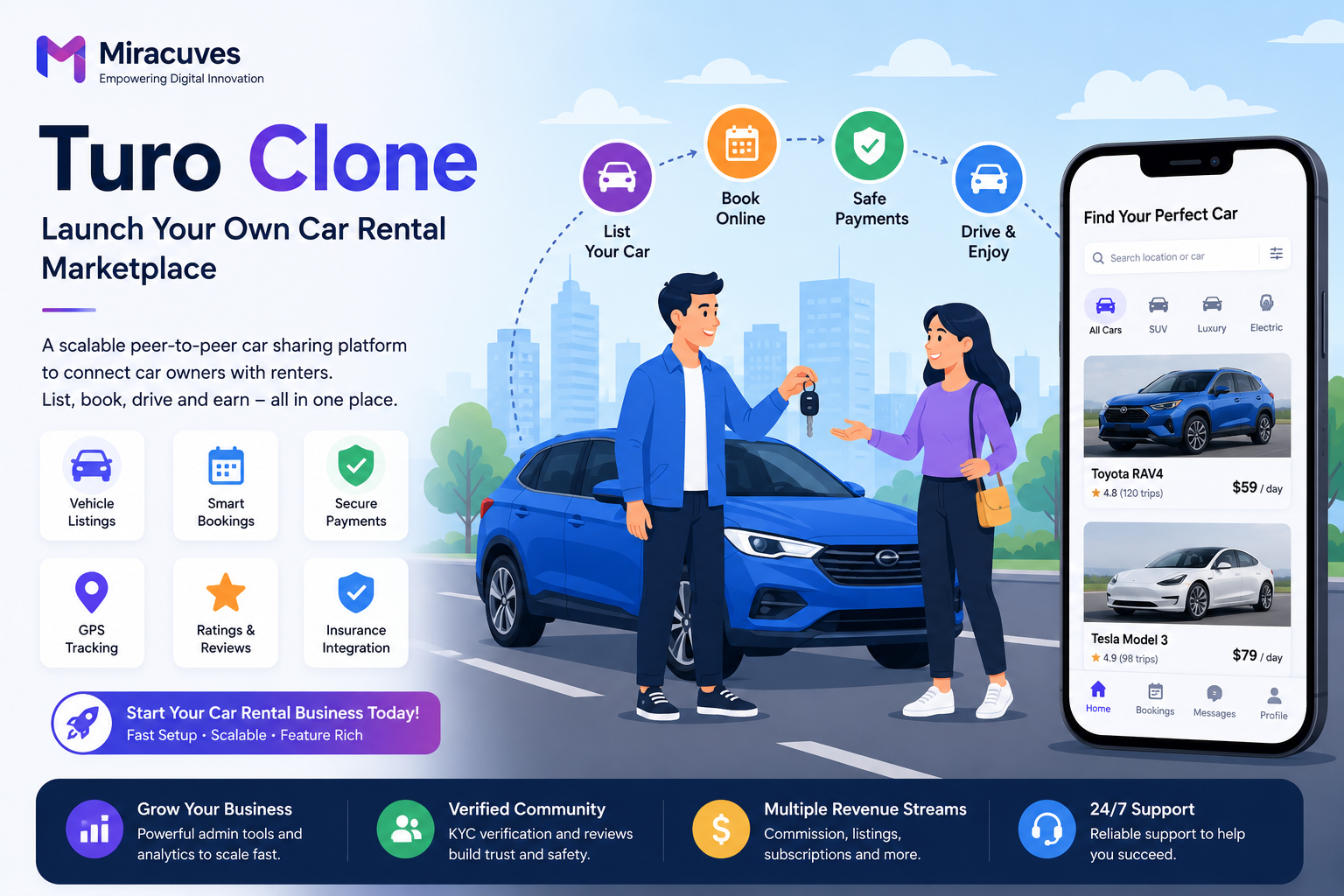
The car rental industry has changed dramatically over the last few years. Traditional rental companies are no longer the only option for travelers, commuters, and short-term vehicle users. Peer-to-peer car sharing platforms like Turo introduced a more flexible and scalable business model where vehicle owners can monetize idle cars while renters gain access to affordable and convenient transportation.
This shift has created a strong opportunity for startups and mobility entrepreneurs to launch their own car-sharing marketplace platforms. Instead of building a complex system completely from scratch, many founders now choose a ready-made Turo clone solution to reduce development time, lower operational risk, and enter the market faster.
Why the Turo Business Model Works
A Turo-like platform operates as a two-sided marketplace connecting car owners with renters. The platform itself does not need to own an entire fleet. Instead, it creates an ecosystem where vehicle owners list cars and renters book them through mobile or web apps.
This marketplace structure creates several advantages:
-
Lower inventory investment
-
Faster regional expansion
-
Recurring commission-based revenue
-
Multiple monetization opportunities
-
Strong network effects as users grow
The more vehicles available on the platform, the more attractive the marketplace becomes for renters. As renter demand increases, more hosts join the platform. This growth cycle is one of the biggest reasons why peer-to-peer car-sharing platforms continue to expand globally.
Features Every Turo-Like Platform Needs
Launching a successful car-sharing marketplace requires much more than vehicle listings and booking forms. A scalable platform needs workflows for renters, vehicle owners, and administrators.
User Features
Renters expect a smooth and mobile-first experience that includes:
-
Vehicle discovery with filters
-
Real-time booking calendars
-
Secure payments
-
Driver verification
-
Booking history
-
Ratings and reviews
-
Notifications and trip updates
Host Features
Vehicle owners need tools to manage their cars efficiently:
-
Vehicle listing management
-
Availability controls
-
Dynamic pricing
-
Earnings dashboard
-
Booking approvals
-
Trip tracking
-
Payout management
Admin Features
The admin panel controls the entire marketplace operation:
-
User moderation
-
Booking management
-
Commission settings
-
Dispute handling
-
Analytics and reports
-
Payment monitoring
-
Vehicle verification workflows
A strong Turo clone platform should support all these workflows from day one to avoid operational bottlenecks later.
Why Startups Prefer Ready-Made Turo Clone Solutions
Building a peer-to-peer rental platform from scratch can take months of planning, development, testing, and deployment. For startups validating a business idea, this often creates unnecessary delays and higher costs.
A ready-made Turo clone solution provides a faster launch path because the core marketplace infrastructure is already developed. Founders can focus on branding, market positioning, partnerships, and customer acquisition instead of rebuilding standard marketplace features.
The biggest advantages include:
Faster Go-To-Market
A pre-built solution dramatically reduces development time. Instead of waiting several months, businesses can launch much faster with ready-made booking systems, payment integrations, user dashboards, and admin workflows already included.
Lower Development Risk
Custom development often creates scope creep, budget overruns, and delayed releases. A proven clone solution reduces technical uncertainty and gives founders a more predictable launch process.
Easier Scalability
Modern Turo clone platforms are designed to scale with marketplace growth. Features like cloud deployment, modular architecture, API integrations, and mobile support help businesses expand into multiple regions more efficiently.
Source-Code Ownership
Many founders prefer solutions that provide full source-code ownership because it gives them flexibility for future upgrades, integrations, and custom workflows.
Revenue Streams in a Turo-Like Marketplace
One reason the Turo model attracts entrepreneurs is the ability to generate revenue from multiple channels.
Common monetization methods include:
-
Booking commissions
-
Platform service fees
-
Vehicle listing promotions
-
Insurance or protection packages
-
Delivery charges
-
Late return penalties
-
Subscription plans for fleet owners
-
Premium account features
A diversified revenue model helps marketplaces scale more sustainably while increasing average revenue per user.
Technology Stack Behind a Car Rental Marketplace
The technology stack plays a major role in platform performance, scalability, and long-term maintenance.
Many modern Turo clone solutions use:
-
Flutter for Android and iOS apps
-
Laravel or Node.js backend architecture
-
MySQL or PostgreSQL databases
-
Google Maps integration
-
Secure payment gateways
-
Real-time notifications
-
Cloud-based deployment infrastructure
The ideal stack depends on business goals, expected traffic, and feature complexity.
Challenges Founders Should Prepare For
Launching a car-sharing marketplace involves more than technology alone. Founders should prepare for operational, legal, and marketplace challenges such as:
-
Insurance partnerships
-
Vehicle verification systems
-
Trust and safety workflows
-
Host onboarding
-
Fraud prevention
-
Customer support operations
-
Regional regulations
-
Fleet quality management
The strongest platforms solve operational trust problems early rather than after scaling.
Why Miracuves Is a Strong Option for Turo Clone Development
Miracuves provides a white-label Turo clone platform designed for entrepreneurs launching peer-to-peer car rental businesses. The platform includes renter apps, host panels, admin dashboards, payment workflows, booking systems, and deployment support.
The solution focuses on helping founders reduce launch time while maintaining flexibility for customization and future scaling. According to Miracuves’ platform details, the solution also supports source-code ownership, branding customization, mobile apps, and deployment assistance.
Final Thoughts
The peer-to-peer car-sharing market continues to create opportunities for startups looking to build scalable mobility businesses. Entrepreneurs no longer need massive fleet investments to enter the rental industry. Marketplace-driven platforms have changed how vehicle access works for both renters and car owners.
A ready-made Turo clone solution helps businesses launch faster, validate demand earlier, and focus on growth instead of rebuilding common marketplace infrastructure from scratch.
For founders planning to enter the mobility industry, choosing the right technology foundation can significantly reduce both risk and time-to-market while creating a stronger path toward long-term scalability.
Nach Verein filtern
Read More
The China Southern Airlines Head Office serves as the central administrative and operational hub for one of Asia’s largest and most influential airlines. From this headquarters, the airline oversees strategic planning, network development, fleet management, safety standards, and customer service policies that guide its global operations. As a major carrier connecting China with...

Understanding what is deception technology market is essential in today’s cybersecurity landscape, where organizations are constantly battling sophisticated cyber threats. The Deception Technology Market refers to the global industry focused on deploying advanced cybersecurity solutions that use decoys, traps, and fake digital assets to detect and mislead attackers. These technologies...

In the modern digital landscape, the backbone of any successful enterprise is no longer just its product or service, but the underlying technology that delivers it. Support IT solutions have evolved from a reactive "break-fix" model into a proactive, strategic partnership that ensures operational continuity. When technology aligns perfectly with business goals, companies experience fewer...

Weddings today are no longer just traditional ceremonies—they are carefully designed experiences where every visual detail matters. From floral arrangements to lighting design, couples are investing more in creating unforgettable atmospheres. Among all décor elements, lighting plays one of the most powerful roles in setting the mood. This is where chandelier rental has...

Modern industrial facilities depend on durable piping systems capable of handling corrosive chemicals, high-flow process fluids, and demanding operating conditions. Whether designing a new chemical processing plant, upgrading a water treatment facility, or manufacturing industrial equipment, selecting the right pipe fittings is essential for ensuring safety, efficiency, and long-term...
