


Bearing Market Scope and Share Trends Set to Capture USD 210.864 Billion by 2031
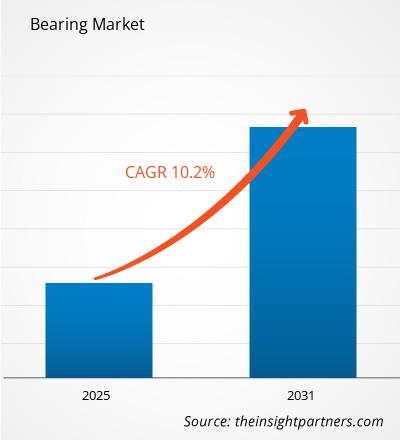
Bearings are fundamental components in modern engineering, serving as the invisible backbone for virtually everything that rotates, rolls, or moves. From massive industrial wind turbines to the micro-motors found in medical devices, these precision-engineered components are critical for reducing friction and handling heavy mechanical loads. According to a comprehensive research report by The Insight Partners, the global bearing industry is currently experiencing a transformative growth phase, driven by rapid industrialization, automation, and the global shift toward cleaner energy systems.
Market Valuation and Growth Trajectory
The Bearing Market size is projected to reach US$ 210.864 billion by 2031 from US$ 127.912 billion in 2024. The market is expected to register a CAGR of 7.51% during 2025–2031. This robust growth trajectory highlights an escalating demand across diverse sectors, particularly automotive, aerospace, heavy machinery, and robotics.
As developing economies expand their manufacturing infrastructure and developed nations modernize their industrial plants with IoT-enabled technologies, the reliance on high-quality, long-lasting bearings has never been higher. The steady Compound Annual Growth Rate (CAGR) reflects a market that is not just expanding in volume, but also shifting toward higher-value, specialized bearing solutions.
Primary Growth Drivers
Several macro-economic and technological trends are fueling this market expansion:
-
The Electric Vehicle (EV) Revolution: The automotive industry is undergoing its most significant shift in a century. EVs require specialized bearings that can operate smoothly at much higher rotational speeds (RPMs) while minimizing noise, vibration, and harshness (NVH). Furthermore, these bearings must offer low friction to maximize battery range and prevent electrical arcing from damaging internal components.
-
Industrial Automation and Robotics: The rise of Industry 4.0 has led to widespread deployment of automated manufacturing lines and robotic arms. These systems demand high-precision miniature and slewing bearings capable of precise, repetitive movements over millions of cycles without failure.
-
Renewable Energy Infrastructure: The global push for green energy has led to massive investments in wind power. Wind turbines rely heavily on large-diameter main shaft and gearbox bearings that can withstand extreme, unpredictable aerodynamic loads and harsh environmental conditions over a multi-decade lifespan.
Get a PDF Sample– https://www.theinsightpartners.com/sample/TIPTE100000700
Key Market Players
The global bearing market is highly competitive, characterized by a mix of established legacy manufacturers who continually innovate to maintain their market share. The prominent companies leading the industry include:
-
SKF (Sweden) – A global leader recognized for its extensive range of rolling bearings, seals, and lubrication systems, heavily focusing on digital monitoring and sustainability.
-
Schaeffler Group (Germany) – Renowned for its INA and FAG brands, driving innovation in high-precision components for automotive engines, transmissions, and industrial applications.
-
The Timken Company (USA) – A specialist in tapered roller bearings, widely trusted for heavy-duty industrial machinery, rail, and aerospace applications.
-
NSK Ltd. (Japan) – One of the foremost suppliers of ball bearings and automotive components, known for exceptional reliability and motion control technologies.
-
NTN Corporation (Japan) – A major global supplier specializing in eco-friendly bearing designs and constant velocity joints for the automotive sector.
-
NACHI-FUJIKOSHI CORP. (Japan) – A versatile manufacturer integrating bearing production with cutting tools, hydraulics, and industrial robotics.
-
JTEKT CORPORATION (Japan) – Known for its Koyo bearing brand, providing advanced steering systems and high-performance bearings across global supply chains.
These industry giants are aggressively investing in Research and Development (R&D) to develop "smart bearings" equipped with integrated sensors. These sensors monitor temperature, vibration, and lubrication levels in real time, allowing operators to perform predictive maintenance before a catastrophic failure occurs.
Future Outlook
The future of the bearing market points toward a convergence of material science and digital technology. Over the coming years, expect to see accelerated adoption of ceramic and hybrid bearings which utilize silicon nitride ceramic balls inside steel rings due to their superior heat resistance, lower weight, and electrical insulation properties. Furthermore, sustainability will become a core focus; manufacturers are increasingly utilizing recycled steel and carbon-neutral production processes to meet strict corporate environmental goals. As industries across the globe continue to prioritize energy efficiency, the development of ultra-low-friction bearings will remain paramount, solidifying the bearing industry's role as a vital catalyst for global economic and technological progress.
Related Reports-
About Us
The Insight Partners is a one-stop industry research provider of actionable intelligence. We help our clients in getting solutions to their research requirements through our syndicated and consulting research services. We specialize in industries such as Semiconductor and Electronics, Aerospace and Defense, Automotive and Transportation, Biotechnology, Healthcare IT, Manufacturing and Construction, Medical Devices, Technology, Media, and Telecommunications, as well as chemicals and Materials.
Contact Us
If you have any queries about this report or if you would like further information, don’t hesitate to get in touch with us:
Contact Person: Ankit Mathur
E-mail: ankit.mathur@theinsightpartners.com
Phone: +1-646-491-9876
Categorii
Citeste mai mult
Kids Friendly Hotels in Kodaikanal – A Perfect Family Stay at Pine Borough Inn Planning a peaceful family getaway to Kodaikanal? Finding kids friendly hotels in Kodaikanal is essential to ensure a fun, safe, and relaxing vacation for both parents and children. If you're searching for the perfect blend of comfort, nature, and family-friendly amenities, Pine Borough...
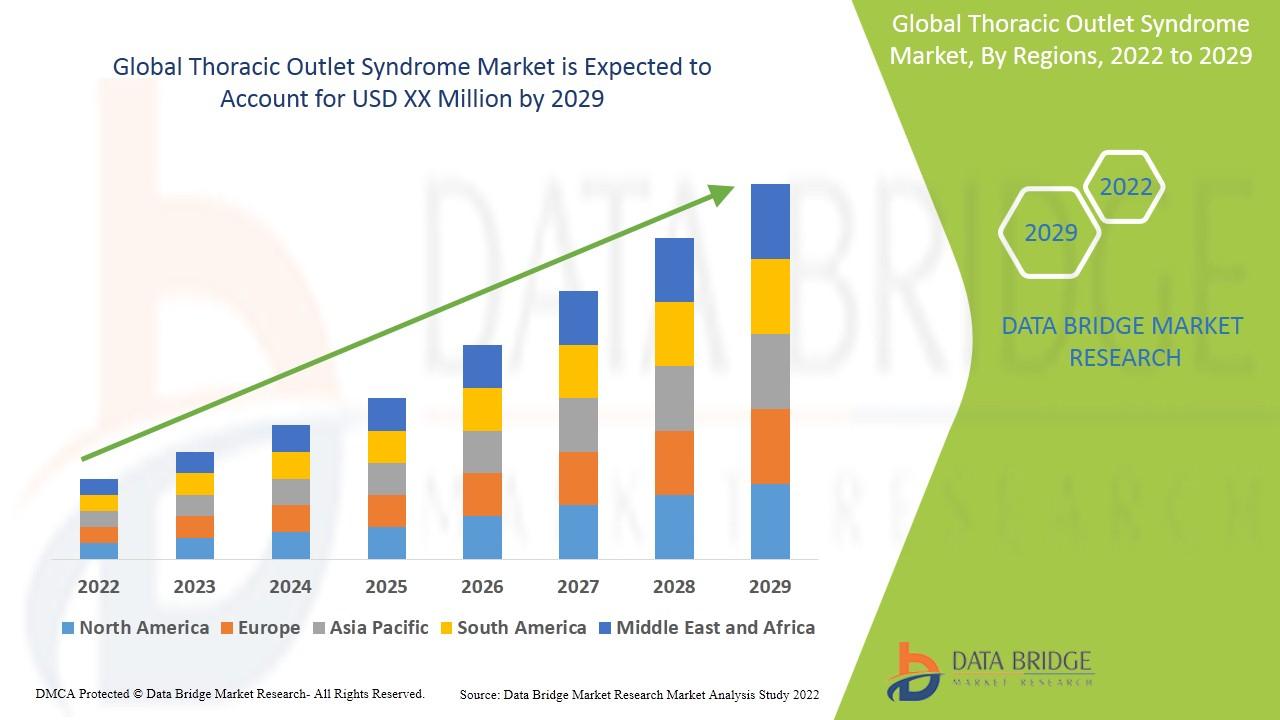
The global thoracic outlet syndrome market is experiencing moderate growth, driven by increasing awareness of neurovascular compression disorders and advancements in diagnostic and therapeutic options. Thoracic outlet syndrome market is expected to gain market growth in the forecast period of 2022-2029. Data Bridge Market Research analyses the market to account to grow at a CAGR of...
With the rapid digital world, there are numerous companies that are now opting to outsource SEO services rather than do all the work in-house. SEO has become much more than just using keywords. It has now become technical, content strategy, and continual updates. By outsourcing SEO services, companies will be able to remain concentrated on their core business and leave visibility,...

" Exactitude Consultancy That Adds Flavour To Your Success" Optical lens Market forecast. Trends in progressive lenses, blue-light filtering, and high-index materials. The global Optical Lens Market is projected to reach USD 48.50 Billion in 2026 and USD 75.10 Billion by 2033, growing at a 6.4% CAGR. If you're looking for insights into the Optical Lens Market, you're in luck! A new...
The Global Recycled Carbon Fiber Market, valued at USD 163.3 million in 2023, is projected to grow significantly and reach USD 464.02 million by 2032, registering a robust compound annual growth rate (CAGR) of 11.7% during the forecast period 2024–2032. The market expansion is driven by increasing demand for sustainable, lightweight, and cost-effective materials across industries...
