


What Is Computational Photography? A Plain-Language Guide to How AI Is Transforming Digital Imaging
Beyond the Lens: How AI and Computational Photography Are Rewriting the Rules of Imaging
Every time a smartphone automatically brightens a dimly lit portrait, a self-driving car detects a pedestrian at an intersection, or an AI diagnostic system flags an anomaly in a medical scan, the same underlying force is at work computational photography. This is not traditional photography improved. It is something fundamentally different: the marriage of artificial intelligence, machine learning, and advanced software algorithms with imaging hardware to produce results that no optical lens alone could ever achieve. And the world is adopting it at a pace that makes the trajectory unmistakably clear.
An Industry Scaling at Remarkable Speed
The global Computational Photography Market was valued at USD 18.34 billion in 2025 and is projected to soar to USD 56.57 billion by 2034, expanding at a compound annual growth rate (CAGR) of 13.34% during the forecast period from 2026 to 2034, according to Polaris Market Research. That near-tripling in value within a decade positions computational photography as one of the most dynamic growth sectors within the broader technology landscape fueled by surging AI investment, premium smartphone demand, and an expanding wave of non-consumer applications in healthcare, automotive, and industrial imaging.
What Computational Photography Actually Does
At its core, computational photography uses software to do what optics cannot. A traditional camera captures what the lens sees. A computational camera uses deep learning algorithms, neural processing units, and real-time image analysis to enhance, reconstruct, interpret, and improve what is captured often in ways invisible to the user but profoundly impactful on image quality and functional performance.
This manifests across an astonishing range of capabilities. On a smartphone, it means portrait mode bokeh that physically separates subject from background, night mode that fuses dozens of underexposed frames into a single brilliantly lit image, and real-time HDR that balances highlights and shadows in milliseconds. In a hospital, it means AI-assisted diagnostic imaging that detects patterns invisible to the human eye. In an autonomous vehicle, it means a multimodal sensor fusion system that builds a three-dimensional model of the surrounding environment fast enough to make safe driving decisions at highway speeds.
Smartphones: The Engine Room of Adoption
The smartphone segment currently dominates the computational photography landscape, accounting for approximately 54% of industry revenue in 2025. The consumer appetite for DSLR-quality photography from a pocket-sized device has turned mobile camera systems into one of the most competitive and innovation-intensive spaces in consumer electronics.
Leading manufacturers are pouring resources into AI camera differentiation. In May 2026, Sony released the Xperia 1 VIII, featuring AI-assisted camera systems that provide real-time recommendations for scene detection, lens selection, color grading, and bokeh control. This level of AI-driven camera intelligence is rapidly becoming the baseline expectation in premium smartphones, with neural processing units and dedicated AI chips now standard hardware in flagship devices from Apple, Samsung, Google, Xiaomi, and others.
The creator economy amplifies this demand further. Social media content creation, short-form video, and mobile filmmaking have transformed billions of smartphone users into active visual content producers who demand professional-grade imaging tools in their devices. This convergence of consumer aspiration and AI capability is precisely what is driving the smartphone segment to its commanding position.
𝐄𝐱𝐩𝐥𝐨𝐫𝐞 𝐓𝐡𝐞 𝐂𝐨𝐦𝐩𝐥𝐞𝐭𝐞 𝐂𝐨𝐦𝐩𝐫𝐞𝐡𝐞𝐧𝐬𝐢𝐯𝐞 𝐑𝐞𝐩𝐨𝐫𝐭 𝐇𝐞𝐫𝐞:
https://www.polarismarketresearch.com/industry-analysis/computational-photography-market
Edge AI: Bringing Intelligence On-Device
One of the most significant technical developments accelerating computational photography is the rise of edge AI processing the ability to run complex AI computations directly on the device, rather than relying on cloud infrastructure. In January 2026, AMD introduced the Ryzen AI Embedded processor family, combining CPUs, GPUs, and neural processing units to enable AI-powered imaging for automotive, industrial, and edge computing applications with lower latency and enhanced privacy.
On-device processing means faster real-time rendering, reduced dependency on connectivity, and a better user experience particularly in applications where millisecond-level response times matter, such as autonomous vehicles or medical imaging systems operating in low-bandwidth environments. This shift is reshaping hardware procurement strategies across industries and driving investment in purpose-built AI silicon from Qualcomm, MediaTek, NVIDIA, and others.
Healthcare and Automotive: The Next Growth Frontiers
While smartphones dominate current revenue, the fastest-growing application segments reveal where computational photography is headed next. The healthcare imaging segment is projected to grow at a CAGR of 13.9% through 2034, driven by the accelerating adoption of AI-assisted diagnostics, image reconstruction, and precision medicine tools in hospitals and imaging centers. AI imaging systems are increasingly able to detect early-stage cancers, quantify disease progression, and guide surgical procedures with a level of accuracy that augments and in some cases surpasses conventional radiological interpretation.
The automotive imaging systems segment is set to grow even faster, at a CAGR of 14.4% the highest of any device category. Every advanced driver assistance system (ADAS) and autonomous vehicle platform depends on computational imaging to function: cameras must detect lane markings, identify obstacles, read traffic signs, and track pedestrians in real time, in all lighting conditions and weather environments. In May 2026, May Mobility unveiled an autonomous vehicle incorporating AI reasoning and environmental modeling to navigate complex driving scenarios a vivid demonstration of how computational imaging is central to the autonomous mobility future.
The Generative AI Horizon
The next chapter of computational photography will be written by generative AI. Already, tools like Adobe's Project Indigo an AI-powered camera application for iPhones developed in collaboration with imaging pioneer Marc Levoy and released in June 2025 are pushing the boundaries of what AI can do with a captured image. Generative models can now reconstruct damaged images, synthesize lighting conditions that were never present, and enhance low-resolution captures into studio-quality outputs. In May 2026, MicroAlgo introduced a quantum image edge extraction algorithm capable of high-precision edge detection under adverse imaging conditions using quantum state encoding a signal of how far the technology frontier is advancing.
Regional Landscape
North America leads the global industry with 34% of revenue in 2025, anchored by an extraordinary concentration of AI investment, semiconductor innovation, and top-tier smartphone brands. Stanford University's AI Index Report 2025 noted that US private AI investment reached USD 109.1 billion in 2024 far exceeding investment levels in any other country and a significant portion of that capital is flowing into imaging AI research and development.
Asia Pacific is the growth powerhouse, expected to expand at a 14.3% CAGR through 2034. Omdia reported that Southeast Asia's smartphone market reached 100 million shipments in 2025, and the region's formidable semiconductor manufacturing base in Taiwan, South Korea, and China provides the AI chip infrastructure that makes advanced computational imaging possible at scale. Europe, with a 26% share in 2025, is driving demand through automotive imaging integration passenger car registrations in the EU grew to 10.82 million units in 2025 according to ACEA, each increasingly equipped with computational camera systems for safety and navigation.
Conclusion
Computational photography has transcended its origins as a smartphone camera trick and is now a foundational technology reshaping how machines see, interpret, and interact with the world. With the Computational Photography Market on a trajectory from USD 18.34 billion to USD 56.57 billion by 2034, the industry is entering a decade of extraordinary growth powered by AI, generative imaging, edge processing, and applications that extend from your phone to the operating room to the autonomous vehicle navigating the road ahead.
More Trending Latest Reports By Polaris Market Research:
North America Robot Operating System Market
5G Fixed Wireless Access (FWA) Market
Categorias
Leia Mais
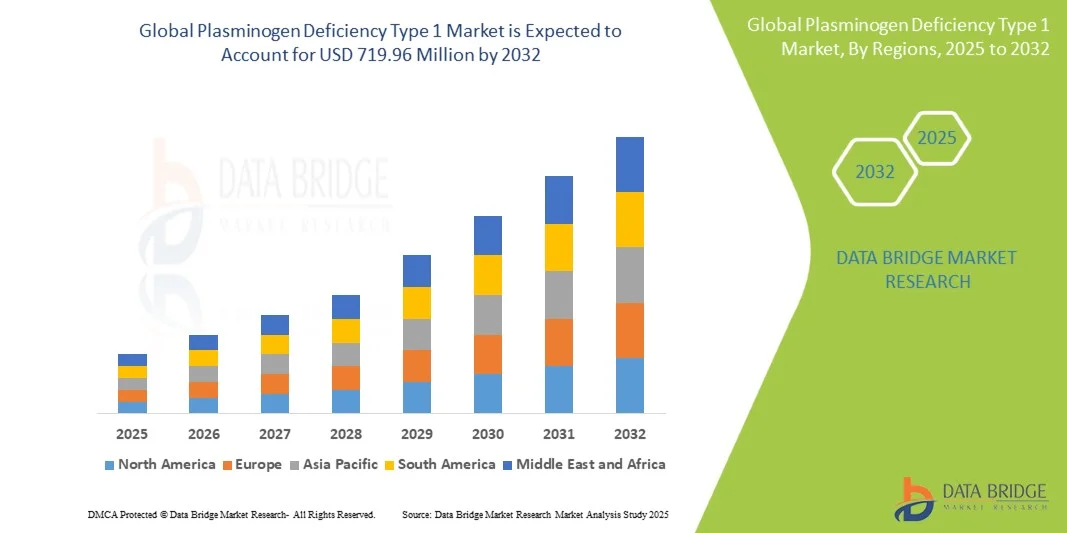
Plasminogen Deficiency Type 1 Market According to the latest report published by Data Bridge Market Research, the Plasminogen Deficiency Type 1 Market The global plasminogen deficiency type 1 market size was valued at USD 487.3 million in 2024 and is expected to reach USD 719.96 million by 2032, at a CAGR of 5.00% during the forecast period The...
The report "POP Treatment and Management / Pelvic Organ Prolapse Market by Product (Synthetic Mesh, Sutures, Pessaries, Robotic Systems), Treatment (Surgical, PFMT), Application (Cystocele, Uterine Prolapse), End User (Hospitals, ASCs), Region - Global Forecast to 2030", is valued at an estimated USD 0.77 billion in 2025. It is projected to reach USD 1.06 billion by 2030, at a...

Eid is a time of celebration, tradition, and togetherness—and for men, festive dressing plays an important role in making the occasion memorable. A well-chosen Eid Kurta not only reflects cultural heritage but also showcases personal style. This festive season, men’s ethnic fashion is evolving with refined designs, modern fits, and versatile styling options. The latest Eid Kurta...

F8BET has built a strong reputation as a modern online entertainment destination that focuses on variety, convenience, and user experience. Over time, it has attracted a large global audience who appreciate its smooth performance, wide selection of games, and engaging digital environment. The platform is designed to deliver a professional and enjoyable space where users can explore different...

According to the latest report published by Data Bridge Market Research, the Thermoelectric Materials Market The global thermoelectric materials market size was valued at USD 652.13 million in 2025 and is expected to reach USD 1288.97 million by 2033, at a CAGR of 8.89% during the forecast period Increasing demands for solid-state energy...
