The Future of Performance Marketing: What Agencies Need to Know

Performance marketing is no longer just about clicks, impressions, and last-click attribution. It has evolved into a complex ecosystem driven by AI, privacy changes, omnichannel behavior, and increasingly demanding clients who expect measurable business outcomes—not just media metrics.
As we move deeper into 2026, agencies that fail to adapt risk becoming irrelevant. Those that evolve, however, can position themselves as strategic growth partners rather than just media buyers.
This article explores where performance marketing is headed, what forces are reshaping it, and what agencies must do to stay competitive in the next phase of digital growth.
1. Performance Marketing Is Becoming Outcome Marketing
Traditionally, performance marketing was defined by measurable actions: clicks, leads, installs, and purchases. But that definition is no longer sufficient.
Today, brands are shifting toward outcome-based marketing, where success is measured in business impact:
-
Revenue growth, not just conversions
-
Customer lifetime value (CLV), not just acquisition
-
Retention and repeat purchase rates
-
Profit margins, not just ROAS
This shift is driven by tighter marketing budgets and greater pressure on accountability. Clients no longer want “traffic”; they want predictable revenue systems.
For agencies, this means a fundamental repositioning:
Instead of saying:
“We generate leads through ads”
Agencies must now say:
“We build scalable revenue systems across paid media, landing pages, CRM, and retention channels.”
2. AI Is Rewriting the Rules of Media Buying
Artificial intelligence is not just a tool in performance marketing anymore—it is becoming the operating system.
Platforms like Google Ads, Meta Ads, and TikTok Ads are heavily automated. Smart bidding, dynamic creative optimization, and AI-driven audience expansion are now standard.
What this means for agencies:
1. Manual optimization is losing value
Bid adjustments, keyword tweaks, and audience segmentation are increasingly handled by algorithms.
2. Creative is now the biggest lever
AI systems optimize based on input signals, and creative is the strongest signal. This makes ad creative the primary performance driver.
3. Platform algorithms favor full-funnel data
AI performs best when it has complete conversion data. Agencies must focus on tracking infrastructure, not just campaign setup.
The new agency role:
Agencies are shifting from “campaign managers” to AI input strategists, responsible for feeding the right data, creatives, and conversion signals into machine learning systems.
3. Privacy Changes Are Breaking Old Attribution Models
One of the biggest disruptions in performance marketing is the global shift toward privacy-first advertising.
With restrictions like:
-
iOS tracking limitations (App Tracking Transparency)
-
Cookie deprecation (third-party cookies)
-
GDPR and similar regulations worldwide
…traditional attribution models are breaking down.
The impact:
-
Last-click attribution is becoming unreliable
-
Cross-device tracking is limited
-
Audience retargeting is less precise
-
Data gaps are increasing across platforms
What replaces it?
Agencies are moving toward:
1. First-party data strategies
Brands now rely on:
-
CRM data
-
Email engagement data
-
Website behavior tracking (server-side)
-
Purchase history
2. Marketing Mix Modeling (MMM)
Instead of tracking individuals, MMM analyzes aggregate data to estimate channel impact.
3. Incrementality testing
Running controlled experiments to measure true lift rather than assumed attribution.
Agency implication:
Data strategy is no longer optional. Agencies must either build or partner for data engineering capabilities.
4. The Death of Channel Silos
In the past, agencies were structured around channels:
-
SEO team
-
PPC team
-
Social media team
-
Email marketing team
This siloed structure is collapsing.
Customers don’t experience channels—they experience journeys.
A user might:
-
Discover a brand on Instagram
-
Search on Google
-
Visit website
-
Leave
-
Get retargeted on YouTube
-
Convert via email
If each channel is optimized independently, the overall system fails.
The future is full-funnel orchestration
Agencies must integrate:
-
Paid media
-
Organic discovery
-
CRM automation
-
Creative strategy
-
Conversion rate optimization (CRO)
New structure emerging:
Instead of channel teams, agencies are shifting to:
-
Acquisition teams
-
Conversion teams
-
Retention teams
-
Data & analytics teams
This reflects the customer lifecycle rather than platform ownership.
5. Creative Becomes the Primary Performance Lever
We are entering what many marketers call the “creative performance era.”
Ad platforms have become so automated that targeting differences are shrinking. What actually drives performance now is:
-
Hook strength (first 3 seconds)
-
Emotional relevance
-
Storytelling clarity
-
Format diversity (UGC, reels, short-form video, static ads)
Why creative matters more than ever:
-
Algorithms test thousands of creatives automatically
-
Fatigue happens faster than before
-
Users are exposed to higher ad volume
-
Attention spans are shrinking
Winning agencies are doing this differently:
1. High-velocity creative testing
Instead of 5–10 ads per month, top agencies produce 50–200 variations.
2. UGC-style content dominance
Authentic, native-looking content often outperforms polished brand ads.
3. Iterative creative systems
Not one-off campaigns, but continuous creative pipelines.
Agency transformation:
Creative teams are becoming performance studios, blending strategy, scripting, editing, and data feedback loops.
6. The Rise of Full-Funnel Performance Marketing
Performance marketing is no longer limited to acquisition.
Modern systems include:
Top of funnel:
-
Video ads
-
Influencer partnerships
-
SEO content
-
Awareness campaigns
Middle funnel:
-
Retargeting ads
-
Landing pages
-
Lead magnets
-
Webinars
Bottom funnel:
-
Email automation
-
CRM nurturing
-
Conversion optimization
-
Sales alignment
Post-purchase:
-
Retention campaigns
-
Loyalty programs
-
Upselling and cross-selling
Key insight:
The future agency is not a “media buyer.” It is a revenue lifecycle architect.
7. Data Integration Is the New Competitive Advantage
Most agencies still struggle with fragmented data:
-
Google Ads data in one place
-
Meta Ads data in another
-
CRM data in HubSpot or Salesforce
-
Website analytics in GA4
This fragmentation leads to poor decision-making.
The future belongs to unified data systems:
Agencies are investing in:
-
Server-side tracking
-
Data warehouses (like BigQuery)
-
BI dashboards (Looker, Power BI)
-
Conversion APIs
-
Unified attribution models
Why this matters:
Without integrated data, AI optimization becomes blind.
Agencies that solve this problem become indispensable.
8. The Shift From ROAS to MER (Marketing Efficiency Ratio)
ROAS (Return on Ad Spend) has long been the default performance metric. But it is increasingly misleading.
Why?
-
It ignores offline conversions
-
It ignores lifetime value
-
It overvalues short-term wins
-
It encourages channel bias
The new metric: MER
MER = Total Revenue / Total Marketing Spend
This gives a holistic view of marketing efficiency across all channels.
Agencies must adapt by:
-
Educating clients on blended metrics
-
Focusing on business outcomes
-
Reducing obsession with platform-level ROAS
This is a major mindset shift in client reporting.
9. Automation Will Reduce Execution Work—But Increase Strategy Demand
AI tools are rapidly automating:
-
Campaign setup
-
Bid optimization
-
Reporting
-
Audience targeting
-
Budget allocation
This means execution-heavy agency models are under pressure.
But here is the opportunity:
As execution becomes easier, strategy becomes more valuable.
High-value agency services will include:
-
Growth strategy development
-
Offer engineering
-
Funnel architecture
-
Conversion psychology
-
Creative direction
-
Experiment design
In simple terms:
Agencies that only “run ads” will decline. Agencies that design growth systems will thrive.
10. The Rise of Experimentation Culture
Modern performance marketing is becoming a continuous testing environment.
Instead of long campaign cycles, agencies are shifting toward:
-
Weekly testing sprints
-
A/B and multivariate testing
-
Rapid landing page iteration
-
Creative testing frameworks
-
Offer testing
Winning mindset:
Not “What works?” but “What works better?”
Agencies that adopt experimentation as a core operating system outperform those relying on static strategies.
11. Platform Diversification Is Mandatory
Relying on one platform is becoming riskier than ever.
-
Meta CPM volatility
-
Google algorithm changes
-
TikTok policy shifts
-
Rising ad costs globally
Future-proof strategy:
Agencies must diversify across:
-
Search (Google, Bing)
-
Social (Meta, TikTok, LinkedIn)
-
Video (YouTube, OTT platforms)
-
Affiliate networks
-
Email and SMS
Key principle:
No single platform should control more than a safe percentage of total acquisition.
12. The Agency of the Future: What It Looks Like
The modern performance marketing agency will look very different from today’s version.
It will combine:
1. Media buying intelligence
Not manual optimization, but AI-guided decision systems.
2. Creative production engine
Fast, iterative, data-driven content creation.
3. Data engineering layer
Tracking, attribution, and analytics infrastructure.
4. Growth strategy consulting
High-level business planning and funnel design.
5. Automation systems
CRM flows, lifecycle marketing, and AI workflows.
Core identity shift:
From:
“We run ads”
To:
“We build scalable growth systems powered by data, creativity, and automation.”
13. Skills Agencies Must Build for the Future
To stay competitive, agencies need new capabilities:
Technical skills:
-
Server-side tracking
-
GA4 and data analytics
-
Marketing automation tools
-
API integrations
Strategic skills:
-
Funnel architecture
-
Offer positioning
-
Customer psychology
-
Lifecycle design
Creative skills:
-
Short-form video production
-
UGC strategy
-
Copywriting for attention economy
-
Creative testing frameworks
Analytical skills:
-
Incrementality testing
-
Cohort analysis
-
MER-based reporting
-
Predictive modeling
14. The Biggest Risk: Becoming a Commodity
The biggest threat to agencies is commoditization.
If an agency only provides:
-
Campaign setup
-
Basic reporting
-
Standard ad management
…it will be replaced by automation or cheaper competitors.
Differentiation comes from:
-
Strategy depth
-
Creative originality
-
Data integration capability
-
Business outcome ownership
Agencies must move up the value chain or risk being replaced by software.
Conclusion: The Future Belongs to Systems Thinkers
Performance marketing is no longer about optimizing ads in isolation. It is about building interconnected systems that drive predictable, scalable, and profitable growth.
The agencies that will win in the coming years are those that:
-
Embrace AI instead of resisting it
-
Prioritize creative over mechanical optimization
-
Invest in data infrastructure
-
Think in full-funnel systems
-
Measure business outcomes, not vanity metrics
-
Operate as strategic growth partners
The shift is clear: performance marketing is evolving from a tactical service into a strategic discipline.
And agencies that understand this transformation early will not just survive the future—they will define it.
Nach Verein filtern
Read More
In the digital age, being "seen" isn't enough; you must be trusted. For UK business owners, the journey toward trust often begins on business listings sites. These platforms serve as the modern-day town square, where reputation is built through transparency rather than loud advertisements. By learning to optimize a free review company directory listing, you can position your...

Top Kaftan Kurta Set Designs Every Woman Should Have in Her Wardrobe Ethnic fashion is constantly evolving, and one trend that has captured attention in recent years is the Kaftan kurta set. Combining comfort with effortless elegance, this outfit has become a must-have for women who want to stay stylish without compromising on ease. From casual wear to festive occasions, kaftan...

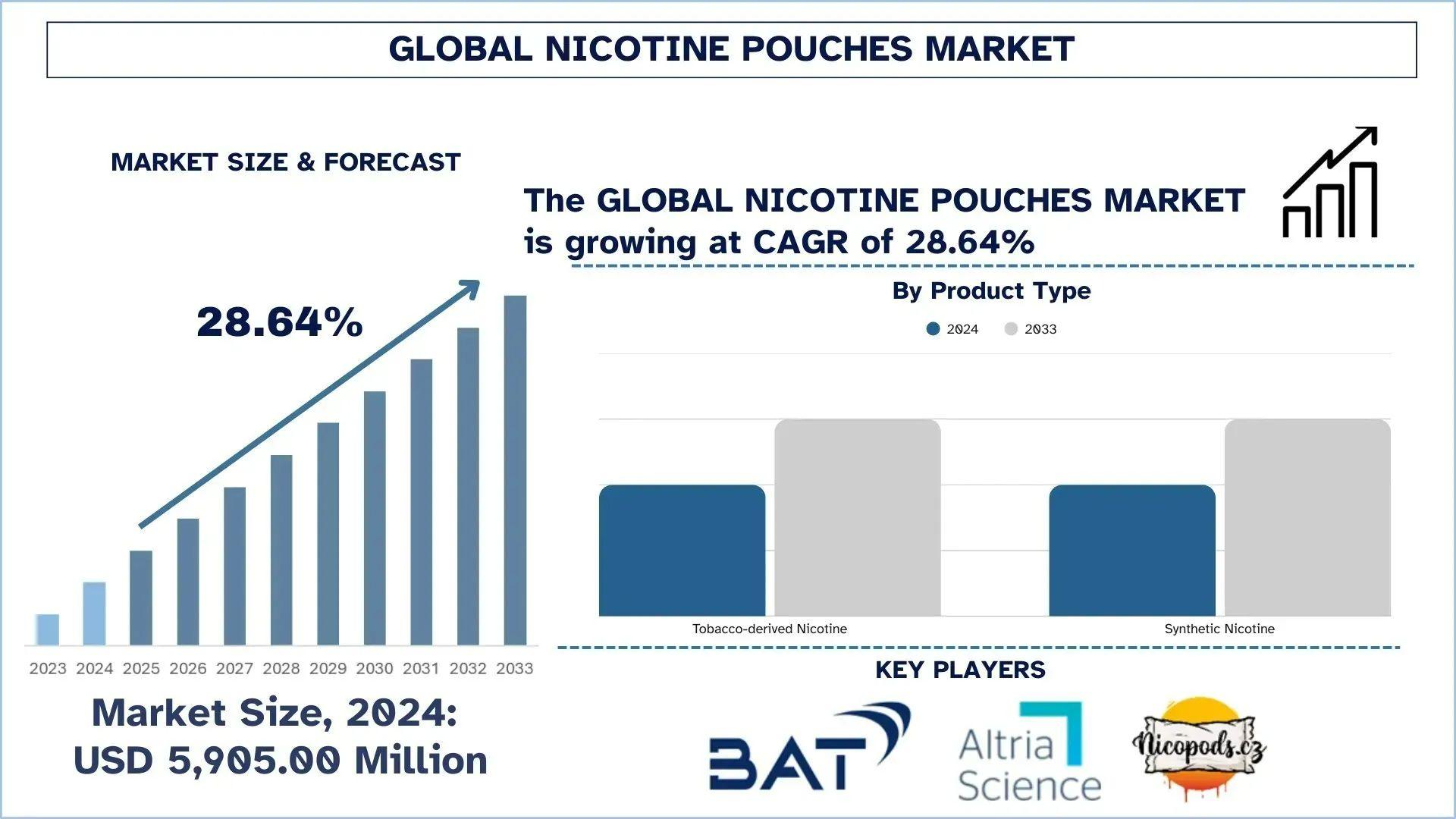
According to the UnivDatos “Nicotine Pouches Market” report, the global market was valued at USD 5,905.00 million in 2024 and is expected to grow at a CAGR of about 28.64% during the forecast period from 2025 - 2033, reaching USD million by 2033. The nicotine pouches market has been experiencing a massive growth in the world market as the need to use alternative tobacco products...
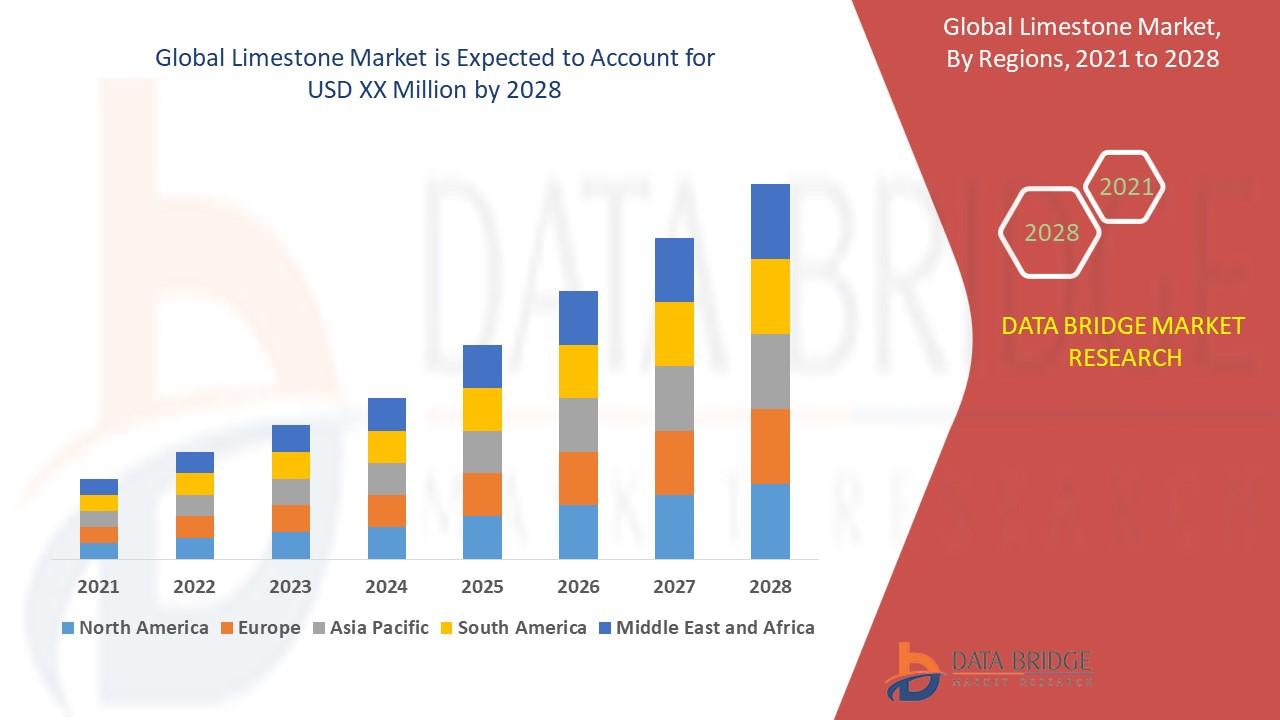
Limestone Market Report The Limestone Market is experiencing robust growth driven by increasing demand in construction, agriculture, and industrial applications. This report provides a comprehensive analysis of the current market landscape, growth drivers, trends, and future opportunities. Market Overview The Limestone Market is primarily influenced by the rising use of...
Travel comfortably with Munnar to Kodaikanal cab service. Enjoy scenic routes, professional drivers, transparent pricing, and safe long-distance travel.