Should You Exercise During Your Period?
Should You Exercise During Your Period?
For many people, the first day of their period comes with an unspoken permission slip to cancel plans, skip the gym, and spend the day horizontal. That instinct isn't entirely wrong — rest has its place — but the exercise during period myth that says physical activity makes things worse, or that you should avoid it altogether, simply doesn't hold up when you look at what the research and clinical experience actually show.
The reality is more nuanced than either extreme. Movement during menstruation isn't just safe for most people — it can actively reduce some of the most uncomfortable symptoms. That said, understanding the exercise during period myth requires first understanding what's actually happening in your body across the different phases of your cycle, and why blanket advice in either direction tends to miss the point.
What Your Body Is Actually Doing
During menstruation, your body is shedding the uterine lining it built up over the previous weeks. Hormones — particularly oestrogen and progesterone — are at their lowest point in the cycle. This hormonal dip is largely responsible for the fatigue, mood shifts, and physical discomfort many people experience.
Prostaglandins, hormone-like compounds that trigger uterine contractions to help expel the lining, are also elevated during this phase. Higher prostaglandin levels are directly linked to cramping intensity. In practice, what often happens is that people conflate normal hormonal fatigue with a signal that the body can't handle movement — but those are two very different things.
The Case for Moving Through It
One of the most well-supported findings in menstrual health research is that moderate aerobic exercise can reduce the severity of period cramps. Physical activity increases circulation, which helps ease the muscle tension that contributes to cramping. It also triggers the release of endorphins — the body's natural pain-modulating chemicals — which can provide genuine, if temporary, relief.
A common mistake people make is assuming that exercising during their period will increase blood flow dramatically and worsen bleeding. The evidence doesn't support this. Light to moderate movement does not meaningfully increase menstrual flow in most people, and for many, it has no effect on flow at all.
There's also a mood dimension worth taking seriously. The hormonal environment during menstruation can amplify feelings of low energy, irritability, or low mood. Exercise — even a 20-minute walk — has well-documented effects on mood regulation through its influence on serotonin and dopamine pathways. Skipping movement entirely during this phase can, for some people, make psychological symptoms feel heavier rather than lighter.
Research into how menstrual cycle phases relate to physical experience — much like the ongoing conversation around period syncing with friends — highlights how much cycle literacy still has to catch up with lived experience.
What Kind of Exercise Actually Helps
Not all exercise is equally suited to the menstrual phase, and this is where individual experience matters enormously. Based on how this typically works, the first one or two days — when cramping and fatigue tend to peak — are best suited to lower-intensity activity.
Walking is consistently underrated. A 20 to 30-minute walk at a comfortable pace can ease cramps, lift mood, and maintain energy without putting significant demand on the body.
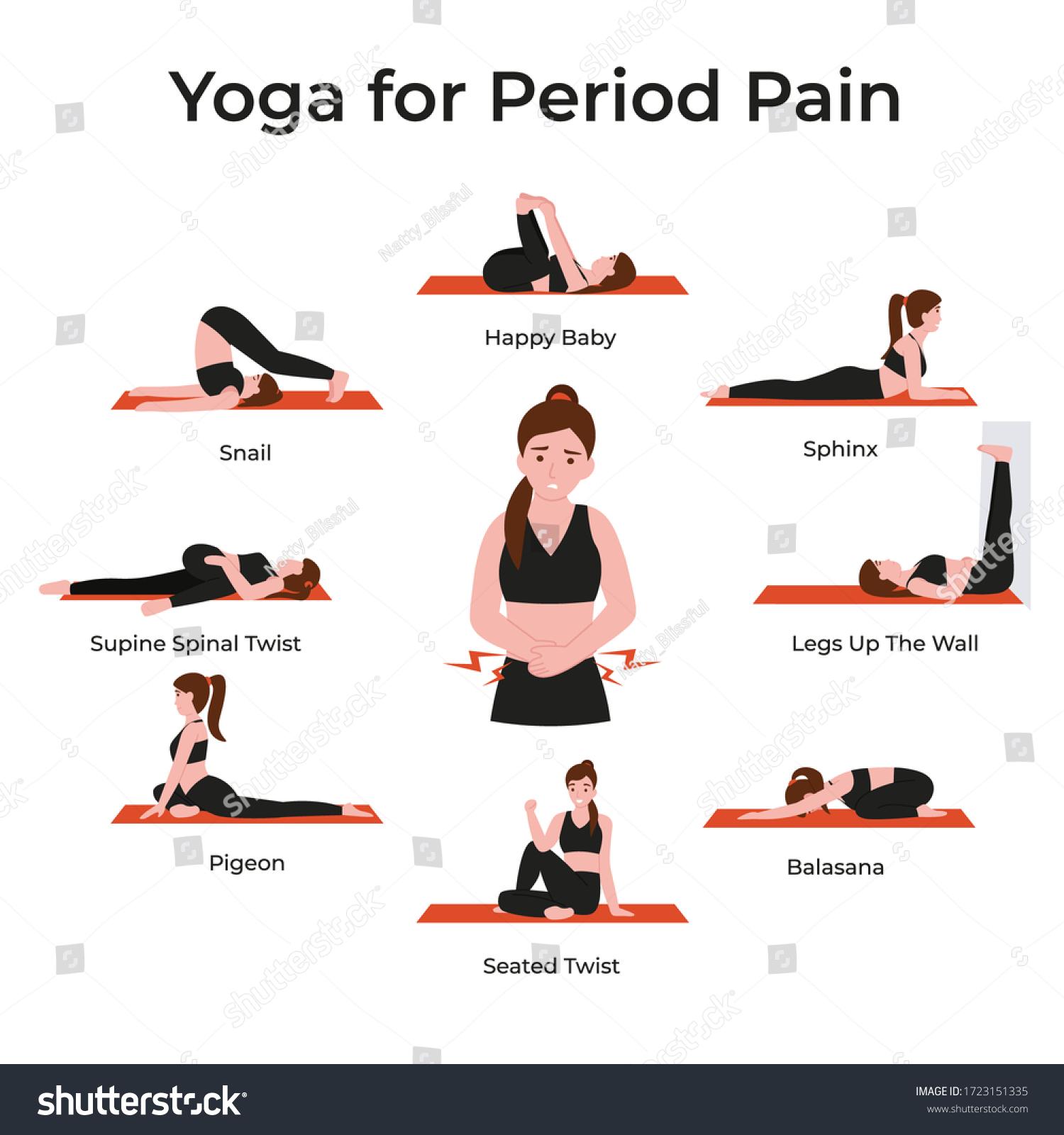
Yoga and stretching, particularly poses that target the lower back, hips, and pelvis, can provide meaningful relief for cramp-related discomfort. Restorative and yin yoga styles are especially worth exploring during heavier flow days.
Swimming is another option that many people find helpful, as the water provides gentle resistance while supporting the body. The warmth of a heated pool can also have a relaxing effect on tense pelvic muscles.
Light strength training at reduced intensity is entirely manageable for most people during menstruation. The key distinction is listening to actual fatigue signals rather than pushing through them out of habit or guilt.
When to Dial It Back
It's worth noting that the advice to keep moving is not a directive to push through everything. There's a meaningful difference between hormonal fatigue that responds well to gentle activity and genuine physical distress that warrants rest.
If you're experiencing unusually heavy bleeding, severe cramping that doesn't respond to normal pain relief, dizziness, or significant nausea, those are signals to rest — and potentially signals that something beyond typical menstruation is happening. Conditions like endometriosis, fibroids, or adenomyosis can produce symptoms that are far more debilitating than standard period discomfort, and exercise is not an appropriate management strategy for an underlying condition that hasn't been properly diagnosed.
High-intensity training and competitive athletic performance during menstruation is a more complex area. Some athletes report that their first cycle days are their strongest training days; others find performance noticeably affected. Individual variation here is significant and shouldn't be flattened into a single recommendation.
The Myths Worth Naming Directly
A few specific beliefs about exercising during your period deserve to be addressed head-on, because they circulate widely and cause genuine confusion.
"Exercise will make your cramps worse." For most people, the opposite is true. Gentle to moderate movement reduces prostaglandin-related cramping by improving circulation and releasing endorphins. This doesn't apply to everyone, but the blanket claim that exercise worsens cramps is not supported by current evidence.
"You should rest completely for the first few days." Complete rest is appropriate when symptoms are severe — but for mild to moderate discomfort, sustained inactivity can actually prolong the feeling of heaviness and fatigue. The body generally responds better to gentle engagement than to total stillness.
"Intense workouts are fine, your body can handle it." This is the opposite overcorrection. While many people do train intensely during their period without issue, dismissing the body's signals in favour of a rigid training schedule isn't wise either. Respecting hormonal fatigue on heavier days is not weakness — it's cycle-informed training.
Cycle-Aware Fitness: A More Useful Frame
Beyond just the menstrual phase, there's growing interest in structuring exercise around the full cycle — a concept sometimes called cycle syncing. The basic idea is that hormonal fluctuations across the four phases of the cycle create different energy and recovery profiles that are worth accounting for in a training plan.
During the follicular phase (the days after your period ends), rising oestrogen supports higher energy, faster recovery, and improved performance. This tends to be the phase when higher-intensity training feels most natural and produces the best results.
The ovulatory phase, around the midpoint of the cycle, is often when energy peaks. Strength and cardiovascular performance can be noticeably higher during this window.
The luteal phase, in the lead-up to menstruation, brings rising progesterone and eventually a drop in both hormones. Fatigue and body temperature increase, which can make training feel harder for the same effort. Scaling back intensity during this phase often leads to better performance overall — not because the body is weaker, but because it's in a different hormonal environment.
Understanding your cycle as a full system, rather than treating menstruation as an isolated inconvenience, tends to produce much better outcomes for both fitness and general wellbeing.
When to Speak With a Doctor
If period symptoms are consistently severe enough to prevent normal activity — including gentle exercise — that's a clinical signal worth investigating rather than normalising. Debilitating cramps, very heavy flow, prolonged periods, or symptoms that worsen over time can all indicate underlying conditions that respond well to treatment when caught early.
A gynaecologist or GP can assess whether symptoms are within expected variation or warrant further investigation. Keeping a cycle diary that tracks flow intensity, pain levels, energy, and how you felt during any exercise is enormously helpful for these conversations — far more informative than a general description of "bad periods."
The Bottom Line
Exercising during your period is not only safe for most people — it's actively beneficial for managing some of the most common symptoms. The key is matching the type and intensity of movement to how your body actually feels on a given day, rather than following a fixed rule in either direction.
Rest when symptoms are severe. Move gently when they're manageable. And treat your cycle as useful biological information rather than a monthly obstacle. Your body during menstruation isn't broken or fragile — it's in a specific hormonal phase that responds well to being listened to
Κατηγορίες
Διαβάζω περισσότερα
The Plant-Powered Heart Health Revolution: How Phytosterols Are Redefining Cholesterol Management Cholesterol lowering ingredients have moved decisively beyond the pharmacy aisle and into the everyday food products that consumers reach for at the supermarket from fortified margarines and enriched yogurts to functional beverages and heart-healthy breakfast cereals. At the forefront of this...

Saxenda Weight Loss Injections in Islamabad are widely used by people who want a medically supervised and non-surgical solution for weight management. Obesity and excess body weight can affect confidence, physical health, and daily lifestyle. Many individuals struggle to lose weight despite trying different diets and exercise routines. In such situations, Saxenda Weight Loss Injections can...
"According to the latest report published by Data Bridge Market Research, the Pathogen Specific Kits Market Data Bridge Market Research analyses that the pathogen-specific kits market was valued at USD 5.40 billion in 2022 and is expected to reach the value of USD 8.71 billion by the year 2030, at a CAGR of 5.30% during the forecast period. This global Pathogen Specific Kits...
TA88 is rapidly gaining attention as a modern online entertainment platform that attracts millions of users across Asia. With the rapid growth of digital entertainment, people are searching for platforms that are reliable, secure, and enjoyable to use. ta88 responds to these expectations by offering a well-designed platform that focuses on user satisfaction, smooth...
Choosing the right college is one of the most important decisions for students planning a career in the aviation industry. With the aviation sector in India experiencing significant growth, there is increasing demand for professionals in airport operations, airline management, cargo logistics, aviation customer service, and aviation administration. Among the institutions offering...