


Vessel Conversion & Modification Engineering — Why This Is the Most Demanding Work a Marine Design Bureau Handles
Meta Description:
Vessel conversion engineering requires more than drawings. Kontek Marine's marine design bureau manages full modification scope with class approval.
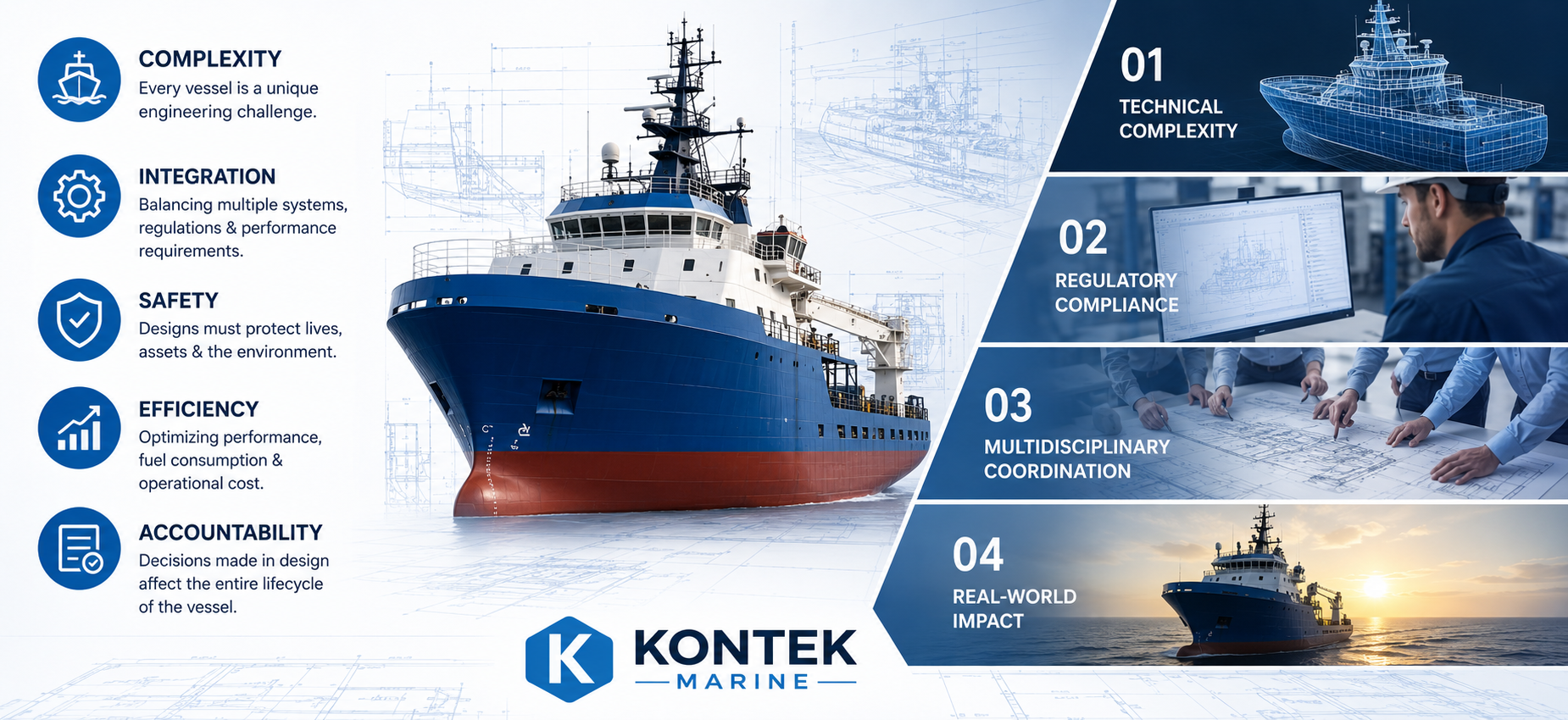
Conversion Design Is Not the Same as Newbuild Design
A newbuild project begins with a blank sheet of paper. Naval architects and engineers have complete control over the hull form, structural arrangement, machinery layout, and system integration from the earliest concept stage. Design optimisation can be built into the vessel from the beginning.
A conversion project is fundamentally different. The vessel already exists, with fixed hull geometry, established structural arrangements, machinery spaces designed for another purpose, and a classification history that must remain intact throughout the modification process. The engineering challenge is fitting a new operational requirement into a framework that was originally designed for something else.
That challenge demands a different level of engineering judgement and practical experience. Successful conversion projects require a Marine Design Bureau & Services Company that understands both regulatory requirements and real-world shipbuilding constraints.
For specialist support, visit Kontek Marine's marine design bureau and vessel modification services: https://kontekmarine.com/marine-design-bureau-services.html
Types of Vessel Conversion That Require Specialist Design Support
Cargo Change Conversions
Converting a bulk carrier into a container feeder, modifying a product tanker for chemical cargoes, or transforming a general cargo vessel into a heavy-lift platform requires extensive engineering review. These projects involve structural reassessment, stability recalculation, and complete class approval of the modified vessel.
Deck Extensions and Superstructure Modifications
Adding accommodation blocks, extending working decks, or increasing freeboard may appear straightforward, but each modification affects hull girder strength, longitudinal bending moments, and vessel stability. Detailed structural verification is required before approval can be obtained.
Propulsion Upgrades
Modernisation projects often involve propulsion improvements such as bow thruster installation, azimuth propulsion systems, or transitions from conventional mechanical drives to diesel-electric arrangements. These changes require machinery integration studies, structural modifications, and updated engineering documentation.
Crane and Deck Equipment Installations
Many offshore and cargo vessels require new lifting equipment during their operational life. Engineering support includes pedestal foundation design, deck strengthening calculations, and verification of operational loading conditions.
Ballast Water Treatment System Retrofits
Environmental compliance projects frequently require retrofitting treatment systems into machinery spaces that were never designed to accommodate them. Successful integration depends on careful piping design, structural penetration assessment, and class approval documentation.
Accommodation Rebuilds
Accommodation upgrades often involve cabin redesign, ventilation modifications, sanitary system changes, and structural alterations. Modern MLC requirements must be incorporated while remaining within the existing hull envelope.
IMAGE PROMPT:
"Marine engineering team from an Indian design bureau reviewing vessel conversion drawings on a large format plotter printout — existing hull structural plan overlaid with new deck extension design in red markup, professional engineering office environment, natural lighting, realistic technical project photography."
The Class Approval Challenge in Conversion Projects
Conversion projects frequently attract greater scrutiny from classification societies than newbuild vessels. Surveyors must confirm that the modified vessel remains structurally sound, stable, and suitable for its revised operational purpose without the benefit of a completely new design baseline.
This makes engineering calculations, reports, and drawing quality critically important. Every assumption must be documented, every modification justified, and every engineering conclusion supported by recognised methodologies.
Kontek Marine manages complete class submission packages for conversion projects, including approval drawings, engineering calculations, submission management, and technical responses throughout the review process. The company supports projects involving Lloyd's Register, DNV, Bureau Veritas, IRS, and ClassNK depending on vessel requirements.
Lloyd's Register publishes technical guidance for ship modification and conversion projects through https://www.lr.org, providing a useful reference resource for owners and project teams researching approval requirements.
To learn more about related engineering capabilities, explore Kontek Marine as a full-service marine services company in India: https://kontekmarine.com/index.html
What Information Is Needed to Start a Conversion Design Project
One of the most common questions vessel owners ask is what information is required before engineering work can begin. Providing complete project information early allows engineers to define scope accurately and reduce approval delays later.
Useful project information typically includes:
-
Existing vessel drawings, including general arrangement plans and structural drawings where available
-
Current class approval documentation and records of previous modifications
-
Detailed description of the intended conversion scope
-
Target classification society and flag state requirements
-
Planned trading area following conversion
-
Desired project timeline and implementation schedule
This information allows engineers to evaluate feasibility, identify technical challenges, and develop a practical execution strategy. Following review, Kontek Marine can provide a defined engineering scope, project timeline, and commercial proposal so clients understand exactly what is being commissioned.
Conclusion
Vessel conversion and modification engineering is often where the difference between design bureaux becomes most visible. Producing drawings is only one part of the process. Successfully navigating class approval requirements, integrating modifications into existing structures, and supporting practical shipyard execution requires specialised expertise developed through real project experience.
For shipowners, offshore operators, and shipyards seeking a Marine Design Bureau & Services Company capable of delivering technically sound conversion engineering at internationally competitive rates, Kontek Marine provides support from initial feasibility studies through final approval and project closure. To begin planning your project, submit your vessel conversion enquiry to Kontek Marine: https://kontekmarine.com/contact.html
CTA
Planning a vessel conversion, propulsion upgrade, or deck modification?
Kontek Marine's design bureau handles full engineering scope — from feasibility through to class approval closure.
India-based pricing. International quality. Global delivery.
📞 +91 7303620603
💬 WhatsApp: https://api.whatsapp.com/send?phone=7303620603
🔗 https://kontekmarine.com/marine-design-bureau-services.html
Categories
Read More
"Life Sciences Business Processing Outsourcing Market Summary: According to the latest report published by Data Bridge Market Research, the Life Sciences Business Processing Outsourcing Market The global life sciences business processing outsourcing market size was valued at USD 463.5 billion in 2025 and is expected to reach USD 831.57 billion by 2033, at...
Mental health is a vital part of overall well-being, influencing how individuals think, feel, and navigate daily life. Finding the right counselling support can be a transformative step toward healing, growth, and balance. robert grigore counselling stands out as a trusted counselling practice dedicated to providing compassionate, client-centered mental health services tailored to each...

"Battery Materials Market Summary According to the latest report published by Data Bridge Market Research, the Battery Materials Market The global battery materials market size was valued at USD 61.86 billion in 2025 and is expected to reach USD 141.22 billion by 2033, at a CAGR of 10.87% during the forecast period This Battery Materials Market research...

Wheat Protein Isolates Market Summary “The global Wheat Protein Isolates Market is expected to reach to USD 1337.6 million by 2032, growing at a CAGR of 11.5% during 2025 to 2032” The TrendBridge Insights Research report, “Global Wheat Protein Isolates Market Report 2025 – Future Opportunities, Latest Trends, In-depth Analysis, and Forecast To 2032”,...
India, Pune - The Insight Partners has released a comprehensive report titled “In Line Process Viscometer Market Share, Size, Trends, and Forecast by 2031. The in-line process viscometer market is experiencing a dynamic transformation driven by escalating industrial automation and the growing imperative for real-time quality monitoring....
