


Why Demand for High-Efficiency Traction Motors Is Rising in EV Industry
The global automotive traction motor market is undergoing a historic transformation, sitting at the very heart of the worldwide shift toward electrified transportation. The global automotive traction motor market was valued at USD 5.67 billion in 2021 and is expected to grow at a compound annual growth rate of 22.5% during the forecast period, reaching USD 32.40 billion by 2030. This extraordinary growth rate — one of the highest across all automotive sub-sectors — reflects the explosive momentum behind electric vehicles (EVs) and the critical role traction motors play in powering them.
A traction motor serves as the primary powerplant in electric and hybrid vehicles, converting electrical energy into mechanical motion to drive the wheels. Unlike internal combustion engines that rely on fuel combustion, traction motors offer instant torque delivery, superior energy efficiency, and significantly lower operational noise. The automotive traction motor is replacing traditional engines operating on steam and diesel, as high performance, low maintenance, improved reliability, and simple design are expected to drive market growth. Furthermore, due to the presence of electrical braking, the cost of brake shoes, rails, and wheel types has reduced, resulting in less wear and tear in vehicles.
This is not merely a component market — it is a strategic battleground where automakers, Tier 1 suppliers, and technology giants are competing to define the future of mobility.
Key Market Growth Drivers
Three powerful forces are converging to drive exceptional growth in this space. First, the global push for zero-emission transportation is fundamentally reshaping automotive manufacturing. Growing environmental concerns and stringent government regulations due to carbon emission vehicles are creating a shift toward electric vehicles, with the increasing demand for BEV and PHEV — which mainly operate on traction motors — expected to drive the market at a significant rate.
Second, infrastructure investment is creating new demand corridors. The global automotive traction motor market is likely to be driven by Asia Pacific owing to increasing government investment in railway and roadway infrastructure, and the growing demand for high-performance motors. This extends beyond passenger vehicles — electric buses, industrial machinery, and freight applications are all emerging as high-volume consumption channels.
Third, the relentless improvement in motor engineering is expanding the addressable market. OEMs are now developing integrated electric drive systems that combine traction motors with power electronics for superior propulsion performance. With technological advancement, OEMs focus on developing drives that comprise electric traction motors and power electronics, which are essential factors for better vehicle propulsion systems. The introduction of silicon carbide inverter architectures and hairpin motor windings — as seen in recent product launches — is dramatically improving power density and thermal performance.
Additionally, the rising cost competitiveness of EVs relative to conventional vehicles is reducing consumer price resistance, a barrier that once constrained mass adoption. As battery costs fall and motor efficiency improves, the total cost of ownership for electric vehicles is reaching parity with or undercutting internal combustion counterparts in many global markets — a tipping point that will accelerate traction motor demand throughout the decade.
Browse Full Insights:
https://www.polarismarketresearch.com/industry-analysis/automotive-traction-motor-market
Market Opportunity
The breadth of opportunity in this market is exceptional. Beyond passenger cars, the commercial and public transport sectors represent enormous untapped potential. The buses segment accounted for the highest revenue share in 2021, driven by rising demand for emission-free public transportation and the continuous torque and power supply requirements — including double torque for quick start, strong acceleration, and high climbing angle — that are ideally met by traction motors.
The electrification of heavy-duty trucks and last-mile delivery vans is another burgeoning frontier. As logistics companies face mounting pressure to decarbonize their fleets, demand for high-power traction motor systems in commercial vehicles is accelerating rapidly. In April 2025, Garrett Motion partnered with Shaanxi HanDe to develop e-axles for heavy trucks, with trials planned for 2026, reflecting the growing need for advanced traction motor technologies in the heavy truck segment.
Manufacturing investment is equally compelling. In September 2025, Rivian began construction of a USD 5 billion plant in Georgia with a capacity of 400,000 vehicles, expected to strongly boost the automotive traction motor market as higher EV production increases demand for advanced traction motors.
Market Segmentation
The market is primarily segmented based on vehicle, EV type, motor type, power output, and region. By vehicle, key categories include passenger cars, trucks, buses, pickup trucks, and vans. By EV type, the market spans Battery Electric Vehicles (BEV), Hybrid Electric Vehicles (HEV), and Plug-in Hybrid Electric Vehicles (PHEV). By motor type, the primary segments are Permanent Magnet Synchronous Motors (PMSM) and AC Induction motors, while power output tiers are divided into less than 200 kW, 200–400 kW, and above 400 kW.
The BEV segment is driven by rising demand for zero-emission vehicles with high fuel efficiency at a reasonable price. Permanent Magnet Synchronous Motors are best suited for such vehicles because of their efficiency, compact size, and high power density. Meanwhile, the less than 200 kW power output category acquired the highest revenue share in 2021, driven by growing demand for traction motors in electric vehicles that require average power of less than 200 kW, with many passenger cars requiring a power output range between 30 to 50 kW.
Key Companies
Major players operating in the global automotive traction motor market include Aisin, ABB Ltd., Alstom S.A., American Traction Systems, Bombardier Inc., BorgWarner Inc., Caterpillar Inc., General Electric Co., Hitachi Ltd., Magna International, Mitsubishi Electric Corporation, Nidec Corporation, Robert Bosch GmbH, Schaeffler Group, Siemens AG, Toshiba Corporation, Voith GmbH, and ZF Friedrichshafen AG. These companies are actively expanding their EV portfolios through acquisitions, joint ventures, and new product launches. In May 2022, ZF Friedrichshafen AG introduced new electric drive modules including a hairpin electric motor and silicon carbide inverter architecture, launching the eWorX product that provides fully electric system solutions in a compact package. Similarly, in April 2022, BorgWarner Inc. completed its acquisition of Santroll automotive components to strengthen its market position in light vehicle e-motors.
Beyond established players, a new wave of vertically integrated EV startups and regional manufacturers — particularly in China, South Korea, and India — are aggressively building traction motor capabilities, intensifying competition and accelerating innovation cycles across the entire value chain.
Conclusion
The automotive traction motor market stands as one of the most compelling growth narratives in global manufacturing today. With a 22.5% CAGR, a market value set to nearly sextle by 2030, and demand pulling from every corner of the electrified transport ecosystem — from city buses to long-haul trucks to personal EVs — the opportunity for investors, OEMs, and component suppliers is extraordinary. The companies that invest now in motor efficiency, thermal management, and scalable manufacturing will be the defining players of the clean mobility era.
More Trending Latest Reports By Polaris Market Research:
Europe Truck-Mounted Lifting, Handling & Access Equipment Market
Automotive Traction Motor Market
Categorias
Leia mais
Morocco is a captivating destination where ancient traditions meet breathtaking landscapes, vibrant cities, and unforgettable cultural experiences. From the colorful streets of Marrakech and the historic medinas of Fez to the golden dunes of the Sahara Desert and the scenic Atlantic coastline, Morocco offers travelers an incredible variety of attractions. Whether you are planning a cultural...

The global dental air abrasion market is steadily transforming as dental professionals increasingly adopt minimally invasive technologies that prioritize patient comfort, treatment precision, and faster recovery. Dental air abrasion systems utilize compressed air combined with abrasive particles to remove decayed tooth material without the vibration, heat, and noise commonly associated with...

According to the latest report published by Data Bridge Market Research, the Sequencing Driven Metagenomics Market CAGR Value The global sequencing driven metagenomics market size was valued at USD 346.08 million in 2025 and is expected to reach USD 599.99 million by 2033, at a CAGR of 7.12% during the forecast period All the statistical...
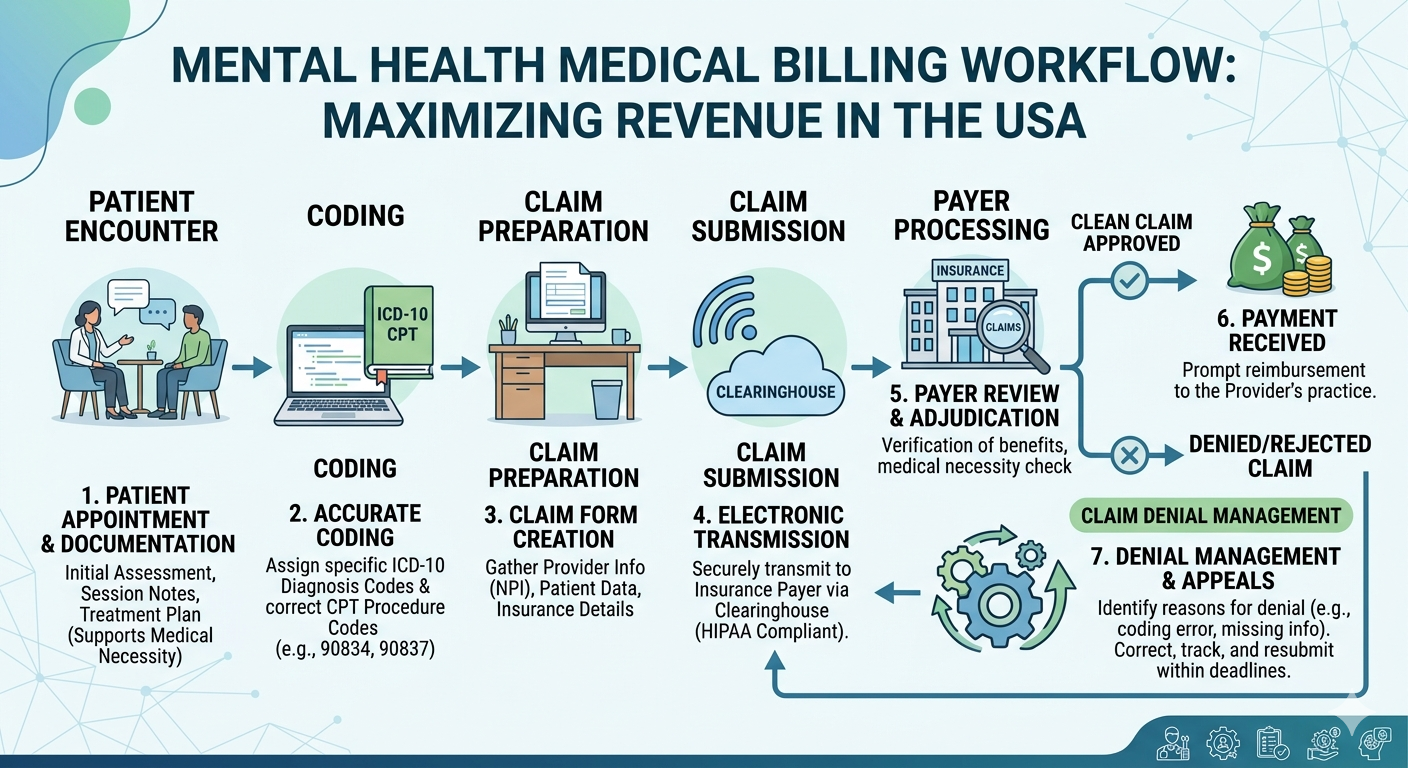
Mental health practices across the United States are growing rapidly, but so are the complexities of billing and reimbursement. From insurance verification to coding accuracy and denial management, handling billing in-house can drain time and resources. This is where outsourced mental health billing becomes a strategic advantage. Instead of struggling with administrative overload, providers are...
Living with chronic pain can affect every aspect of daily life, from mobility and productivity to emotional well-being. Whether caused by arthritis, sports injuries, spinal disorders, or post-surgical recovery, pain requires proper evaluation and treatment to prevent long-term complications. At Revive Orthopedic and Spine Centre, patients receive comprehensive care designed to address the root...
