Software Solutions Development for Efficient Digital Transformation
Key Takeaways
-
Digital transformation solutions are not about adopting new technology for its own sake. They are about redesigning how a business operates, delivers value, and competes in a software driven economy.
-
Legacy infrastructure is the single biggest obstacle to successful digital transformation. Businesses that do not address it build modern capabilities on unstable foundations.
-
Enterprise software solutions must be built around business outcomes first and technology choices second. The wrong sequence produces expensive tools that nobody uses.
-
AI powered software solutions are moving from experimental to operational across every major industry, compressing the competitive advantage window for businesses that delay adoption.
-
Cloud migration services are a foundational enabler of digital transformation, but migration without optimization converts old inefficiencies into new cloud bills.
-
Software lifecycle management determines whether digital investments compound in value over time or deteriorate into the next wave of legacy debt.
-
Organizations that treat software engineering solutions as a continuous capability rather than a series of projects consistently outperform those that approach transformation as a one time event.
Businesses that thrived a decade ago built their operations around processes that worked in a pre digital world. Those processes, and the software systems supporting them, were not designed for the speed, data volume, or customer expectations that define markets today. The gap between where most organizations operate and where they need to be is not a technology gap. It is a transformation gap, and closing it requires more than purchasing new software.
Software Development services address the full scope of that gap: the outdated infrastructure, the disconnected systems, the manual workflows, and the absence of data driven decision making. Done right, transformation rebuilds how a business functions at its core. Done wrong, it adds complexity without changing outcomes. This guide explains what effective software solutions development for digital transformation actually involves, and what separates organizations that achieve measurable results from those that spend heavily and change little.
The Problem: Why Most Digital Transformation Efforts Stall
McKinsey research consistently shows that 70% of digital transformation programs fail to achieve their stated goals. The failure rate is not caused by a lack of technology options. It is caused by a misalignment between the software being built and the business problems it is meant to solve.
The most common failure patterns are well documented
Legacy system dependency — Most large organizations run critical operations on systems built in the 1990s or earlier. These systems were not designed to integrate with modern APIs, cloud infrastructure, or real time data pipelines. Building transformation initiatives on top of them without addressing the underlying architecture produces fragile, expensive integrations that break under scale.
Disconnected technology investments — Departments purchase software solutions independently to solve immediate problems. Over time, the organization accumulates dozens of tools that do not communicate with each other. Data sits in silos. Workflows require manual handoffs between systems. The result is higher operational cost and lower organizational agility than a coherent architecture would deliver.
Underestimating the software lifecycle — Many organizations treat digital transformation as a project with a completion date. In reality, software requires continuous investment: security updates, performance optimization, feature iteration, and eventual replacement. Organizations that do not plan for software lifecycle management end up repeating the same transformation cycle every five to seven years.
Absence of measurable outcomes — Transformation programs without clearly defined business metrics become technology adoption exercises. Deploying a new platform is not a business outcome. Reducing order processing time by 40%, increasing customer retention by 15%, or cutting infrastructure costs by 30% are outcomes. The difference in how success is defined shapes every decision in the program.
What Digital Transformation Solutions Actually Deliver
Show Image Effective digital transformation architecture connects cloud infrastructure, AI capabilities, and enterprise software into a unified operational system.
Effective digital transformation solutions deliver change across four interconnected layers of an organization. Each layer builds on the one beneath it, and weakness in any layer limits the impact of those above it.
Infrastructure Modernization Through Cloud Migration
The foundation of any transformation program is infrastructure that can support modern software demands. For most organizations, this means cloud migration services that move workloads off on premises hardware onto scalable, managed cloud environments.
The business case for cloud migration is well established. According to IDC, organizations that complete cloud migrations report an average of 20 to 30% reduction in IT infrastructure costs alongside significant improvements in deployment speed and system reliability. AWS, Microsoft Azure, and Google Cloud all publish case studies from enterprises including GE, BMW, and Unilever documenting these outcomes at scale.
The critical decision in cloud migration is lift and shift versus re architecture. Lift and shift moves existing workloads to cloud infrastructure with minimal changes. It is faster and less expensive upfront but preserves the inefficiencies of legacy architecture in a cloud environment. Re architecture redesigns workloads to take full advantage of cloud native services such as managed databases, serverless compute, and auto scaling, delivering better long term performance and cost efficiency.
For most enterprises, the right approach is a phased combination: migrate stable, low complexity workloads first to build cloud competency and deliver early cost savings, then systematically re architect higher value systems to capture the full benefit of cloud native design.
IT Solutions Development: Building for Integration and Scale
Infrastructure alone does not transform a business. The software running on that infrastructure determines whether transformation delivers operational change or simply moves the same processes to newer hardware.
IT solutions development for transformation requires a different design philosophy than traditional enterprise software development. Transformation software must:
-
Expose functionality through APIs that allow other systems to consume and share data without custom point to point integrations
-
Support real time data flows rather than batch processing, enabling decisions based on current conditions rather than yesterday's reports
-
Scale horizontally to handle variable demand without manual intervention or performance degradation
-
Be instrumented for observability, meaning teams can monitor system health, identify bottlenecks, and diagnose issues before they affect business operations
Companies like Shopify, Stripe, and Salesforce have built their competitive positions entirely on this architectural philosophy. Their platforms handle billions of transactions because they were designed from the beginning for scale, integration, and continuous evolution. Enterprise organizations building internal software solutions benefit from applying the same principles, even when the scale is smaller.
AI Powered Software Solutions: Moving from Pilot to Production
Show Image AI powered software solutions deliver operational intelligence when integrated into core business workflows rather than deployed as standalone tools.
Artificial intelligence has moved past the proof of concept stage in enterprise software. According to McKinsey's 2023 State of AI report, 50% of organizations have adopted AI in at least one business function, and those that have deployed AI at scale report cost reductions of 20% or more in the functions where it operates.
The challenge for most enterprises is not understanding the value of AI. It is operationalizing it. AI models that perform well in controlled pilot environments frequently underperform when deployed against real world data in production systems. The gap between pilot success and production value has several common causes:
Data quality problems — AI models are only as reliable as the data they learn from. Organizations with fragmented, inconsistently tagged, or incomplete data sets cannot build reliable AI systems without first addressing the underlying data infrastructure.
Integration gaps — AI tools deployed as standalone applications without integration into core operational systems produce insights that require manual action. The value of AI is highest when its outputs trigger automated workflows or surface directly in the tools employees already use.
Absence of feedback loops — AI models degrade over time as business conditions change. Without mechanisms to continuously retrain models on fresh data, the accuracy advantage of AI erodes within months.
Effective AI powered software solutions are embedded in operational systems rather than bolted on. Retailers like Amazon and Walmart use AI integrated directly into inventory management, pricing, and demand forecasting systems. Financial institutions like JPMorgan Chase embed AI into fraud detection, credit decisioning, and regulatory compliance workflows. In both cases, AI is not a separate tool. It is a core component of how the business operates.
Software Engineering Solutions: The Role of Architecture in Transformation Success
The quality of software engineering decisions made early in a transformation program determines the ceiling on what that program can achieve. Poor architectural choices create technical debt that compounds over time, eventually consuming the development capacity that should be building new capabilities.
Three software engineering principles consistently separate successful transformation programs from those that stall:
Modular architecture — Systems built as collections of independent, loosely coupled services can be updated, replaced, or scaled individually without affecting the rest of the system. This is the foundation of microservices architecture, adopted by Netflix, Uber, and Amazon to enable continuous delivery at scale. For enterprises, modular architecture means business capabilities can evolve at the speed the market demands rather than the speed the monolithic system allows.
API first design — Every system component exposes its functionality through well defined APIs. This makes integration with new tools, partners, and platforms a configuration task rather than a development project. Organizations with API first architectures adapt to new business requirements in weeks. Those without them adapt in months or years.
Automated testing and deployment — Continuous integration and continuous deployment (CI/CD) pipelines automate the process of testing and releasing software changes. This reduces the cost and risk of each individual release, enabling teams to ship improvements frequently rather than accumulating changes into large, risky deployments. Google deploys software changes thousands of times per day using this model.
Cloud Cost Optimization Within Digital Transformoverprovisioningation Programs
Cloud migration is a prerequisite for digital transformation, but migration without cost governance converts on premises inefficiencies into cloud overspend. According to Flexera's 2023 State of the Cloud Report, organizations waste an average of 32% of their cloud spend due to idle resources, over provisioning, and lack of tagging governance.
For enterprises running transformation programs, cloud cost optimization is not a separate workstream. It is an integral part of how cloud infrastructure is designed and managed.
Right sizing resources from the start — Provisioning infrastructure matched to actual workload requirements rather than estimated peak demand. AWS Compute Optimizer, Azure Advisor, and GCP Active Assist identify right sizing opportunities continuously.
Commitment based pricing for stable workloads — AWS Savings Plans and Azure Reserved Instances reduce compute costs by 40 to 70% for workloads with predictable usage patterns.
Automated lifecycle policies for storage — Data that is not frequently accessed should not occupy the same storage tier as production data. Automated tiering policies reduce storage costs by 40 to 68% without manual management.
Tagging governance — Every cloud resource tagged by environment, team, and business unit enables accurate cost attribution and accountability, making cost overruns visible before they compound.
Software Lifecycle Management: Protecting the Transformation Investment
The most overlooked dimension of digital transformation is what happens after the initial build. Software that is not actively maintained becomes the next generation of legacy debt.
Effective software lifecycle management for enterprise systems includes:
-
Regular security patching and vulnerability assessment cycles aligned to the threat landscape
-
Performance monitoring with defined service level objectives that trigger optimization work when breached
-
Dependency management to track and update third party libraries before they become security or compatibility risks
-
Planned major version upgrades on a defined schedule rather than emergency migrations forced by end of support deadlines
-
Feature retirement processes that remove unused functionality before it becomes a maintenance burden
Organizations like Microsoft, Google, and Atlassian publish explicit lifecycle policies for their products because they understand that customers make long term infrastructure decisions based on support commitments. Enterprises building internal software benefit from applying the same discipline to their own systems.
Conclusion
Digital transformation is not a technology purchase. It is an organizational capability built through deliberate software engineering, disciplined architecture, and continuous investment in the systems that run the business. The organizations that achieve lasting transformation outcomes share a common approach: they define success in business terms, build on modern infrastructure, integrate AI into operations rather than running it separately, and treat software lifecycle management as an ongoing responsibility rather than an afterthought.
Enterprise software solutions built on these principles do not just modernize what exists. They create the foundation for capabilities that do not yet exist, positioning the business to adapt as markets, customer expectations, and competitive landscapes continue to evolve. That adaptability, more than any specific technology, is the enduring return on a well executed digital transformation investment.
FAQ’s
What are digital transformation solutions?
Digital transformation solutions are the combination of software systems, infrastructure, and engineering practices that enable organizations to modernize how they operate, deliver value, and compete. They include cloud migration services, enterprise application development, AI powered automation, data platform modernization, and the governance frameworks that keep these systems aligned with business outcomes over time.
What is the role of software engineering in digital transformation?
Software engineering is the core delivery mechanism of digital transformation. The architectural decisions made during software development determine whether transformation programs can scale, adapt, and integrate over time. Modular architecture, API first design, and automated deployment pipelines are the engineering foundations that separate successful transformation programs from those that deliver initial results but stall as complexity grows.
How do AI powered software solutions accelerate digital transformation?
AI powered solutions accelerate transformation by automating decisions and workflows that previously required manual processing. When integrated directly into operational systems rather than deployed as standalone tools, AI reduces processing times, improves accuracy in functions like fraud detection and demand forecasting, and surfaces insights in the tools employees already use. The key condition is data quality: AI delivers consistent value only when the underlying data infrastructure is reliable and well governed.
What is the difference between cloud migration and cloud optimization?
Cloud migration moves workloads from on premises infrastructure to cloud environments. Cloud cost optimization ensures that those workloads run efficiently and cost effectively once they are in the cloud. Migration without optimization frequently results in higher costs than on premises infrastructure because the same over provisioning and waste patterns that existed on premises are reproduced in cloud environments. Both are necessary components of a complete digital transformation program.
How long does a digital transformation program take?
The timeline depends on the scope of transformation, the complexity of existing systems, and the organizational change management involved. Infrastructure migrations for mid size enterprises typically take six to eighteen months. Building new software capabilities on top of that infrastructure is an ongoing process rather than a project with a fixed endpoint. Organizations that treat transformation as a continuous capability rather than a time bound project consistently achieve better outcomes than those with fixed completion dates.
What is software lifecycle management and why does it matter for transformation?
Software lifecycle management is the set of practices that govern how software is maintained, updated, and eventually replaced after it is built. It matters for transformation because software that is not actively managed accumulates security vulnerabilities, performance degradation, and compatibility issues that eventually force costly emergency migrations. Organizations that plan for lifecycle management from the beginning of a transformation program protect their technology investments and avoid repeating the same modernization cycle every five to seven years.
How do enterprises measure the ROI of digital transformation?
ROI measurement requires defining specific business metrics before the program begins: cost reduction targets, revenue growth goals, customer retention improvements, or operational efficiency gains. Technology deployment metrics like the number of systems migrated or APIs built are inputs, not outcomes. Enterprises that define success in business terms and measure against those definitions consistently demonstrate clearer ROI than those measuring technology adoption alone.
Kategoriler
Read More
"Afibrinogenemia Treatment Market Summary: According to the latest report published by Data Bridge Market Research, the Afibrinogenemia Treatment Market The afibrinogenemia treatment market is expected to witness market growth at a rate of 5.00% in the forecast period of 2022 to 2029. Data Bridge Market Research report on afibrinogenemia treatment market provides analysis and insights...

In Dark and Darker, players must navigate through perilous dungeons filled with dangerous foes, and one such adversary is the Frost Skeleton Axeman. This fearsome undead warrior resides in the icy depths of the Ice Caverns and Ice Abyss, posing a significant challenge to adventurers seeking Dark And Darker Gold and valuable Dark and Darker Items. Frost Skeleton Axeman – Normal Variant The...

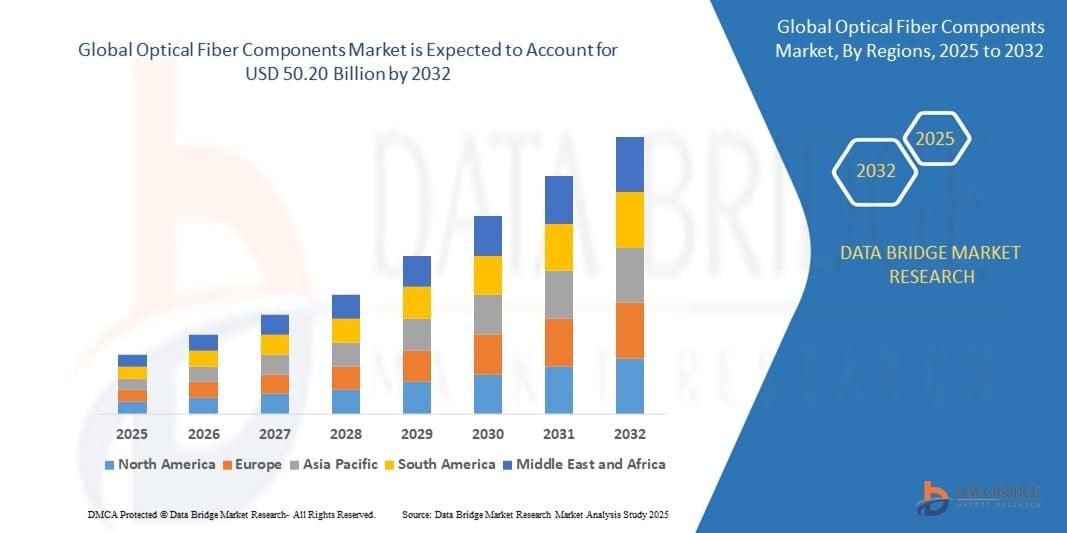
According to the latest report published by Data Bridge Market Research, the Optical Fiber Components Market The global optical fiber components market size was valued at USD 26.53 billion in 2024 and is expected to reach USD 50.20 billion by 2032, at a CAGR of 8.3% during the forecast period An all inclusive Optical Fiber Components Market document...
Glass breakage can happen without warning, whether due to accidents, storms, break-ins, or structural stress. When it does, the situation becomes urgent not only because of the damage itself but also because of the safety and security risks it creates. This is where 24 Hour Glass Emergency Services in Pearland, TX become essential. Immediate professional response helps protect your home or...

The online betting industry keeps rapidly evolving. 2026 could end up being an extraordinary year, especially for new entrepreneurs who are looking to enter the betting sector for the first time. With the growth of the global betting industry and the increasing popularity of digital platforms, starting a sportsbook is currently the most doable challenge of all time. Rather than starting from...