


Why AI Strategy Should Come Before AI Development

Artificial Intelligence (AI) is revolutionizing the way businesses operate. From automating repetitive tasks to improving customer experiences and enabling predictive decision-making, AI has become a key driver of digital transformation. However, many organizations rush into AI development without first establishing a clear strategy.
While building an AI solution may seem like the logical first step, successful AI adoption begins long before coding starts. A well-defined AI strategy ensures that technology investments align with business goals, reduces implementation risks, and maximizes long-term return on investment (ROI).
In this article, we'll explore why AI strategy should always come before AI development and how businesses can create a roadmap for successful AI adoption.
What Is an AI Strategy?
An AI strategy is a comprehensive plan that defines how an organization will use artificial intelligence to achieve its business objectives. It outlines priorities, identifies opportunities, assesses available data, and establishes a roadmap for implementation.
A strong AI strategy answers critical questions such as:
- What business problems are we trying to solve?
- Which processes should be automated?
- Do we have sufficient data to train AI models?
- What technology stack should we use?
- How will we measure AI success?
- What are the expected business outcomes?
Without answering these questions, AI development can become expensive, time-consuming, and disconnected from business needs.
Why AI Strategy Should Come Before AI Development
1. Aligns AI with Business Goals
AI should solve real business problems—not exist simply because it's a trending technology.
A strategic approach helps organizations identify where AI can create the greatest impact, whether it's improving customer support, streamlining operations, increasing sales, or enhancing decision-making.
When AI initiatives are tied to measurable business objectives, organizations are more likely to achieve meaningful results.
2. Identifies High-Value Use Cases
Not every business process requires AI.
An effective AI strategy helps prioritize use cases based on:
- Business impact
- Implementation complexity
- Expected ROI
- Data availability
- Operational efficiency
Focusing on high-value opportunities ensures faster wins and better resource utilization.
3. Reduces Development Risks
Developing AI solutions without a clear strategy often leads to:
- Poor project planning
- Budget overruns
- Delayed timelines
- Low user adoption
- Ineffective AI models
Strategic planning minimizes these risks by defining clear objectives, success metrics, and implementation phases before development begins.
4. Ensures Data Readiness
AI systems rely on high-quality data.
An AI strategy evaluates:
- Data quality
- Data availability
- Data governance
- Privacy requirements
- Compliance standards
Organizations that prepare their data before development are more likely to build accurate and reliable AI models.
5. Maximizes Return on Investment (ROI)
AI projects require significant investments in technology, talent, and infrastructure.
A strategic roadmap ensures these investments are directed toward initiatives that deliver measurable business value.
Organizations with clear AI strategies often experience:
- Faster implementation
- Lower operational costs
- Higher productivity
- Improved customer experiences
- Greater scalability
6. Creates a Clear Implementation Roadmap
An AI strategy defines every stage of the AI journey, including:
- Business assessment
- Opportunity identification
- Data preparation
- Technology selection
- AI model development
- System integration
- Deployment
- Performance monitoring
This structured approach reduces uncertainty and keeps projects on schedule.
7. Improves Collaboration Across Teams
AI implementation affects multiple departments, including IT, operations, HR, marketing, sales, and finance.
A shared AI strategy ensures all stakeholders understand:
- Project objectives
- Roles and responsibilities
- Expected outcomes
- Implementation timelines
Cross-functional collaboration increases adoption and project success.
8. Supports Scalable AI Adoption
Many organizations start with one AI project but later expand AI across the business.
A strategic foundation enables scalable growth by establishing:
- Standardized processes
- Technology architecture
- Governance frameworks
- Integration standards
- Long-term AI vision
This prevents fragmented AI initiatives and unnecessary redevelopment.
9. Addresses Security and Compliance
AI solutions often process sensitive business and customer data.
An AI strategy helps organizations address:
- Data privacy regulations
- Security policies
- Ethical AI practices
- Risk management
- Compliance requirements
Planning for security early reduces legal and operational risks.
10. Enables Continuous Improvement
AI is not a one-time implementation.
Successful AI strategies include plans for:
- Performance monitoring
- Model retraining
- User feedback
- Feature enhancements
- Ongoing optimization
Continuous improvement ensures AI systems remain accurate and relevant as business needs evolve.
The Role of AI Consulting Services
Many organizations lack the in-house expertise needed to create an effective AI strategy.
This is where AI consulting services add value by helping businesses:
- Assess AI readiness
- Identify automation opportunities
- Develop AI roadmaps
- Select the right technologies
- Estimate ROI
- Plan implementation phases
- Ensure governance and compliance
Working with an experienced AI development company in USA can help organizations move from strategy to successful execution with confidence.
Common Mistakes Businesses Make
Organizations often struggle with AI adoption because they:
- Start development without clear objectives
- Ignore data quality issues
- Choose technology before defining business needs
- Focus on trends instead of value
- Underestimate change management
- Lack measurable success metrics
Avoiding these mistakes begins with a well-defined AI strategy.
How to Build an Effective AI Strategy
Follow these steps to create a successful AI roadmap:
1. Define Business Objectives
Identify the problems AI should solve and the outcomes you want to achieve.
2. Assess Current Processes
Evaluate existing workflows to identify automation opportunities.
3. Evaluate Data Readiness
Ensure your organization has accurate, secure, and accessible data.
4. Prioritize AI Use Cases
Focus on projects with the highest business impact and ROI.
5. Select the Right Technology Partner
Work with an experienced AI automation agency in USA or AI consulting company to guide implementation.
6. Develop a Roadmap
Create a phased implementation plan with timelines, milestones, and measurable KPIs.
7. Monitor and Optimize
Continuously measure performance and improve AI solutions over time.
Why Choose Devstringx Technologies?
Devstringx Technologies helps businesses build successful AI initiatives by combining strategic consulting with custom AI development.
Our services include:
- AI Strategy Consulting
- AI Development Services
- AI Automation Services
- AI Agent Development
- Generative AI Solutions
- Workflow Automation
- AI Chatbot Development
- Machine Learning Solutions
- Enterprise AI Integration
We work closely with organizations to identify high-impact AI opportunities, create implementation roadmaps, and develop scalable solutions that deliver measurable business outcomes.
Final Thoughts
AI success starts with strategy—not code. Organizations that define a clear AI vision before beginning development are better positioned to reduce risks, control costs, and achieve measurable business results.
A thoughtful AI strategy helps businesses prioritize the right opportunities, prepare their data, align stakeholders, and build a scalable foundation for future innovation. By partnering with an experienced AI consulting and development partner, companies can transform AI from an experimental initiative into a long-term competitive advantage.
Frequently Asked Questions (FAQs)
1. What is an AI strategy?
An AI strategy is a structured plan that outlines how an organization will use artificial intelligence to achieve its business goals, prioritize use cases, manage data, and measure success.
2. Why is AI strategy important before AI development?
AI strategy ensures that development efforts align with business objectives, reduce implementation risks, improve ROI, and create a roadmap for successful AI adoption.
3. What is the difference between AI strategy and AI development?
AI strategy focuses on planning, identifying business opportunities, and defining implementation goals, while AI development involves building and deploying AI-powered applications and models.
4. How can AI consulting services help my business?
AI consulting services help assess AI readiness, identify use cases, create implementation roadmaps, select technologies, estimate ROI, and guide successful deployment.
5. How long does it take to create an AI strategy?
Depending on the size and complexity of the organization, developing an AI strategy can take anywhere from a few weeks to several months.
6. Who should develop an AI strategy?
Businesses should collaborate with experienced AI consultants, business leaders, IT teams, and stakeholders to create a strategy that aligns with organizational goals and delivers measurable business value.
Nach Verein filtern
Read More
Oddway International help customers safely courier medicines from india to australia, with trusted pharmaceutical shipping services across Sydney, Melbourne, Brisbane, Perth, and Adelaide, kind of straightforward but still serious about it. Our courier medicines from india to australia solutions support patients, hospitals, clinics, and pharmacies who need secure and on time medicine...

A year has passed since Expedition 33 first set sail, and Sandfall Interactive marks the occasion with a gift. While major story expansions remain off the table, the studio offers a fresh wave of anniversary style. New hairstyles await the entire crew, a cosmetic tribute to this journey’s milestone. Gustave’s look is found near the Stone Wave Cliffs, while the rest—Verso,...

According to the latest report published by Data Bridge Market Research, the Optical Spectrum Analyzer Market The global optical spectrum analyzer market size was valued at USD 9.98 billion in 2025 and is expected to reach USD 14.97 billion by 2033, at a CAGR of5.20% during the forecast period DBMR team uses simple language and easy to understand...
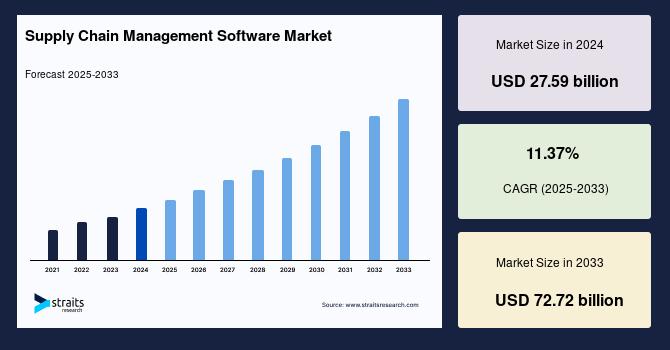
Supply Chain Management Software Industry Outlook: Straits Research has introduced a detailed analytical study on the Supply Chain Management Software Market, offering insights into market valuation, segmentation framework, and long-term growth trajectory. The publication delivers a structured overview of market drivers, constraints, technological advancements, and strategic developments...
"According to the latest report published by Data Bridge Market Research, the Artificial Grass Market The global artificial grass market size was valued at USD 6.19 billion in 2024 and is expected to reach USD 11.15 billion by 2032, at a CAGR of 7.62% during the forecast period DBMR team uses simple language and easy to understand statistical images to...