How Much Should You Budget Before Committing to WhatsApp AI Automation?

Before committing to WhatsApp AI automation, budget for four distinct things: the software itself, WhatsApp's own conversation charges, setup and configuration effort, and ongoing upkeep. Owners often price only the first and get surprised by the rest. The good news is that the total is usually modest relative to the time and sales it recovers, but you should walk in with eyes open. This guide breaks down where the money actually goes so you can set a realistic number.
Cost one: the software model
The biggest budgeting decision is subscription versus ownership. SaaS platforms charge monthly, often scaling with your contact count or feature tier, so your bill grows as you grow. A one-time, self-hosted purchase flips that: you pay once and run it yourself. Over a couple of years the difference can be large, which is why cost-conscious businesses increasingly weigh a WhatsApp automation platform you buy once against the compounding total of a subscription. Neither is universally cheaper, it depends on your volume and time horizon, but you should model both.
Cost two: WhatsApp's own charges
Separate from any platform, Meta charges for conversations on the WhatsApp Business API, and the pricing varies by conversation type and country. This is easy to forget because it is not on the software vendor's invoice, but it is a real line item, especially if you send marketing messages at volume. Budget for it based on your expected message mix. Running automation on the WhatsApp Business API means these conversation fees apply regardless of which platform you choose, so factor them in from day one.
Cost three: setup and configuration
Standing up automation takes some effort even with good software: documenting answers, building flows, getting templates approved, and testing. If you do it yourself, the cost is your time, usually a handful of hours to a few days. If you outsource it, budget for that service. Either way, do not assume zero. The upside is that an automation system that is quick to configure keeps this cost low, whereas a fiddly one can quietly consume a week you did not plan for.
Cost four: ongoing upkeep
Automation is not entirely hands-off. Someone should review what it handles, refine answers, and adjust as your business changes. This is minor, an hour here and there, but it is real, and it is worth acknowledging in your budget as time rather than money. Choosing a WhatsApp automation tool you can maintain yourself keeps this in-house and cheap, avoiding per-change vendor fees that some platforms charge for adjustments.
Watch for the hidden costs
The expenses that ambush owners are almost always the ones outside the software invoice. WhatsApp's own conversation fees are the classic surprise, but they are not alone. Template rejections can cost you time if your messaging is not written to Meta's rules. Poorly designed flows can send more paid conversations than necessary, quietly inflating your bill. And if you choose a platform that charges for every adjustment, the cost of simply keeping your automation current adds up. Budgeting well means naming these before they appear, not discovering them on a statement at the end of the month. It also pays to budget a little for learning: the first month of any automation involves refinement, tightening answers, fixing awkward flows, adjusting tone, and that time is part of the true cost of getting value. Owners who plan for it treat early imperfections as expected tuning rather than failures, and their automation reaches its full return faster.
How to size your total number
Add it up: software (monthly or one-time), estimated WhatsApp conversation fees for your volume, a one-off setup allowance, and a small ongoing upkeep buffer. Then compare that total against what automation saves, hours reclaimed and enquiries recovered. For most small and mid-sized businesses the recovered value comfortably exceeds the cost, particularly when you avoid a recurring subscription. If you want predictability, a platform you own outright makes the long-run budget far easier to forecast than usage-based billing.
The budgeting bottom line
Do not budget for software alone. Plan for the platform, WhatsApp's conversation charges, a modest setup investment, and light ongoing upkeep, and you will avoid the unpleasant surprises that catch unprepared adopters. Once you see the full picture, the decision usually gets easier, not harder, because the numbers reveal that automation is affordable and that ownership, for many, keeps it that way over time. Enter the commitment with a complete budget, and WhatsApp AI automation becomes a controlled investment rather than an open-ended expense.
Categories
Read More
Améliorations de la version 1.1 La mise à jour 1.1 de Genshin Impact introduit plusieurs changements de qualité de vie qui répondent aux retours des joueurs. Le plafond de la Résine originelle est augmenté de 120 à 160 unités, offrant plus de flexibilité pour stocker l’énergie nécessaire aux défis. Cette...

To gain insight into the IVF Cost in Delhi, fertility treatment couples need to know the cost of IVF. IVF may be expensive based on a number of variables, including medical condition, complexity of treatment, medications and other procedures. In Sehgal Nursing Homes, we specialise in the delivery of clear and inexpensive IVF services without any compromise on quality. The cost of IVF in Delhi...

Gum recession is a common dental concern that affects many adults, often without noticeable symptoms in the early stages. If you are experiencing sensitivity, changes in the appearance of your smile, or discomfort along the gumline, you may be dealing with gum recession in Milton-Freewater, OR. The good news is that with timely care and the right treatment approach, gum recession can be managed...

Triple Green Farms CBD Gummies are edible supplements infused with cannabidiol (CBD), a naturally occurring compound derived from the hemp plant. Unlike THC, CBD is non-psychoactive, meaning it does not produce a “high.” These gummies are designed to deliver a pre-measured dose of CBD in a flavorful and chewable form, making them an appealing option for both beginners and...

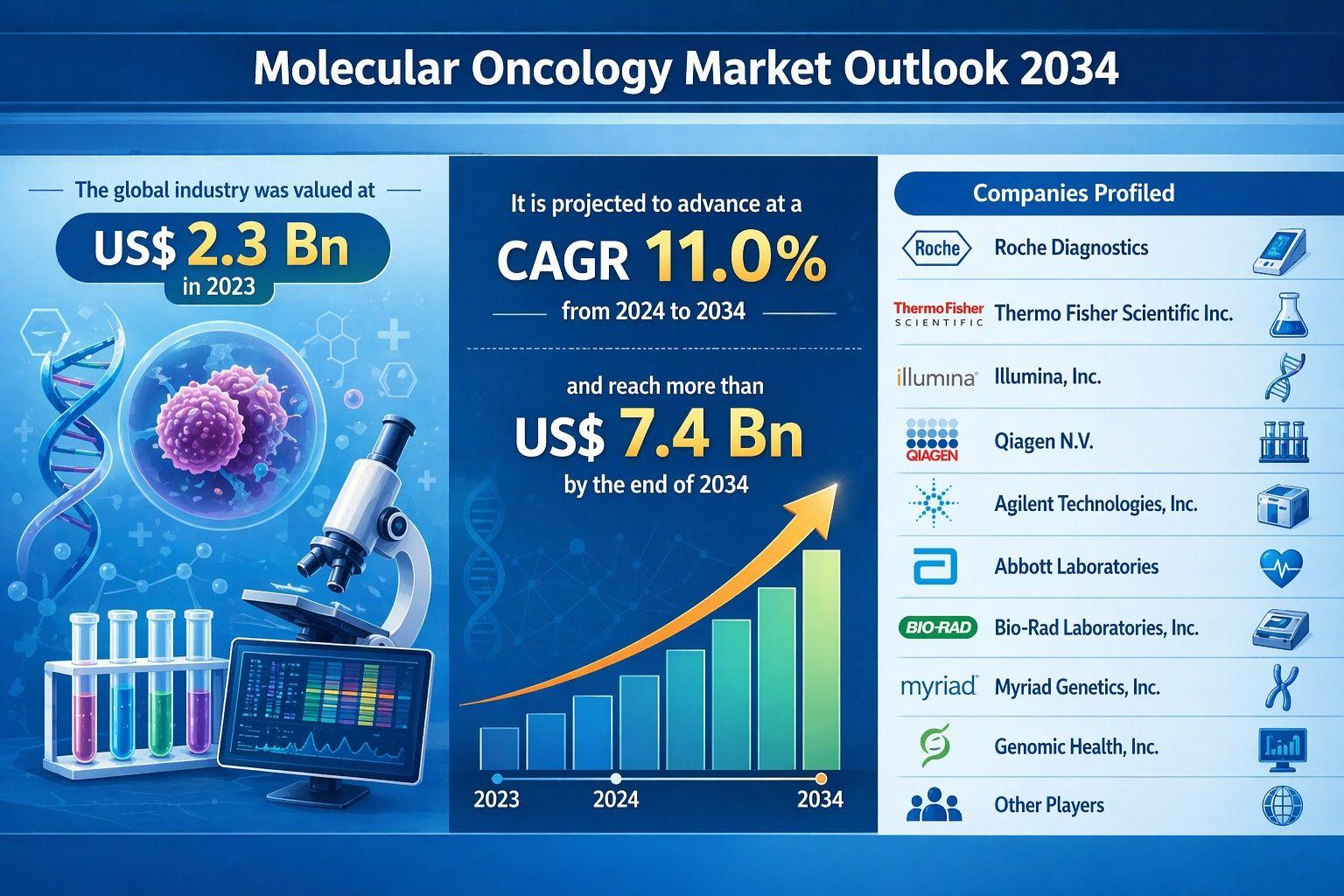
The global molecular oncology market is entering a transformative phase, driven by rapid advancements in genetic research and precision medicine. Valued at US$ 2.3 Bn in 2023, the industry is projected to expand at a robust CAGR of 11.0% between 2024 and 2034, surpassing US$ 7.4 Bn by the end of the forecast period. This strong growth trajectory reflects the increasing importance of...