Food Ordering App Development for Startups: Build, Buy, or Subscribe?

Every food startup reaches the same fork in the road. You have validated demand, you have restaurants or a kitchen ready to go, and now you need software. Food ordering app development comes in three distinct flavors: build a custom app from scratch, buy a ready-made clone script, or subscribe to a SaaS platform. Each path has a different price tag, timeline, and ceiling.
Pick wrong and you either burn 12 months of runway on features nobody asked for, or you hit a growth wall in year two because you never owned your code. This guide breaks down all three options with real numbers so you can decide in one sitting.
The Three Paths at a Glance
Before diving into details, here is how food ordering app development options differ at the highest level:
• Custom build: You hire a team to design and code everything from a blank page. Maximum control, maximum cost.
• Ready-made clone script: You buy pre-built, white-label source code modeled on proven apps like UberEats or Zomato, then rebrand and customize it.
• SaaS subscription: You rent access to a hosted ordering platform and pay monthly, with little to no code ownership.
Option 1: Custom Build - Full Control at Full Price
A custom build means every screen, API, and database table is written for you. Typical budgets run $60,000 to $200,000 for a customer app, restaurant panel, driver app, and admin dashboard. Timelines stretch 6 to 12 months before your first real order.
When custom makes sense
Custom food ordering app development fits startups with unusual workflows that off-the-shelf products cannot model - think multi-day meal subscriptions, ghost kitchen routing algorithms, or B2B catering with approval chains. If your differentiation lives in the software itself, custom is worth the premium.

The hidden costs
Beyond the build, budget 15-20% of the original cost per year for maintenance, OS updates, and security patches. You also carry all the risk of bugs discovered in production.
Option 2: Ready-Made Clone Script - Speed With Ownership
A clone script is pre-written, tested source code that replicates the feature set of established delivery apps. A reliable online food ordering app development company will sell you the full package - customer app, driver app, restaurant panel, admin dashboard - with your branding applied, typically for $5,000 to $25,000 depending on customization depth.
Launch timelines shrink to 2 to 6 weeks because 80-90% of the work is already done. Crucially, reputable vendors hand over 100% source code ownership, so you can modify anything later with your own developers.
What to verify before buying
• Full source code transfer in writing, not a license to use
• Apps already live on the App Store and Play Store as proof
• Free bug-fix support window of at least 3-6 months
• A scalable stack (for example Flutter or React Native frontends with Node.js or Laravel backends)
Option 3: SaaS Subscription - Lowest Entry, Lowest Ceiling
SaaS ordering platforms charge $50 to $500 per month plus, often, per-order fees of 1-3%. You get a working system in days with zero development effort. The trade-offs are real, though: you never own the code, your data lives on someone else's servers, deep customization is impossible, and per-order fees scale painfully. At 10,000 orders a month with a $25 average ticket, a 2% platform fee costs $5,000 monthly - $60,000 a year in perpetual rent.
Decision Matrix: Build vs Buy vs Subscribe
|
Factor |
Custom Build |
Clone Script |
SaaS |
|
Upfront cost |
$60,000-$200,000 |
$5,000-$25,000 |
$0-$1,000 |
|
Time to launch |
6-12 months |
2-6 weeks |
1-7 days |
|
Code ownership |
Full |
Full (with right vendor) |
None |
|
Customization |
Unlimited |
High |
Low |
|
Ongoing cost |
Maintenance retainer |
Optional support plan |
Monthly + per-order fees |
|
Scaling ceiling |
None |
None |
Platform-dependent |
Recommendations by Startup Stage
Idea stage: validate first
If you are still testing whether customers will order, start with SaaS or even a WhatsApp-plus-payment-link workflow. Do not spend on food ordering app development until orders prove the model.
Validated and funded: clone script
Once you have repeat customers and a launch budget, a clone script is the rational middle path in 2026. You get ownership and speed at roughly one-tenth the custom price, and you preserve runway for marketing - which decides winners in food delivery far more often than code does.
Scaling with unique tech needs: custom or hybrid
If you are processing thousands of daily orders and your roadmap demands proprietary features, either commission a custom build or extend your clone script codebase - a major advantage of having owned it from day one.
Frequently Asked Questions
How much does food ordering app development cost for a startup?
Expect $5,000 to $25,000 for a white-label clone script with branding and moderate customization, $60,000 to $200,000 for a fully custom build, or $50 to $500 per month for SaaS. Final pricing depends on platforms covered, feature depth, and third-party integrations like payment gateways and mapping services.
Do clone scripts have legal problems?
No. A clone script copies a business model and feature set, not protected code or branding. Business models cannot be copyrighted. As long as your vendor wrote the code themselves and you apply your own brand name, logo, and design identity, launching a clone-based app is completely legal in virtually every market.
Can I migrate from SaaS to my own app later?
Yes, and many startups do exactly that around the 500-orders-per-month mark. The main friction points are exporting customer data, rebuilding loyalty balances, and re-acquiring app installs. Plan the migration during a slow season and run both systems in parallel for two to four weeks to avoid losing orders.
How long does a white-label app take to launch?
A typical white-label launch takes 2 to 6 weeks. That covers branding, color and logo changes, payment gateway configuration for your country, app store submission, and testing. Heavier customization, such as new modules or third-party POS integrations, can extend the schedule to 8-10 weeks depending on complexity.
What ongoing costs should I budget after launch?
Plan for server hosting ($100-$500 monthly at startup scale), annual app store fees ($99 for Apple, $25 one-time for Google), SMS and map API usage, and a support retainer if you lack in-house developers. Most funded startups budget $500 to $2,000 per month all-in for the first year.
Категории
Больше
British Comedy and Dramedy Highlights While describing this sitcom as a British equivalent of "Seinfeld" might be a stretch, it undeniably boasts sharp humor and clever storytelling. The show weaves together multiple storylines, often parodying pop culture and plunging into hilarious, absurd scenarios. Its trio of main characters, including creator Dylan Moran and later "Episodes" star Tamsin...

Healthcare procurement strategies often begin with evaluating Nintedanib 150 mg Price to balance sourcing requirements, inventory planning, and supplier reliability. Hospitals, distributors, and pharmacies in the Philippines also compare Nintedanib Cost while selecting procurement partners for specialty respiratory medicines. A trusted Medicine Supplier in the Philippines can help organizations...

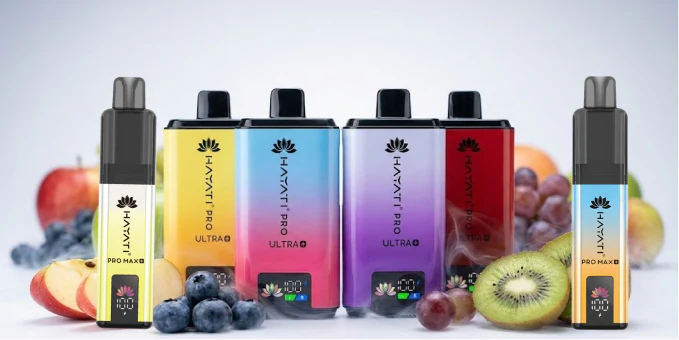
Hayati Pro Max: Powerful Performance, Rich Flavours, and a New Standard for Modern Vaping The vaping market in the UK has grown rapidly over the last few years, with users constantly searching for devices that combine performance, convenience, and flavour quality. Among the products attracting attention from modern vapers, the Hayati Pro Max has established itself as a strong contender in the...
Europe Dental Membrane and Bone Graft Substitute Market According to the latest report published by Data Bridge Market Research, the Europe Dental Membrane and Bone Graft Substitute Market Data Bridge Market Research analyses that the dental membrane and bone graft substitute market which was USD 423.96 million in 2022, is expected to reach USD 876.27 million by 2030, at a CAGR of...

Forex trading has come a long way, and in 2026, traders are no longer limited by small margins or slow-moving opportunities. With the rise of high-leverage platforms, especially those offering 1000x leverage, even beginners now have the chance to explore global markets with greater flexibility. But with great opportunity comes the need for smart decisions, the right tools, and a reliable...