Dioctyl Sebacate and the Invisible Cold-Weather Infrastructure Keeping Cables, Seals and Machines Flexible Below Zero
A material can be commercially small yet operationally decisive. Dioctyl sebacate belongs to that category. It rarely appears on a vehicle badge, cable label or factory dashboard, but it determines whether selected polymer components bend, seal and transmit power when temperature falls. Its real story is therefore not “another plasticizer.” It is the infrastructure of flexibility: farms producing castor feedstock, sebacic-acid plants, esterification reactors, polymer-compounding lines, qualification laboratories and high-reliability end uses connected by one performance requirement—avoid brittleness.
The molecule starts with a measurable manufacturing equation
Dioctyl sebacate is produced by reacting one molecule of sebacic acid with two molecules of 2-ethylhexanol. Molecular-weight arithmetic converts that chemistry into plant economics. Producing one theoretical tonne requires roughly 474 kilograms of sebacic acid and 610 kilograms of 2-ethylhexanol, while generating about 84 kilograms of reaction water. A 10,000-tonne annual unit therefore needs approximately 4,740 tonnes of acid, 6,100 tonnes of alcohol and sufficient separation infrastructure to remove nearly 840 tonnes of water before final polishing.
This makes feedstock integration important. Sebacic acid commonly originates from castor-oil chemistry, while 2-ethylhexanol comes from the petrochemical oxo-alcohol chain. The product consequently connects agricultural and refinery-linked systems. A supply interruption on either side can stop the same ester reactor. Manufacturers reduce this risk through dual sourcing, heated storage, batch scheduling and inventory buffers. At 30 operating days of feedstock cover, the illustrative 10,000-tonne plant would hold around 390 tonnes of sebacic acid and 500 tonnes of 2-ethylhexanol.
A six-stage plant, not a single reaction vessel
Commercial infrastructure extends beyond esterification. A typical line requires reaction, excess-alcohol recovery, neutralisation, washing or dewatering, adsorption, filtration and finished-product storage. Even at 95% net yield, a plant targeting 10,000 saleable tonnes must process feedstock for about 10,526 tonnes of theoretical output. That 526-tonne gap represents the annual burden of conversion losses, residues, off-specification batches and handling losses.
Quality creates another layer of capital intensity. Industrial material may be accepted near 98% purity, while sensitive formulations often target 99% or higher diester content. Moving one percentage point upward sounds minor, but it requires tighter temperature control, better vacuum recovery, cleaner filtration and more laboratory testing. For a 40-tonne batch, a 1% impurity reduction means removing or preventing 400 kilograms of non-target material.
Why cold changes the purchasing decision
The strongest commercial argument for Dioctyl sebacate is measurable at low temperature. Manufacturer testing has reported a brittle point near minus 56°C for a DOS-plasticized vinyl formulation, compared with approximately minus 30°C for a comparable DOP system. That 26°C performance gap can separate a cable that coils from one that cracks. The same testing showed plastisol viscosity at roughly one-third of a comparable DOP-based system, improving pumping, coating and mould-filling behaviour.
Heat-aging data explains why formulators do not evaluate cold flexibility alone. After three days at 121°C, the tested DOS formulation recorded about 7% weight loss, versus 34% for DOA and 20% for DOP. The result is not universal for every compound, but it demonstrates the engineering trade-off: the selected ester must remain flexible at sub-zero temperatures without disappearing rapidly during heat exposure.
The market value sits between volume chemicals and qualification-heavy specialties
According to DataVagyanik, the global Dioctyl sebacate market is valued at USD 297.20 million in 2026 and is forecast to reach USD 647.15 million by 2035, representing a 9.03% compound annual growth rate. The trajectory reflects rising consumption in cold-flexible PVC, specialty elastomers and synthetic ester lubricants, together with higher realised prices for purified grades. The numbers also show why capacity decisions remain selective: this is large enough to support dedicated production campaigns, but too specialised for indiscriminate commodity-scale expansion.
One formulation decision can be quantified per tonne
Dioctyl sebacate is often most rational as a targeted performance component rather than the entire plasticizer package. Consider a simplified compound containing 100 parts PVC resin and 10 parts DOS. Ignoring other additives, each tonne of the blend contains about 91 kilograms of DOS. Increasing the loading to 20 parts raises consumption to roughly 167 kilograms per tonne. The extra 76 kilograms must earn its place through lower brittle temperature, easier processing or longer service life.
This formulation logic explains why demand is application-led. A flooring producer operating indoors at 15°C may not pay the premium. A cable maker qualifying for minus 40°C has a different cost equation. If a rejected 5-tonne cable batch costs USD 15,000 in materials and processing, spending an additional USD 500–1,000 on a low-temperature plasticizer package can be economically rational when it materially reduces failure risk.
Electric mobility converts small dosage into industrial tonnage
The International Energy Agency reported that nearly 22 million electric cars were produced in 2025 and expects around 23 million electric-car sales in 2026. Every vehicle adds wiring, connectors, sensor circuits and thermally exposed polymer components, although not all require sebacate chemistry.
A conservative adoption scenario shows the leverage. Assume only 5 kilograms of relevant flexible polymer compound per electric car, with Dioctyl sebacate representing 5% of that compound. Consumption equals 0.25 kilogram per vehicle. Across 23 million vehicles, the theoretical requirement becomes 5,750 tonnes. At USD 3,000 per tonne, that narrow use case alone represents USD 17.25 million of material value—before conventional vehicles, charging cables, industrial wiring or replacement demand are counted.
The hidden logistics are measured in containers and qualification time
Dioctyl sebacate moves through tankers, 1,000-litre totes and drums. At a density near 0.91, one tote carries roughly 910 kilograms; ten totes can supply about 100 tonnes of the illustrative 10-part compound. Delivery is only half the transaction. Dioctyl sebacate undergoes checks for colour, acidity, moisture, ester content and viscosity, so a two-week approval delay can make nearby inventory more valuable than a cheaper distant shipment. Approval timing can determine whether a compounder maintains production or stops its line.
A Kilometre of Cable Turns Formulation into Infrastructure
Cold-resistant power and control cables convert laboratory properties into recurring tonnage. Assume a one-kilometre industrial cable contains 650 kilograms of flexible insulation and sheathing. If the compound includes 8% Dioctyl sebacate, each kilometre consumes 52 kilograms. A 2,000-kilometre wind-farm, railway or mining-cable programme would therefore require about 104 tonnes. At an illustrative delivered price of USD 3,000 per tonne, the ester represents USD 312,000 of chemical spend inside a project whose installed cable value may exceed USD 20 million.
The dosage is small relative to project cost but large relative to failure exposure. Replacing ten kilometres of damaged cable at USD 15 per metre creates a USD 150,000 material bill before excavation, shutdown labour or lost production. This is why qualification departments test bending, tensile retention and insulation performance after thermal cycling. A saving of USD 0.20 per metre disappears if premature replacement costs USD 15 per metre.
Railways, Mines and Polar Facilities Buy Operating Continuity
Outdoor infrastructure experiences repeated rather than constant cold. A cable may move from 20°C during installation to minus 35°C overnight, then warm under electrical load. Over 1,000 temperature cycles, a marginal formulation accumulates fatigue. Dioctyl sebacate helps the polymer matrix remain mobile during these transitions instead of turning every cold start into a crack-initiation event.
Consider a remote mine with 25 mobile machines, each carrying 200 metres of flexible cable. The fleet contains five kilometres of highly stressed cable. At 650 kilograms of compound per kilometre and an 8% inclusion rate, the system holds roughly 260 kilograms of ester. Its chemical value may be below USD 1,000, but one eight-hour interruption at USD 25,000 per hour creates a USD 200,000 loss. The decision is governed by avoided downtime, not plasticizer cost.
Synthetic Lubricants Create a Second Performance Economy
The same molecular structure that supports flexible polymers can contribute low-temperature fluidity to synthetic lubricants and functional fluids. Here, Dioctyl sebacate is assessed through viscosity, pour behaviour, volatility, oxidation resistance and seal compatibility. A formulation engineer may use it within an ester blend, balancing cold start-up against high-temperature retention.
An illustrative 1,000-litre specialty-fluid batch with 30% ester content requires about 273 kilograms, assuming density near 0.91. Producing 5,000 batches annually would consume approximately 1,365 tonnes. If the finished fluid sells for USD 8–15 per litre, yearly output carries USD 40–75 million of sales value, while the Dioctyl sebacate input at USD 3,000 per tonne represents about USD 4.1 million. The chemistry may account for 5–10% of fluid revenue but can determine whether pumps start after prolonged cold soaking.
Aviation Qualification Makes Each Tonne Commercially Heavier
Aviation and defence applications do not reward rapid material substitution. A supplier must demonstrate repeatable composition, low moisture, controlled acidity and stable viscosity. Assume qualification requires three 20-tonne production lots, 30 analytical tests per lot and six months of compatibility work. At USD 150 per test, direct analysis reaches USD 13,500; engineering, documentation and inventory can lift the programme beyond USD 100,000.
Once approved, that cost becomes a barrier to switching. A buyer consuming 100 tonnes annually may retain one source because changing supplier can cost more than a 5% price difference. At USD 3,000 per tonne, a 5% premium equals USD 15,000 a year—far below a six-figure requalification programme. Dioctyl sebacate is therefore sold through traceability and consistency rather than price alone.
Cold-Chain Machinery Extends the Use-Case Map
Refrigerated warehouses and food-processing plants contain door seals, flexible curtains, wiring and lubricant systems exposed to sustained cold. A 20,000-square-metre frozen warehouse may operate 30 loading doors, hundreds of metres of cable and dozens of motors, pumps and fans.
Suppose 2 tonnes of qualifying polymer compound are installed during construction and maintenance each year, with a 6% Dioctyl sebacate dosage. Annual consumption equals 120 kilograms per facility. Across 5,000 comparable sites, theoretical demand reaches 600 tonnes. The material value is modest, yet losing a 1,000-tonne frozen inventory worth USD 2 per kilogram exposes the operator to USD 2 million of product risk. Component reliability therefore sits inside the cold-chain insurance equation.
Producer Competition Is Organised Around Feedstock and Flexibility
Integrated plasticizer manufacturers can run multiple ester products through common reactors, tanks and filtration systems. Specialist producers compete through tighter specifications, smaller orders and application support. Feedstock-linked producers can use access to sebacic acid as a procurement advantage. Dioctyl sebacate production is consequently suited to multipurpose assets rather than plants dependent on one molecule.
For a 20,000-tonne multiproduct ester facility, 80% utilisation gives 16,000 tonnes of annual output. If DOS represents 25% of the campaign schedule, the unit produces 4,000 tonnes. At USD 3,000 per tonne, that line contributes USD 12 million in sales. Raising yield from 95% to 97% recovers about 82 saleable tonnes, adding roughly USD 246,000 in revenue before incremental processing costs.
Inventory Is a Financial Instrument Disguised as a Tank
A compounder consuming 1,200 tonnes of Dioctyl sebacate annually uses 100 tonnes per month. Holding 45 days of stock requires approximately 150 tonnes and ties up USD 450,000. Cutting inventory to 20 days releases roughly USD 250,000 in working capital but reduces protection against shipping delays and plant outages.
If a stopped line loses USD 40,000 per day, six days of interruption destroys USD 240,000—almost equal to the capital released by destocking. At a 10% annual cost of capital, carrying the extra USD 250,000 costs USD 25,000 per year, equivalent to only fifteen hours of downtime.
The Next Growth Phase Will Be Won in Specifications
The future of Dioctyl sebacate will not be decided by replacing every conventional plasticizer. It will be decided one temperature specification, cable approval, lubricant formulation and maintenance contract at a time. The highest-value demand occurs where the penalty for brittleness, viscosity rise or replacement is many times larger than the ester bill.
A few hundred kilograms inside a mine, aircraft-fluid programme or frozen warehouse can protect assets worth millions. The molecule earns adoption when its cost is calculated against service interruption rather than cheaper plasticizer alternatives. In that equation, reliability is not an abstract claim; it is a quantified operating asset.
Categorie
Leggi tutto
Market Overview The natural ferulic acid market was estimated at USD 45.27 million in 2022 and is likely to grow at a CAGR of 6.7% during 2023-2028 to reach USD 66.99 million in 2028. The Natural Ferulic Acid Market Share landscape is influenced by product innovation, distribution capabilities, and expanding regional presence. Leading companies are investing in advanced manufacturing processes...

" According to the latest report published by Data Bridge Market Research, the Fluvoxamine Market The global fluvoxamine market size was valued at USD 1.48 billion in 2025 and is expected to reach USD 2.02 billion by 2033, at a CAGR of 4.00% during the forecast period. The Fluvoxamine Market document has wide-ranging and comprehensive market insights which are based on...

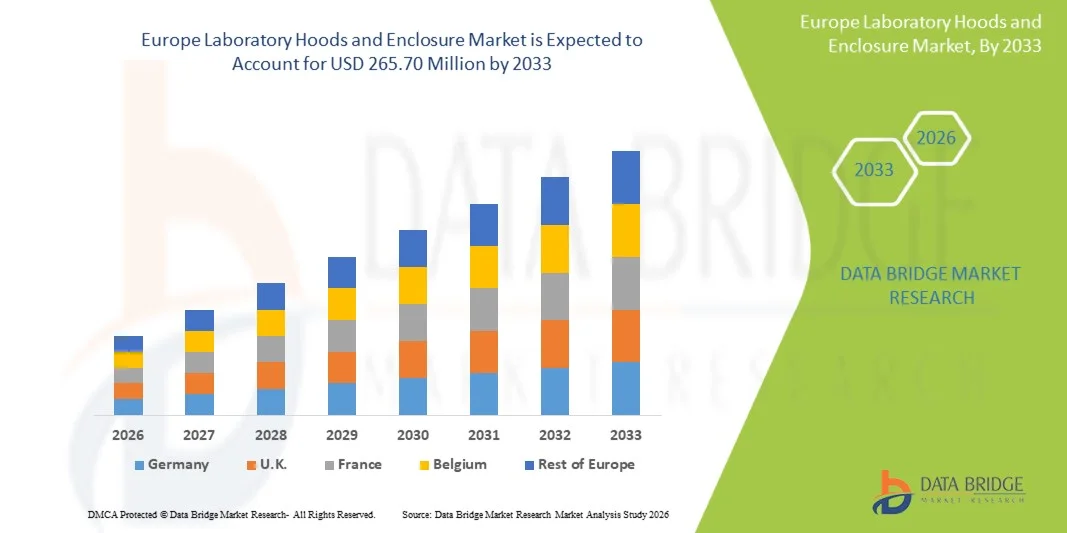
"According to the latest report published by Data Bridge Market Research, the Europe Laboratory Hoods and Enclosure Market The Europe Laboratory Hoods and Enclosure Market size was valued at USD 168.86 Million in 2025 and is expected to reach USD 265.70 Million by 2033, at a CAGR of 5.70% during the forecast period This client-centric, leading edge and...
According to the latest report published by Data Bridge Market Research, the Ceramide Skincare Market CAGR Value The global ceramide skincare market size was valued at USD 534.95 million in 2024 and is expected to reach USD 859.09 million by 2032, at a CAGR of 6.10% during the forecast period The winning Ceramide Skincare...

Podcasting has developed into a strong method which enables people to communicate their thoughts and their personal brand to listeners around the world. The professional podcast recording services provide creators and entrepreneurs and businesses with audio equipment which delivers clear and engaging sound for their podcast episodes. Your audience develops trust and credibility through...