


How Structural Steel Connection Design Services Tend the Hidden Roots of a Steel Frame Before It Ever Breaks Ground

A master gardener does not plant a sapling and hope it grows straight. Long before the first leaf unfurls, the soil has been tested for drainage, the root ball has been carefully untangled, and stakes have been driven to guide the trunk against the prevailing wind. The tree that eventually spreads its canopy over decades owes its quiet strength to those unseen, preparatory hours spent underground. Steel construction follows an identical philosophy, except the sapling is a multi-story frame and the root work is a digital model where Structural Steel Connection Design Services methodically test every load path, untangle every interference, and stake every joint against the forces of wind, gravity, and time. When a project team partners with a dedicated engineering firm like GridsGlobal Steel Detailing LLC, they lock in this deep preparatory work inside a fully coordinated 3D prototype. The result is a steel frame that grows skyward without cutting torches, drift pins, or costly field rework, regardless of structural complexity or geographic location.
Digital Prototyping and a Fully Detailed Bill of Material
Modern structural designs have departed from the era of simple, box-like bays. Sloping columns, irregular bracing grids, deep transfer trusses, and heavily congested mechanical, electrical, and plumbing services create a spatial puzzle that flat 2D shop drawings cannot solve. Detailing specialists address this challenge by constructing richly populated 3D BIM models that act as exact digital replicas of the finished steel frame. Inside these coordinated virtual environments, every cope, stiffener, bolt hole, and weld preparation is placed precisely where it will appear during fabrication, down to the millimeter. The model becomes the single source of dimensional truth for the entire project team.
Once the digital twin stands complete, the team runs a rigorous series of constructability checks directly within the model. They confirm that a welding gun can physically access the back face of each stiffener. They measure the swing arc of a torque wrench to guarantee that every bolt in a group can be tightened without obstruction. They verify that the natural accumulation of mill and fabrication tolerances will actually assist the ironworker during erection rather than create hidden fit-up conflicts. These virtual checks catch problems that would otherwise surface only when a beam hangs from a crane hook, burning through schedule and contingency funds.
After all checks pass, the validated model data flows directly into CNC beam lines, plate processors, and drill stations, producing shop drawings of absolute mathematical precision. Fabrication shops then cut, drill, and weld thousands of individual components with such repeatable accuracy that each piece arrives on site tagged, labeled, and ready for immediate bolt-up. Field grinding, hole reaming, and corrective welding are entirely eliminated from the schedule.
Running alongside this digital assembly, the model automatically extracts a comprehensive Bill of Material (BOM). This document itemizes every structural shape, plate thickness, high-strength bolt grade, and welding consumable, organized by unique piece mark. The BOM goes far beyond a simple shopping list; it becomes the engine that powers procurement. Supply chain managers use it to synchronize mill orders perfectly with shop production sequences. Fabricators know the exact tonnage of each profile required, accounting for every cut-off, stiffener, and base plate. This granular control eliminates the two most persistent budget drains in steel fabrication: material shortages that idle production bays, and surplus stockpiles that inflate carrying costs and tie up working capital. Across multiple fabrication facilities, the BOM serves as the master tracking document, ensuring that each truckload arriving on site matches the planned erection sequence and that no critical part ever falls out of a sprawling international supply chain. The precise digital environments that support such accurate BOM generation are built by professional Structural Steel Detailing Services.
Connection Performance Validation and a Transparent Bill of Quantity
Watching a steel beam settle cleanly onto its column and slide home without resistance passes only the first structural test. The second, far more demanding test asks whether that same connection can safely absorb decades of dead loads, live loads, wind pressures, and seismic events without any part of the joint exceeding its factored design capacity. Connections are the concentrated stress arteries where forces change direction, and their behavior under combined loading requires a depth of analytical scrutiny that goes far beyond a quick bolt count or a rule-of-thumb guess.
During the connection design phase, engineers methodically investigate every potential failure mechanism. They calculate prying forces that could lever an end plate away from a column flange. They trace block shear paths through beam webs. They check for web crippling under concentrated bearing loads, and evaluate bolt groups for tension fatigue under cyclic wind or seismic loading. All of this analysis proceeds within the strict framework of internationally recognized design codes, leaving no room for guesswork. Only after this exhaustive process do the engineers lock down the exact end plate thicknesses, stiffener layouts, bolt spacings, and fillet weld leg sizes that safely permit natural beam end rotation while holding lateral drift within permissible limits. For teams looking to sidestep recurring pitfalls, Structural Steel Connection Design Services also offer focused guidance on the errors that most frequently compromise beam-to-column interfaces.
This same analytical discipline simultaneously generates a detailed Bill of Quantity (BOQ) that categorizes each connection type by unit count, estimated labor hours, fastener tally, and any special welding or nondestructive testing requirements. The BOQ transforms what is often a vague budget line item for "connections" into a fully transparent, line-by-line expense. Armed with that level of granular detail, estimators can sharpen their bid accuracy to a fine edge. Project controllers can build cash flow forecasts grounded in measurable engineering quantities rather than broad percentage allowances that frequently spark disputes during progress meetings. International stakeholders, from lenders to joint-venture partners, receive financial reports that trace every connection dollar back to a verifiable design output. Additionally, Structural Steel Connection Design Services that incorporate custom seismic detailing add an extra layer of resilience for structures located in active earthquake zones.
Comprehensive Structural Steel Detailing Services keep this BOQ, the BOM, and the fabrication drawings perfectly synchronized within the same coordinated digital model. There is no disconnect between what the engineer analyzed, what the procurement team ordered, and what the shop floor will produce. Every team member, from the connection designer to the erection foreman, works from a single source of truth, eliminating the data fragmentation that so often plagues complex, multi-country projects.
Capital Safeguards and a Streamlined Material Supply Chain
When project teams push spatial coordination and connection analysis to the margins of the planning process, they expose massive capital investments to serious financial jeopardy. Unvalidated load paths or mismatched bolt specifications can embed latent defects that remain dormant until the moment a beam swings into position and refuses to fit. The crane holds the load, the schedule begins to slip, and the cost of correcting the error in the field often multiplies tenfold compared to catching it within the digital model. Such shocks drain profit margins, push back turnover dates, and introduce unnecessary safety hazards for the ironworker crews working at height.
Choosing a path of total structural foresight removes that exposure entirely. Flawless digital coordination prevents the familiar cascade of costs tied to field rework, schedule extensions, and liquidated damages. The tightly integrated BOM and BOQ workflows add another robust layer of budget protection. By slashing material waste, closing procurement gaps, and enabling just-in-time deliveries that keep on-site storage footprints small, they allow project teams to operate with lean, predictable efficiency. Fabrication shops can batch similar connection types together for production speed, and erection supervisors can schedule crane picks and crew rotations with full confidence that every steel assembly will arrive complete, dimensionally accurate, and ready to bolt into place.
Engineering Stewardship for Generational Infrastructure
Delivering landmark commercial and industrial facilities leaves no room for rough approximations or unchecked spatial assumptions. The combination of exhaustive digital prototyping, rigorous connection validation, and meticulous material quantification creates the strongest possible defense against structural underperformance. By upholding that uncompromising technical standard from the earliest stages of a project, developers and contractors secure the smooth delivery of resilient, future-ready assets designed to serve their communities safely for decades.
To begin shaping a tailored constructability strategy for your next major initiative, including full BOM compilation, BOQ structuring, and advanced model coordination, visit our contact us page.
Corporate Contact Information
United States Operations
GRIDSGLOBAL STEEL DETAILING LLC
Address: 1207 Delaware Ave, Unit 2877, Wilmington, DE 19806
Phone: +1 (302) 231-1850
Email: info@gridsglobal-detailing.com
Website: https://gridsglobal-detailing.com/
Categorias
Leia mais
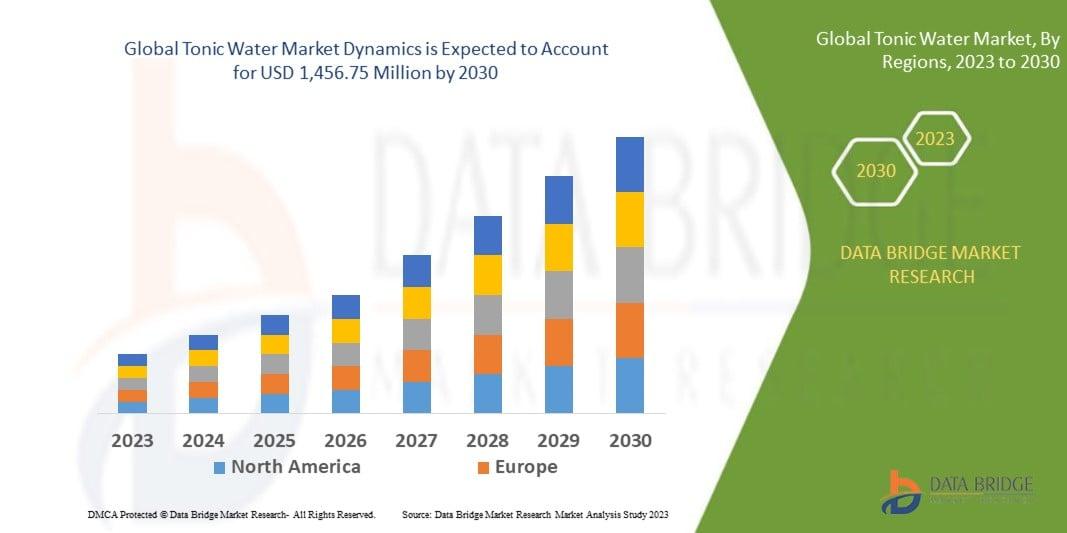
Tonic Water Market: According to the latest report published by Data Bridge Market Research, the Tonic Water Market Data Bridge Market Research analyses that the global tonic water market was valued at USD 901.64 million in 2022, and is expected to reach the value of USD 1,456.75 million by 2030, at a CAGR of 7.2% during the forecast period of 2023 to 2030. The market research data...
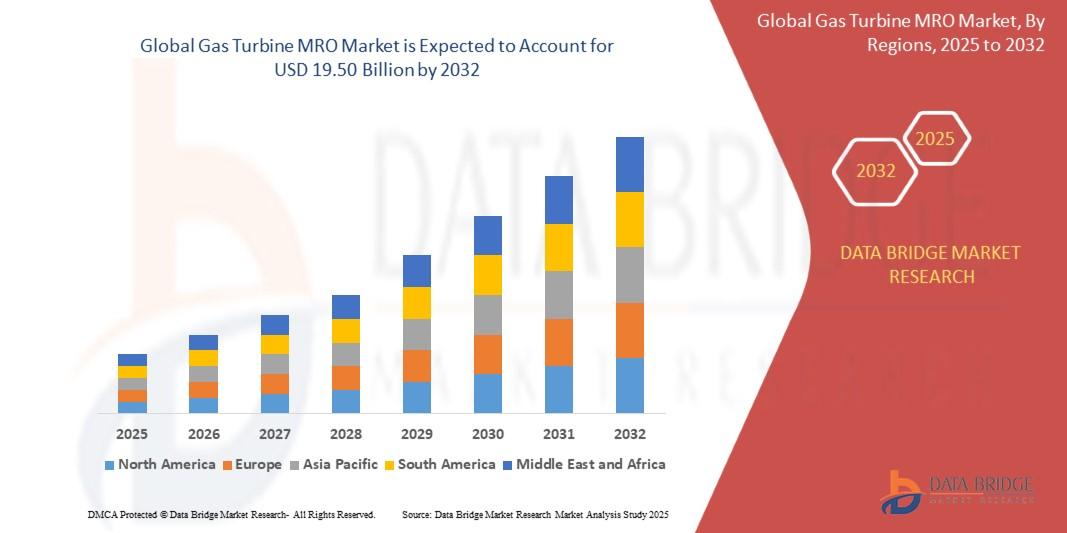
"Market Trends Shaping Executive Summary Gas Turbine MRO Market Size and Share Global gas turbine MRO market size was valued at USD 11.90 billion in 2024 and is projected to reach USD 19.50 billion by 2032, with a CAGR of 6.40% during the forecast period of 2025 to 2032.This Gas Turbine MRO Market report covers a myriad of aspects of the market analysis that many businesses call for....
Le casino sans verification s’inscrit dans une évolution globale des usages digitaux où les utilisateurs privilégient des plateformes moins intrusives. En éliminant les procédures d’identification classiques, le casino sans vérification répond à une demande croissante d’autonomie et de contrôle des...

In the rapidly growing world of online platforms, LC88 has quickly made a name for itself as a user-friendly and dependable destination for visitors seeking smooth and engaging experiences. From the moment someone lands on LC88, they are greeted with a clean and intuitive interface designed to make navigation effortless. The platform’s layout feels modern and well organized, allowing...
"France Fruit Concentrate Market Summary: According to the latest report published by Data Bridge Market Research, the France Fruit Concentrate Market France Fruit Concentrate Market size was valued at USD 935.27 million in 2024 and is projected to reach USD 1081.90 million by 2032, with a CAGR of 1.47% during the forecast period of 2025 to 2032. The supreme France Fruit Concentrate...