


The Penetration Testing Checklist Every Indian E-commerce Brand Urgently Needs
A Single Checkout Flaw Can Cost an Entire Sales Season
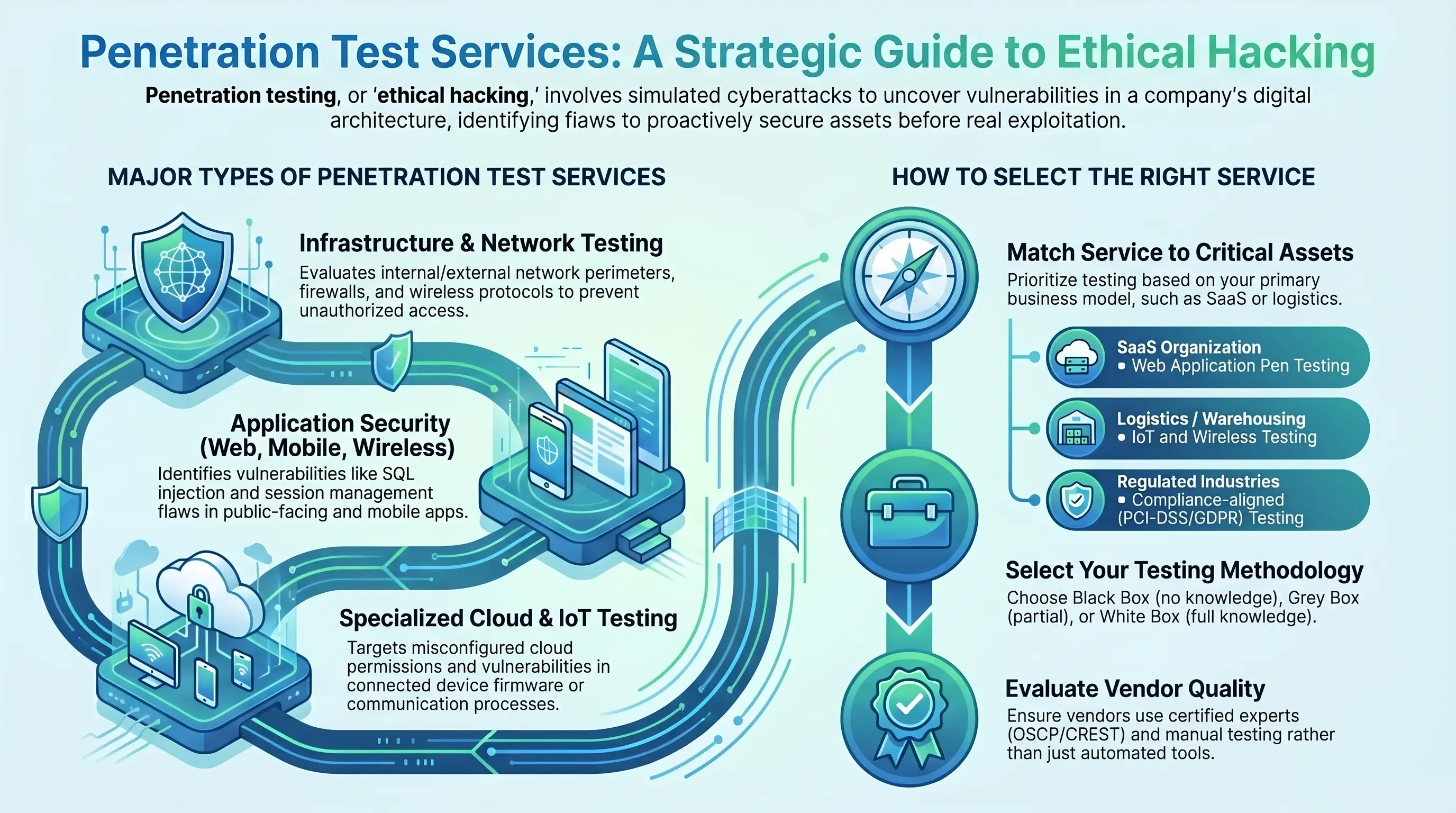
Indian e-commerce brands live and die by traffic spikes during sale seasons, and that same traffic makes checkout systems, payment gateways, and customer accounts irresistible targets for attackers. A single exploited flaw during peak shopping days can mean stolen customer data, fraudulent orders, and a trust hit that outlasts the sale itself. That's the exact risk penetration testing services are built to catch before launch day, not after.
Why Retail Platforms Face Unique Pressure
Unlike a static corporate website, an e-commerce platform is a living system — constantly integrating new payment methods, third-party logistics APIs, loyalty programs, and marketing plugins. Each integration is a potential new entry point. Add rising customer expectations around data privacy under India's DPDP Act, and retail brands face pressure from both regulators and shoppers to prove their platforms are secure.
Why "It Worked Fine Last Season" Is a Risky Assumption
Retail teams often treat security testing as a one-time launch activity rather than an ongoing discipline. But every new feature, plugin, or payment integration reopens the attack surface. A platform that passed testing a year ago can carry entirely new vulnerabilities today, especially around checkout logic, discount code handling, and third-party API connections added since the last review.
A Practical Penetration Testing Checklist for E-commerce Teams
- Test the checkout and payment flow for logic flaws, not just input validation
- Verify session handling so one customer cannot access another customer's cart or order history
- Assess every third-party integration — payment gateways, shipping APIs, chat widgets
- Check discount code and loyalty point systems for abuse potential
- Confirm mobile app and web platform are both included in scope
- Validate admin panel access controls separately from customer-facing systems
- Schedule testing before major sale events, not just annually
How the Testing Engagement Actually Runs
A structured VAPT engagement starts with scoping the full retail environment — website, mobile app, APIs, and admin systems. Automated scanning using tools like Burp Suite and Nessus surfaces known weaknesses, while manual testers attempt to exploit business logic issues unique to retail, such as price manipulation or coupon stacking. Findings are ranked by CVSS severity, delivered with clear remediation guidance, and followed by retesting to confirm fixes hold before the next high-traffic event.
Where Retail Platforms Commonly Lose Ground
|
Area Tested |
Typical Risk Found |
|
Checkout & payment flow |
Logic flaws allowing price manipulation |
|
Customer accounts |
Broken access between user sessions |
|
Discount/loyalty systems |
Coupon reuse, point manipulation |
|
Third-party integrations |
Inherited vulnerabilities from plugins |
|
Admin dashboards |
Weak or shared administrative credentials |
Benefits That Protect Both Revenue and Reputation
Consistent testing reduces the risk of fraud losses during high-volume sale periods, when attackers specifically time exploitation attempts to blend into legitimate traffic spikes. It also protects brand trust — customers who lose confidence after a breach rarely return, no matter how good the discounts are afterward. For growing retail brands, a documented testing history also builds credibility with payment processors and logistics partners.
Industry Use Case
An e-commerce platform preparing for a major product launch engaged IBN Technologies for a full-scope web and API assessment ahead of go-live. The engagement surfaced access control issues in the customer account system, which were remediated and retested before the platform went live to customers.
Compliance Context
IBN Technologies aligns e-commerce testing with PCI DSS for payment data handling, alongside ISO 27001 and India's DPDP Act requirements, using a hybrid approach that combines automated scanning tools like Qualys and Nessus with manual exploitation by OSCP and CEH-certified testers.
For India's retail brands, a disciplined penetration testing services checklist isn't just a security formality — it's what stands between a record sale season and a very public, very costly failure.
Categorias
Leia mais
A trusted Lotus Cricket Betting Panel Developer offers complete development solutions tailored to the needs of betting operators. From designing user-friendly interfaces to integrating modern technologies, developers ensure that every component of the platform works efficiently. An advanced betting panel enables businesses to manage accounts, monitor transactions, and track user activity from a...

Airport travel depends on timing as much as transportation. Flight schedules follow fixed departure windows, whereas passenger movement changes throughout the day. DFW Security Wait Times help explain these changing conditions by showing the level of activity at security checkpoints. Instead of relying on routine expectations, current wait times provide information based on existing airport...

Property Loan in Delhi: A Smart Way to Fund Your Big Plans So you own a house, a shop, or maybe just a plot somewhere in Delhi, and you suddenly need a big chunk of money. Sounds familiar? A Property Loan in Delhi is probably the first thing your bank RM or a finance-savvy friend will mention. And honestly, it makes sense. Whether you're expanding a business, sending your kid abroad for...

Healthcare organizations are investing heavily in digital transformation, introducing patient portals, electronic medical records, diagnostic applications, telemedicine platforms, and online appointment systems. While these innovations improve patient care, they also increase exposure to cyber threats. Many organizations believe they are adequately protected because they have implemented...
Introduction In today’s competitive environment, small businesses are constantly looking for smarter ways to manage communication and improve customer experience. The rise of AI receptionists has transformed how businesses handle calls, bookings, and inquiries. With advanced platforms like Clone Caller, small businesses can automate front-desk operations without sacrificing...