How does a tyre safety checklist help prevent accidents?
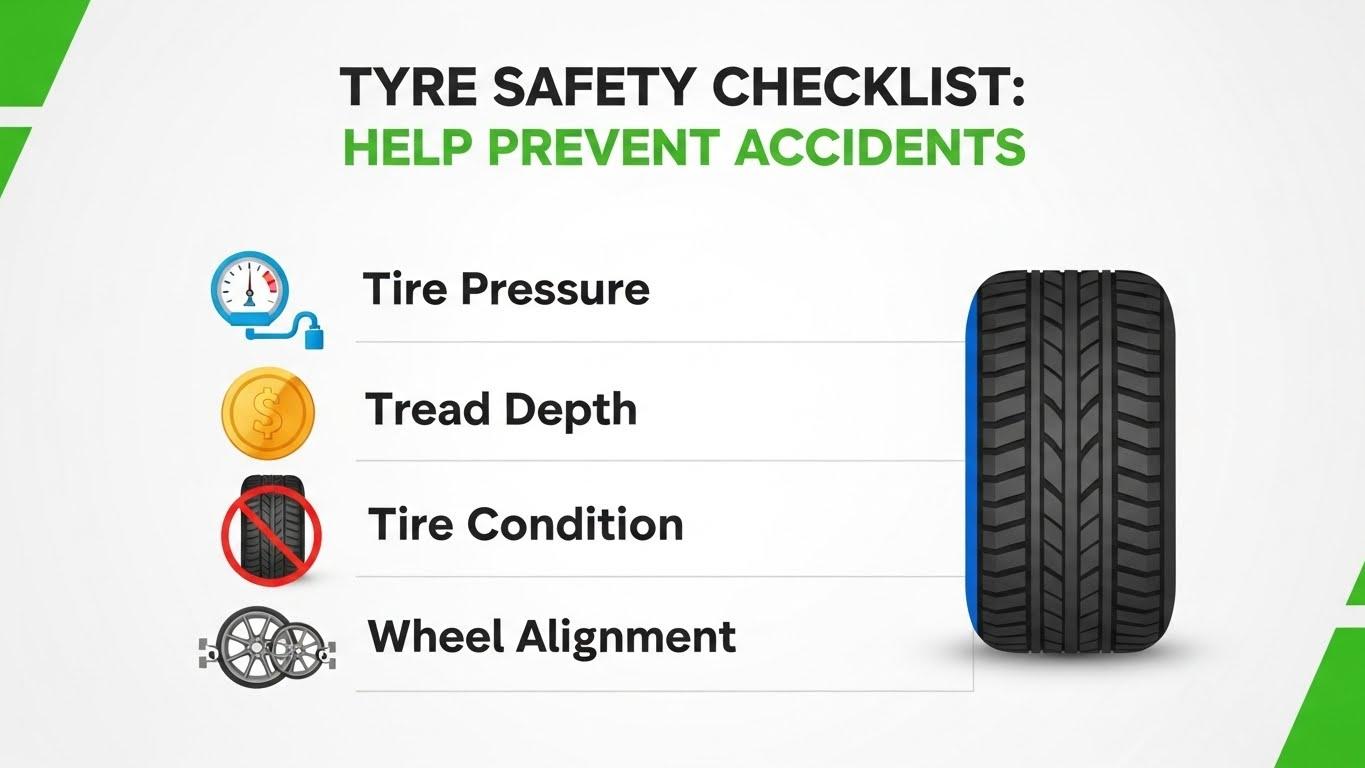
A tyre safety checklist works by catching the early warning signs of tyre wear, poor pressure, structural damage, and performance issues before they turn into dangerous on-road failures. When drivers regularly check tread depth, tyre pressure, alignment, and overall tyre condition, they dramatically reduce the risk of blowouts, skidding, long braking distances, aquaplaning, and unpredictable vehicle handling. In short, a systematic checklist creates a layer of protection between the driver and common accident triggers related to tyre performance.
That principle anchors the entire idea behind tyre safety. A vehicle is only as safe as the tyres it stands on, and this blog unpacks every essential step you need to know to keep your tyres road ready year-round.
What Is a Tyre Safety Checklist?
A tyre safety checklist is a structured routine that helps drivers assess tyre health and performance. It allows you to monitor tread wear, inflation levels, tyre age, wheel alignment issues, and signs of damage. By following it consistently, you maintain optimal grip, stability, braking capability, and fuel efficiency. It is a foundational part of responsible vehicle maintenance and plays a direct role in accident prevention.
Why Tyre Safety Matters
Tyres are the only point of contact between your vehicle and the road. Even the most advanced braking systems, traction controls, or driver assistance features cannot compensate for worn or poorly maintained tyres. Tyre safety influences stopping distance, cornering control, load capacity, wet traction, and emergency responsiveness. Quality maintenance reduces blowout risks, improves tyre lifespan, and enhances overall driving confidence.
Tyre Pressure Check
Maintaining correct tyre pressure is one of the most important components of tyre safety. Underinflated tyres increase rolling resistance, reduce fuel economy, and generate excess heat that can lead to tyre failure. Overinflated tyres reduce road contact and compromise handling.
Check your tyre pressure at least once a month and before long trips. Use a reliable pressure gauge and follow the manufacturer’s recommended PSI. Remember to measure tyres when they are cold. A tyre that is properly inflated delivers better braking performance and stable cornering.
Tread Depth Inspection
Tread depth plays a vital role in road grip, especially on wet or slippery surfaces. Tyres with low tread depth struggle to disperse water which can lead to aquaplaning. Measure tread depth using a tread depth gauge or the built in tread indicators on the tyre. If the tread is worn down to the minimum legal limit, replace the tyres immediately.
Uneven tread wear may signal alignment issues, incorrect inflation, or suspension problems. A routine tread inspection ensures consistent traction and safer braking.
Checking for Tyre Damage
A visual inspection helps identify early signs of tyre damage. Look for cuts, bulges, cracks, embedded objects, or exposed cords. Sidewall damage is particularly dangerous because it compromises structural integrity. If you notice any abnormalities, have the tyre inspected by a professional technician without delay.
Small nails or punctures may be repairable, but large or sidewall punctures typically require full replacement. Ignoring damage can lead to sudden blowouts, one of the leading causes of tyre related road accidents.
Tyre Age Assessment
Even if tyres appear to be in good shape, ageing rubber can harden, crack, and lose flexibility over time. Many experts recommend replacing tyres every six years regardless of tread condition. You can determine tyre age by checking the DOT code on the tyre sidewall, which indicates the week and year of manufacture.
Older tyres may not deliver the same grip or heat resistance as newer ones, increasing the risk of failure during high speed or long distance driving.
Wheel Alignment and Balancing
Proper wheel alignment ensures that your tyres make even contact with the road. Misalignment causes uneven tread wear, drifting steering, vibration, and reduced fuel efficiency. Similarly, wheel balancing prevents shaking at high speeds and reduces strain on suspension components.
Have your alignment and balancing checked whenever you feel unusual vibrations, uneven wear, or after hitting a pothole or curb. Regular checks help prolong tyre life and maintain handling stability.
Rotation and Maintenance Schedule
Tyre rotation promotes even wear across all tyres and enhances overall tyre longevity. Most vehicles benefit from a rotation every five thousand to eight thousand kilometres, depending on driving style and tyre type. Following your manufacturer’s maintenance schedule ensures optimal distribution of wear patterns and prevents premature tyre replacement.
Load Capacity and Driving Habits
Exceeding a tyre’s load rating can cause excessive heat buildup and structural stress. Always stay within the recommended load index and avoid overloading your vehicle. Driving habits also matter. Hard braking, fast cornering, and aggressive acceleration accelerate tyre wear. Smooth driving contributes to longer lasting tyres and safer handling.
Seasonal Tyre Considerations
Different conditions demand different tyre behaviours. In colder climates, winter tyres offer better grip due to softer rubber compounds. In warmer seasons, summer or all season tyres deliver superior performance. Choosing tyres based on your driving environment ensures grip, stability, and braking efficiency remain consistent throughout the year.
Professional Tyre Inspections
While a personal tyre safety checklist is essential, professional inspections provide an added layer of security. Tyre specialists use advanced tools and trained assessments to identify weaknesses the average driver might miss. Services like alignment, balancing, pressure correction, and precision inspections ensure tyres meet road safety standards. For expert tyre care, reliable service centres like Wangara Tyre Auto can help keep your vehicle safe and road ready.
Conclusion
A tyre safety checklist is more than a routine. It is a protective measure that shields drivers from unpredictable hazards. From checking tyre pressure and tread depth to inspecting for damage and maintaining alignment, every step contributes to safer, smoother driving. By staying consistent with your checklist, you reduce accident risks, improve tyre performance, and enhance overall vehicle safety.
Frequently Asked Questions
How often should I check my tyre pressure?
Check tyre pressure once a month and before any long journey.
What is the minimum legal tread depth?
Most regions require a minimum tread depth of around one point six millimetres. Replace tyres sooner if grip feels compromised.
Can a damaged sidewall be repaired?
Sidewall damage is usually unsafe to repair and often requires tyre replacement.
How long do tyres typically last?
Depending on usage and conditions, tyres usually last between four and six years.
Why are my tyres wearing unevenly?
Uneven wear is often caused by misalignment, incorrect tyre pressure, or suspension issues.
Categorias
Leia Mais
Market Overview: The Smart Polymers Market is experiencing rapid growth, driven by Rising demand in biomedical applications, Expansion of smart textiles and Support from environmental sustainability goals. According to IMARC Group's latest research publication, "Smart Polymers Market : Global Industry Trends, Share, Size, Growth, Opportunity and Forecast 2025-2033", The global smart polymers...

Accurate temperature conversion is crucial in science, engineering, laboratories, HVAC systems, manufacturing, healthcare, food safety, weather analysis, and academic work. A Temperature Converter Calculator facilitates users converting temperature values instantly, decreases manual errors, and enhances technical accuracy. Users can enter a value, choose the required unit, and get an instant...
Germany Softball Equipment Market Growth Outlook The global Germany Softball Equipment Market growth trajectory is accelerating, supported by technological advancements, shifting consumer preferences, and the broadening scope of industry applications. This report provides a holistic evaluation of the Germany Softball Equipment Market, analyzing major growth drivers, emerging...
According to a new report from Intel Market Research, the global Immersion Cooling Technology Market was valued at USD 1.28 billion in 2025 and is projected to reach USD 1.45 billion by 2031, growing at a steady CAGR of 8.3% during the forecast period. Growth is driven by the increasing demand for energy-efficient cooling solutions in data centers, where traditional air-cooling methods account...
Starting a construction company is a big step that brings both challenge and reward. Many people dream about building houses, roads, offices, and other projects that help the community grow. A construction company is not only about bricks and cement. It is about planning, management, safety, finance, and trust. If you wish to start your own company in this field, you must learn about each stage...