


Why Ultrafine Polyethylene Powder Is Becoming the Invisible Infrastructure Behind High-Performance Manufacturing, Coatings, Additive Processing, and Industrial Surface Engineering

Why Ultrafine Polyethylene Powder Is Becoming the Invisible Infrastructure Behind High-Performance Manufacturing, Coatings, Additive Processing, and Industrial Surface Engineering
Industrial materials rarely become visible to consumers, yet they often determine whether a product survives 5 years or 25 years in service. Ultrafine Polyethylene powder belongs to that category. It is measured in microns rather than millimeters, but its economic influence extends across thousands of production lines where friction reduction, wear resistance, controlled flow behavior, and lightweight engineering determine manufacturing efficiency.
During the past decade, manufacturers have increasingly shifted from designing products around bulk polymers to engineering surfaces at the microscopic level. Instead of replacing an entire component, industries now improve only the outer few hundred microns through coatings, additives, and engineered powder systems. This change has transformed Ultrafine Polyethylene powder from a specialty raw material into an enabling industrial ingredient.
The numbers illustrate this transition. More than 70% of industrial equipment failures originate from wear, friction, corrosion, or poor surface interaction rather than structural failure. Maintenance budgets in many heavy industries allocate nearly one-third of lifecycle expenditure to managing these issues. Even a 10–20% reduction in wear can translate into millions of dollars in annual savings for large processing facilities. Consequently, Ultrafine Polyethylene powder is increasingly viewed not merely as a polymer powder but as an operational efficiency material.
Unlike conventional polyethylene granules that are melted into finished products, Ultrafine Polyethylene powder is designed for precision applications. Particle sizes commonly range between 5 and 40 microns, creating a surface area many times greater than conventional polymer pellets. Increasing surface area dramatically improves dispersion, coating uniformity, lubrication performance, and additive efficiency while allowing manufacturers to achieve desired properties with comparatively lower loading percentages.
Infrastructure supporting Ultrafine Polyethylene powder has expanded alongside improvements in micronization technology. Modern cryogenic grinding facilities, precision air classification systems, laser particle analysis laboratories, automated packaging, and contamination-controlled manufacturing have become standard investments among advanced producers. A single industrial powder production line may process several thousand tonnes annually while maintaining particle-size consistency within only a few microns, a requirement essential for high-performance coatings and engineered composites.
The evolution is particularly evident in manufacturing sectors pursuing higher equipment utilization. Factories operating above 85% capacity cannot afford unexpected downtime caused by excessive friction or abrasive wear. Consequently, industrial engineers increasingly integrate Ultrafine Polyethylene powder into coating formulations, lubricating systems, engineering plastics, inks, and specialty compounds that collectively improve production efficiency without redesigning entire manufacturing assets.
One of the strongest indicators of market maturity is diversification of applications. Twenty years ago, Ultrafine Polyethylene powder served relatively narrow industrial purposes. Today, it supports additive manufacturing materials, powder coatings, wood-plastic composites, industrial printing inks, elastomer modification, thermoplastic compounds, cable insulation additives, release agents, and numerous specialty formulations. Such diversification reduces dependence on any single industry while expanding overall industrial demand.
A major engineering advantage comes from its exceptionally low coefficient of friction. Materials engineers frequently seek friction reductions of 20–50% within moving systems because every percentage improvement contributes to lower energy consumption, quieter operation, and extended service life. Ultrafine Polyethylene powder provides these gains without significantly increasing component weight, an increasingly valuable characteristic as manufacturers pursue lightweight product architectures.
The rise of automated manufacturing further strengthens adoption. Robotics, conveyor systems, automated packaging equipment, warehouse logistics, and high-speed assembly lines all depend upon surfaces capable of enduring millions of repetitive movements. Small improvements in sliding characteristics often generate disproportionately large improvements in productivity. Consequently, Ultrafine Polyethylene powder increasingly occupies a strategic role within maintenance-oriented engineering rather than remaining simply another polymer ingredient.
According to Staticker, the global Ultrafine Polyethylene powder market in 2026 is positioned for measurable expansion and is expected to maintain sustained growth through the forecast period as industrial coatings, additive formulations, engineered plastics, and advanced manufacturing applications continue to widen their adoption. Staticker attributes this outlook to increasing investments in high-performance materials, automation infrastructure, precision manufacturing, and surface engineering technologies rather than short-term cyclical demand, making Ultrafine Polyethylene powder an increasingly strategic specialty material across multiple industrial ecosystems.
The infrastructure story surrounding Ultrafine Polyethylene powder extends far beyond manufacturing plants. A complete industrial ecosystem supports its production and commercialization. Polymer resin suppliers provide carefully selected feedstock with tightly controlled molecular weight distributions. Cryogenic milling specialists reduce particle size without degrading polymer properties. Air classification systems separate particles with precision often below 10 microns. Analytical laboratories verify morphology, density, moisture content, particle distribution, and flow characteristics before products reach industrial users.
Each infrastructure layer influences downstream performance. For example, a deviation of only a few microns in particle size can affect coating smoothness, powder flow, additive dispersion, and wear behavior. Therefore, manufacturers invest heavily in laser diffraction equipment, electron microscopy, rheological testing, and automated quality monitoring. Such investments reflect the industry's movement toward precision manufacturing where consistency often outweighs production volume.
Application mapping demonstrates why Ultrafine Polyethylene powder continues expanding into diverse industrial sectors. Powder coating manufacturers utilize it to improve scratch resistance, surface texture, anti-blocking performance, and abrasion durability. Printing ink producers incorporate microscopic particles to reduce rubbing damage during packaging transportation. Composite manufacturers use the material to enhance processing efficiency while lowering friction during extrusion and molding operations.
Wood-plastic composite manufacturers represent another growing application segment. Outdoor decking, fencing, structural panels, and landscaping products experience continuous exposure to abrasion, moisture, and environmental stress. Incorporating Ultrafine Polyethylene powder helps improve processing behavior while contributing to enhanced surface durability and longer maintenance intervals. Considering that global wood-plastic composite production has expanded steadily alongside sustainable construction practices, demand for specialty additives continues rising accordingly.
The coatings industry offers another compelling use case. Industrial equipment operating in mining, agriculture, material handling, and logistics experiences continuous abrasive contact. Even modest reductions in wear rates can significantly extend repainting cycles and maintenance schedules. By incorporating Ultrafine Polyethylene powder, formulators create coatings with improved slip characteristics, mar resistance, and scratch durability, reducing total lifecycle maintenance expenditure over years of operation.
Additive manufacturing presents an emerging infrastructure opportunity. Powder-based manufacturing technologies increasingly require engineered materials possessing predictable flowability, controlled particle morphology, and repeatable thermal characteristics. Although several polymer families dominate current additive manufacturing, continuing advances in powder engineering are expanding opportunities for Ultrafine Polyethylene powder within specialized industrial printing applications where wear resistance and lightweight performance provide measurable engineering advantages.
Environmental efficiency also contributes to adoption. Extending equipment life by even 15% reduces replacement frequency, manufacturing emissions, transportation requirements, and material consumption. Instead of replacing worn machinery, manufacturers increasingly focus on improving component longevity through advanced material engineering. This philosophy aligns well with circular manufacturing strategies that emphasize resource optimization over continuous replacement.
From a manufacturing economics perspective, the value proposition remains compelling. A relatively small percentage addition of Ultrafine Polyethylene powder within an engineered formulation can improve wear performance, reduce maintenance frequency, enhance processing stability, and increase finished product durability. When multiplied across thousands of tonnes of annual industrial production, these incremental improvements often generate substantial operational savings that far exceed the initial additive investment.
The continuing expansion of automation, industrial infrastructure modernization, advanced coatings, lightweight engineering, and precision manufacturing suggests that microscopic materials will increasingly influence macroscopic industrial performance. In that transition, Ultrafine Polyethylene powder is becoming less of a supporting ingredient and more of a foundational technology enabling longer equipment life, improved manufacturing efficiency, and more sustainable industrial production.
Request for customization: https://staticker.com/reports/ultrafine-polyethylene-powder-market
Категории
Больше
" According to the latest report published by Data Bridge Market Research, the Building Information Modelling Market The global building information modelling market size was valued at USD 20.61 billion in 2025 and is expected to reach USD 58.39 billion by 2033, at a CAGR of 13.90% during the forecast period Building Information Modelling Marketing report...

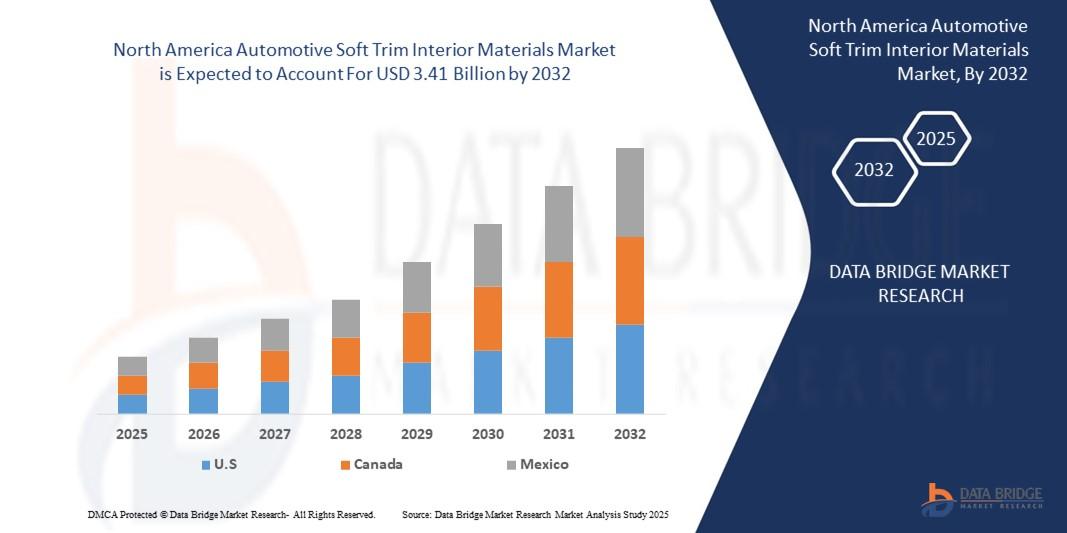
"North America Automotive Soft Trim Interior Materials Market Summary: According to the latest report published by Data Bridge Market Research, the North America Automotive Soft Trim Interior Materials Market The North America automotive soft trim interior materials market size was valued at USD 2.38 billion in 2024 and is projected to reach USD 3.41 billion by 2032, with a CAGR...
The Unique Identity Behind Chrome Hearts In a fashion world where trends change quickly and many brands try to follow whatever is popular at the moment, Chrome Hearts has managed to create a style that feels original, bold, and instantly recognizable. That is one of the main reasons the brand continues to attract attention from fashion lovers around the world. Instead of blending in with...

Delhi is a major business hub in India, home to startups, SMEs, and large corporations. As businesses grow or restructure, relocating offices becomes necessary. However, shifting an office involves more than just moving furniture—it includes handling sensitive equipment, important documents, and ensuring minimal downtime. This is where professional office relocation in Delhi services come...

Good hearing plays an important role in everyday life. It helps people communicate, enjoy conversations, listen to music, stay alert to their surroundings, and maintain strong social connections. Yet many individuals often ignore their ears until they notice discomfort, difficulty hearing, ringing sounds, or trouble understanding conversations in crowded places. Maintaining strong...