How Carbide Drill Tools Improve Speed and Tool Life in Manufacturing
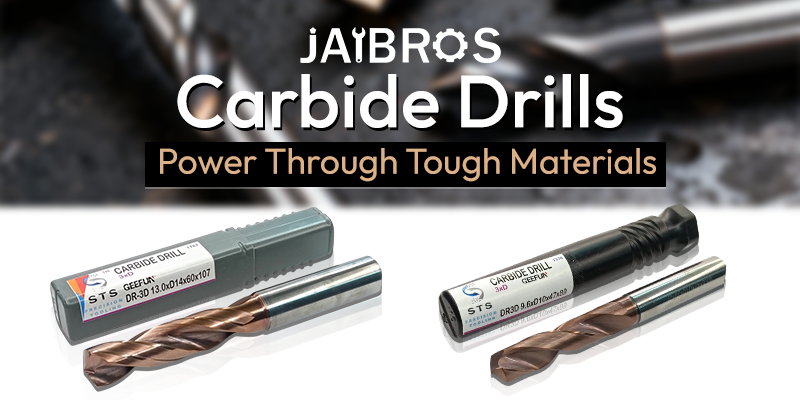
Discover how Carbide Drill tools improve machining speed, durability, and precision. Learn their benefits, applications, and why they outperform standard drill bits.
Premium Carbide Drill Solutions for Faster & Accurate Machining
In today’s fast-paced machining and manufacturing world, precision, productivity, and tool durability have become the top priorities for workshops of all sizes. Whether it’s automotive, aerospace, die-mold, or general engineering, industries are looking for cutting tools that can handle tough materials while maintaining accuracy and speed. This is where the Carbide Drill has become a game-changing solution for modern manufacturers.
A carbide drill is known for its unmatched hardness, heat resistance, and wear resistance. These attributes make it an essential tool for high-performance drilling applications where traditional HSS drills struggle. But beyond durability, carbide tools offer exceptional improvements in machining speed and tool life, helping industries achieve higher output with lower downtime.
This blog explores how carbide drills enhance machining efficiency, why manufacturers prefer them over conventional tools, and how they work with CNC machines to deliver exceptional results.
What Makes the Carbide Drill So Effective?
The effectiveness of a Carbide Drill comes from its unique material composition. Carbide is an extremely hard compound made from tungsten carbide particles bonded with cobalt. It is significantly harder than high-speed steel and capable of cutting through the most demanding materials.
While a regular carbide drill bit can perform general drilling, specialized carbide drills are engineered for heavy-duty, high-precision, and high-speed work.
Key characteristics that make carbide drills superior:
1. Extreme Hardness
Carbide tools maintain sharp edges far longer than steel-based tools. This ensures consistent hole quality and accurate dimensions even during long production runs.
2. High Heat Resistance
Carbide drills withstand high temperatures generated during machining, especially when drilling tough metals like stainless steel, cast iron, and titanium.
3. Reduced Tool Wear
Their ability to resist abrasion and deformation helps extend their usable life significantly.
4. Excellent Compatibility with CNC Machines
Carbide drills are designed to work perfectly with modern CNC tool setups, delivering high-level repeatability and accuracy.
How Carbide Drills Improve Speed in Manufacturing
Speed is one of the biggest advantages of using a Carbide Drill in industrial applications. As manufacturing businesses move toward faster production cycles, carbide tooling becomes essential.
1. High Cutting Speeds
Carbide drills allow much faster cutting speeds compared to standard drills. The material's hardness lets machinists push RPM and feed rates significantly higher without damaging the tool.
2. Reduced Cycle Time
With increased cutting speeds and efficient chip removal, carbide drills drastically reduce machining time per component. This is particularly important in high-volume industries like automotive manufacturing.
3. Consistent Drilling at High Speeds
Because carbide resists heat and deformation, the drill maintains its sharpness, ensuring that holes remain smooth and accurate even at elevated speeds.
4. Better Stability at High Load
Even under tough machining conditions, carbide drills maintain rigidity and stability, preventing vibration and ensuring cleaner hole surfaces.
Manufacturers often report a 25–50% reduction in cycle time when switching from HSS drills to carbide drills, depending on the material and machine capability.
How Carbide Drills Increase Tool Life
Tool life is a major cost factor in machining. Longer-lasting tools reduce downtime, lower tool replacement expenses, and improve overall productivity. A Carbide Drill excels in this area due to its durability.
1. Wear Resistance
Carbide is extremely resistant to abrasive wear, making it ideal for drilling abrasive metals or composites.
2. Heat Dissipation
Because carbide drills operate efficiently at high temperatures, they don’t lose hardness quickly. This helps maintain edge sharpness for longer periods.
3. Tough Coatings for Extra Protection
Many carbide drills come with coatings like TiN, TiAlN, or AlCrN. These coatings further enhance the tool life by reducing friction and preventing material adhesion.
4. Performs Better on Hard Materials
While HSS drills struggle on hard metals, carbide drills cut them with ease. This means fewer tool changes and more consistent performance during long production cycles.
Carbide Drill vs. Carbide End Mill
Both are essential carbide bits, but they serve different machining purposes:
-
Carbide Drill → For accurate hole-making
-
Carbide End Mill → For cutting, shaping, and removing material
The combination of these tools empowers CNC workshops with complete machining capability.
Why Carbide Drills Are Essential for CNC Manufacturing
The rise of CNC tool technology has transformed modern machining. CNC machines demand tools that can perform at high speeds, hold tight tolerances, and deliver consistent results. Carbide drills meet all these needs.
1. Perfect for High-Speed Machining
CNC machines operate at extremely high RPMs, and carbide drills are built for this purpose.
2. Accurate Hole Dimensions
CNC programming combined with carbide drill precision ensures perfect hole geometry every time.
3. Zero Tool Deflection
Carbide’s rigidity prevents tool bending, leading to cleaner, straighter holes.
4. Improved Productivity
Carbide drills work perfectly with automated systems, making them ideal for continuous, 24/7 operations.
Applications of Carbide Drills in Manufacturing
Carbide drills are widely used across multiple industries, including:
-
Aerospace engineering
-
Automotive manufacturing
-
Tool and die industry
-
Medical device machining
-
Heavy machinery production
-
Precision engineering
Their ability to deliver accuracy and durability makes them the preferred choice for demanding applications.
Conclusion
The Carbide Drill has become an essential tool for modern manufacturing due to its superior speed, unmatched durability, and excellent performance in demanding environments. By reducing cycle time, extending tool life, and improving hole accuracy, carbide drills help workshops achieve higher productivity and lower operational costs. As CNC machining continues to evolve, carbide tools—including carbide drill bit, carbide bits, and carbide end mill—will remain the backbone of high-precision and high-efficiency manufacturing processes.
FAQs
1. Why is a Carbide Drill better than an HSS drill?
A Carbide Drill offers superior hardness, better heat resistance, and longer tool life compared to HSS drills.
2. What materials can I cut with a carbide drill bit?
You can drill stainless steel, cast iron, alloy steel, titanium, and other hard materials efficiently.
3. Are carbide drills suitable for CNC machines?
Yes, carbide drills are ideal for CNC machines due to their rigidity and stability at high speeds.
4. How long does a carbide drill last?
Tool life depends on material and cutting conditions, but carbide drills typically last many times longer than HSS drills.
5. Can carbide drills be used for high-speed machining?
Absolutely. They are designed to perform at high RPMs, making them perfect for modern CNC high-speed operations.
Κατηγορίες
Διαβάζω περισσότερα
Netflix Launches Proprietary Content Delivery Infrastructure Netflix, serving almost a billion hours of content monthly to viewers worldwide, has traditionally relied on commercial content delivery networks (CDNs) to distribute its extensive media library. Today, we're introducing Open Connect, Netflix's dedicated content delivery network designed to efficiently handle our massive data...

Prepare confidently with DumpsHero’s updated N16300GC10 Dumps and verified N16300GC10 PDF Dumps. Get accurate, exam-focused study guides designed to help you pass the Oracle N16300GC10 certification exam successfully on your first try. N16300GC10 Exam Dumps to Achieve Excellent Results on Your First Attempt DumpsHero provides highly dependable Oracle N16300GC10 exam...

"Future of Executive Summary North America Self-leveling Concrete Market: Size and Share Dynamics The North America Self-leveling Concrete Market size was valued at USD 1.2 Billion in 2024 and is expected to reach USD 1.77 Billion by 2032, at a CAGR of 5.1% during the forecast period The North America Self-leveling Concrete Market report offers an...
With the addition of creative DnD supplements, tabletop gaming has become more diverse than ever before, as such materials provide new options, ideas, and systems to create fresh experiences each session. In addition to helping storytellers create personalised stories, DnD supplements help create balance in gameplay, explore themes that are unique to your campaign, while keeping the rules...
1. Leading SEO Agency Near Sector 18 Noida Village Kyte stands out as a top choice for businesses aiming to dominate search engine rankings. Strategically positioned to serve startups, SMEs and enterprises, the agency focuses on delivering measurable growth through customized SEO strategies. Sector 18, being a commercial hub, demands aggressive and smart digital competition—and...