Data Access Strategies
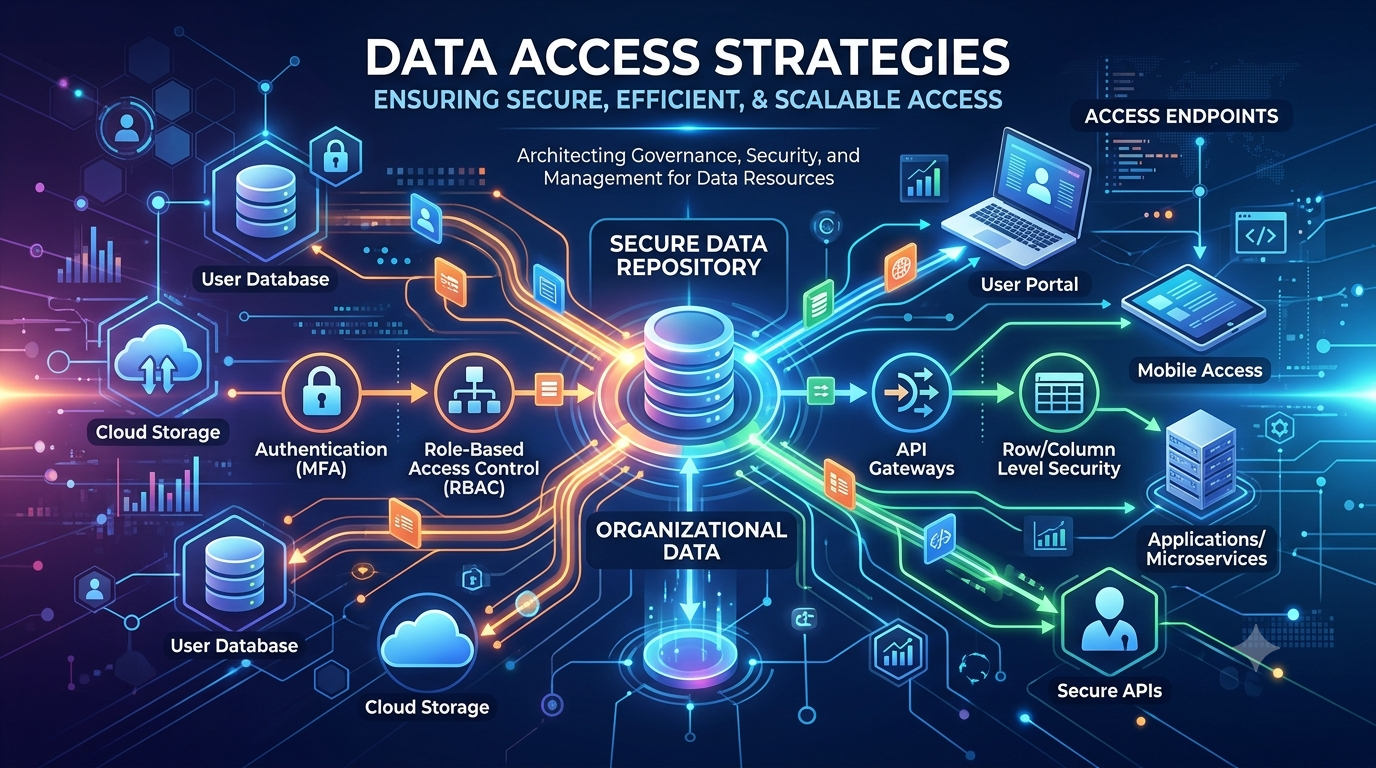
Modern applications depend on quick and reliable access to information. Whether you are running an online store, managing customer records, or developing business software, the way your application retrieves and manages data has a direct impact on performance and user experience. WP-1 click understands that choosing the right data access strategy is just as important as selecting the right database because both work together to deliver smooth and efficient applications.
Data access strategies are the methods and techniques used to communicate with databases while ensuring that information is retrieved, updated, and stored efficiently. A well-planned approach improves speed, enhances security, reduces unnecessary workload on the server, and makes applications easier to maintain. As businesses continue to handle larger amounts of information, adopting effective data access methods becomes essential for long-term success.
What Are Data Access Strategies?
Data access strategies refer to the structured methods developers use to interact with databases. Instead of allowing every application component to communicate directly with the database, a proper strategy organizes this communication through well-defined layers and techniques.
A good data access strategy helps developers retrieve information quickly, reduce unnecessary database requests, improve application security, simplify future maintenance, and support growing amounts of data. Without a clear strategy, applications often become slower, harder to update, and more vulnerable to performance issues.
Why Data Access Matters
Every action performed by an application involves some form of data retrieval or storage. When users log in, search for products, submit forms, or generate reports, the application communicates with the database.
If these operations are not managed efficiently, users may experience slow loading pages, delayed search results, increased server load, higher operational costs, and poor user satisfaction. Efficient data access keeps applications responsive while making better use of available resources.
Common Data Access Approaches
Different projects require different approaches depending on their size, complexity, and business requirements.
Direct Database Access
In this approach, application code communicates directly with the database. While this method is simple for small projects, it becomes difficult to maintain as applications grow. Any change to the database structure often requires multiple code updates, increasing development time and the risk of errors.
Data Access Layer (DAL)
A Data Access Layer acts as an intermediary between the application and the database. Instead of writing database queries throughout the application, developers centralize them in one dedicated layer.
This approach provides several benefits, including easier maintenance, better code organization, improved security, reduced duplication, and simplified testing. Many modern applications rely on a Data Access Layer because it supports long-term scalability and cleaner software architecture.
Repository Pattern
The Repository Pattern separates business logic from database operations. Instead of allowing application services to handle database queries directly, repositories manage all interactions with the database.
This approach keeps the application more organized and allows developers to replace or modify database technologies with minimal changes to the overall codebase.
Selecting the Right Data Retrieval Method
Not every query should retrieve every piece of available information. Fetching unnecessary data increases response time, consumes additional resources, and places extra pressure on the database server.
Developers should focus on retrieving only the required columns, applying accurate filters, using efficient sorting methods, and limiting result sets whenever possible. Smaller and more focused queries improve both application speed and scalability.
Reducing Database Requests
One of the most effective ways to improve application performance is by reducing the number of database calls.
Instead of repeatedly requesting the same information, applications can reuse previously retrieved data whenever appropriate. This minimizes unnecessary communication with the database server and significantly improves response times.
At this stage, developers often consider database optimization techniques to streamline queries, eliminate redundant operations, and improve the overall efficiency of data retrieval without sacrificing accuracy.
The Role of Caching
Caching temporarily stores frequently accessed information so applications can serve users without repeatedly querying the database.
Several types of caching are commonly used, including memory caching, distributed caching, browser caching, and application-level caching. Choosing the appropriate caching strategy depends on how frequently the information changes and how important real-time updates are.
When implemented correctly, caching reduces server load while delivering a much faster experience to users.
Using Pagination for Better Performance
Applications that display thousands of records should avoid loading everything at once. Instead, pagination divides large datasets into smaller pages, allowing users to access only the information they currently need.
This approach reduces memory usage, lowers database workload, improves loading speed, and creates a better overall user experience. Pagination is especially valuable for eCommerce websites, reporting systems, dashboards, and blogs.
Connection Management
Efficient connection management is another important aspect of successful data access. Opening and closing database connections repeatedly can reduce performance, especially in high-traffic applications.
Modern systems often use connection pooling, where reusable database connections remain available for incoming requests. This approach reduces connection overhead, improves resource utilization, speeds up request processing, and supports better scalability as user traffic increases.
Data Security During Access
Performance should never come at the expense of security. Every interaction with the database should protect sensitive information and prevent unauthorized access.
Developers should use parameterized queries, validate user input, apply role-based access controls, encrypt confidential information, and monitor suspicious activities. These practices help prevent SQL injection attacks and reduce the risk of data breaches.
Error Handling and Monitoring
Even well-designed applications occasionally encounter unexpected issues. Effective error handling ensures that failures are managed gracefully without exposing sensitive system information.
Logging database operations provides valuable insights for developers when diagnosing problems. Monitoring slow queries, failed connections, and unusual activity helps identify issues early and supports continuous improvement.
Regular performance monitoring also allows teams to make informed decisions as applications evolve.
Preparing for Future Growth
As businesses expand, their databases become larger and more complex. A data access strategy that performs well today may struggle under future workloads if scalability is not considered during development.
Planning for growth means designing systems that can support increasing numbers of users, larger datasets, higher transaction volumes, and additional application features. Flexible architectures reduce the need for major redesigns and provide a stronger foundation for long-term success.
Best Practices for Effective Data Access
Building an efficient data access strategy involves following proven development practices rather than relying on a single technique.
Developers should keep queries simple and efficient, retrieve only necessary information, use indexing appropriately, separate business logic from database operations, monitor performance regularly, implement caching where appropriate, test under realistic workloads, and review security settings on a regular basis.
Following these practices helps create applications that remain reliable, secure, and easy to maintain as business requirements continue to evolve.
Conclusion
Data access strategies are a fundamental part of building modern, high-performing applications. They influence how efficiently data is retrieved, processed, and stored while directly affecting speed, security, scalability, and maintainability. By implementing structured access layers, reducing unnecessary database requests, using caching effectively, managing connections efficiently, and following security best practices, developers can create systems that provide a smooth experience for users while supporting future business growth.
Investing time in designing the right data access strategy today can reduce maintenance costs, improve application performance, and make future expansion much easier. To learn more about building reliable and efficient database systems, explore Scalable Data Management.
Categorias
Leia mais
Jai Club Login is the official gateway to accessing your gaming account safely and conveniently. Whether you are a new player creating an account or a returning user eager to continue playing, the login process is designed to be quick, secure, and user-friendly. With a successful login, players can explore a wide range of gaming features, manage their account settings, and enjoy a seamless...

In today’s fashion landscape, outerwear is no longer just about warmth—it’s about identity, confidence, and craftsmanship. A well-made jacket has the power to elevate an entire outfit, tell a story, and last for years. This is where premium jackets stand apart. Designed with superior materials, thoughtful detailing, and timeless silhouettes, premium outerwear offers...

In today’s competitive world, technical knowledge alone is not enough to achieve success. Employers and organizations increasingly look for individuals who demonstrate confidence, strong communication, leadership ability, and a positive attitude. These qualities together define a person’s personality and professional presence. For students, job seekers, and working professionals,...

"Asia-Pacific Cenospheres Market Summary: According to the latest report published by Data Bridge Market Research, the Asia-Pacific Cenospheres Market Data Bridge Market Research analyses that the cenospheres market is expected to reach USD 879,944.73 thousand by 2030, which was USD 317,269.80 thousand in 2022, registering a CAGR of 13.60% during the forecast period of 2023 to...

A healthy and confident smile plays a vital role in overall well-being. It affects not only how we look but also how we feel and interact with others. Oral health is closely linked to general health, making it essential to maintain regular dental care and seek professional treatment when needed. With the evolution of modern dental practices, patients now have access to advanced techniques that...