


AI Workstation and GPU Server: Choosing the Right AI Computing Infrastructure

Artificial intelligence is moving from experimentation into production. From generative AI and computer vision to deep learning, simulation and data science, organizations need computing infrastructure capable of handling workloads that are increasingly demanding in both processing power and memory.
Two solutions have become central to this shift: the AI workstation and the GPU server. Although both use GPU acceleration, they are designed for different environments and workload requirements. Choosing between them—or deploying both—depends on how an organization develops, tests and scales its AI applications.
What Is an AI Workstation?
An AI workstation is a high-performance desktop system designed for AI development, machine learning, data science and other GPU-accelerated workloads.
Unlike a conventional desktop, an AI workstation can be configured with powerful NVIDIA GPUs, high-core-count processors, large amounts of RAM and fast NVMe storage. This provides researchers, developers and engineers with a dedicated environment for developing and testing AI models locally.
An AI workstation is particularly useful for:
- Machine learning and deep learning development
- Generative AI experimentation
- Computer vision
- Data science
- AI model inference
- 3D visualization
- Research and prototyping
For individual researchers, developers and small AI teams, an AI workstation can provide dedicated computing power without requiring a complete data-center deployment.
What Is a GPU Server?
A GPU server is designed for heavier, shared and continuously running workloads. It can accommodate multiple high-performance GPUs alongside powerful CPUs, large memory configurations, high-speed storage and advanced thermal management.
GPU servers are commonly deployed for:
- AI model training
- Large-scale deep learning
- AI inference
- High-performance computing
- Scientific research
- Large datasets
- Enterprise AI applications
A multi-GPU server can provide substantially greater compute capacity than a typical workstation, making it suitable for workloads that need to scale beyond a single desktop system.
AI Workstation vs GPU Server
The difference is primarily related to scale, deployment and accessibility.
An AI workstation is generally designed for an individual user or a small team. It offers a convenient local environment for development, experimentation and inference.
A GPU server, on the other hand, is built for centralized computing. Multiple users, applications or virtual environments can access the available GPU resources depending on the infrastructure and software configuration.
For example, an AI researcher developing a new model may use an AI workstation for development and testing. Once the workload becomes larger or needs to be shared across a team, the trained model can be moved to a GPU server for large-scale training or inference.
Why NVIDIA GPUs Matter for AI
NVIDIA GPUs are widely used in AI infrastructure because of their combination of GPU computing performance, memory capacity and software ecosystem.
Technologies such as CUDA and optimized AI libraries allow developers to accelerate frameworks and applications across deep learning, computer vision, scientific computing and generative AI.
The right NVIDIA GPU depends on the workload. GPU memory is particularly important for AI because larger models and datasets can require substantial VRAM.
Building the Right AI Infrastructure
Selecting an AI workstation or GPU server should begin with the workload rather than simply the number of GPUs.
Important considerations include:
- GPU compute performance and VRAM
- CPU performance
- System memory
- NVMe storage
- PCIe expansion requirements
- Networking
- Power delivery
- Cooling and thermal design
- Software and framework compatibility
A balanced configuration prevents other components from limiting GPU performance and provides more predictable results during sustained workloads.
AI Workstations and GPU Servers from ANT PC
ANT PC designs high-performance computing systems for AI research, deep learning, data science, simulation and enterprise workloads.
Its AI workstation configurations are designed for professionals who need powerful local computing, while GPU server platforms can be configured for multi-GPU environments and scalable AI infrastructure.
Instead of relying on generic hardware configurations, ANT PC evaluates the intended workload and recommends the appropriate combination of GPU, processor, memory, storage, power and cooling.
Conclusion
AI workstations and GPU servers serve different roles within modern AI infrastructure. An AI workstation provides a powerful local platform for development, experimentation and professional workloads, while a GPU server offers the scale and shared computing capacity required for larger AI deployments.
For organizations building an AI infrastructure strategy, the decision does not always have to be one or the other. A combination of workstations for development and GPU servers for large-scale workloads can create a practical path from experimentation to deployment.
With professionally engineered configurations and NVIDIA-based solutions, ANT PC helps organizations build reliable computing infrastructure for the next generation of AI workloads.
Categorias
Leia mais
According to the latest report published by Data Bridge Market Research, the Analytical Laboratory Services Market As per Data Bridge Market Research Analysis the global analytical laboratory services market is expected to reach USD 15,746.84 million by 2029, at a CAGR of 14.7% during the forecast period. The bioanalytical testing segment accounts for the largest offering...

Bagi para pecinta slot online, menemukan situs bandar slot terpercaya dengan pola RTP gacor adalah kunci utama meraih kemenangan konsisten. ALEXISTOGEL hadir sebagai situs bandar slot online terpercaya yang menawarkan pola RTP gacor untuk memaksimalkan peluang kemenangan Anda. Dengan koleksi game dari provider ternama, sistem yang adil dan transparan, serta layanan profesional, ALEXISTOGEL siap...
The increasing prevalence of cardiovascular disorders and the growing demand for advanced cardiac diagnostics are transforming the healthcare landscape across the globe. Electrophysiology laboratory devices have become an essential part of modern cardiac care by enabling physicians to accurately diagnose and treat complex heart rhythm disorders with greater precision. Technological innovations,...
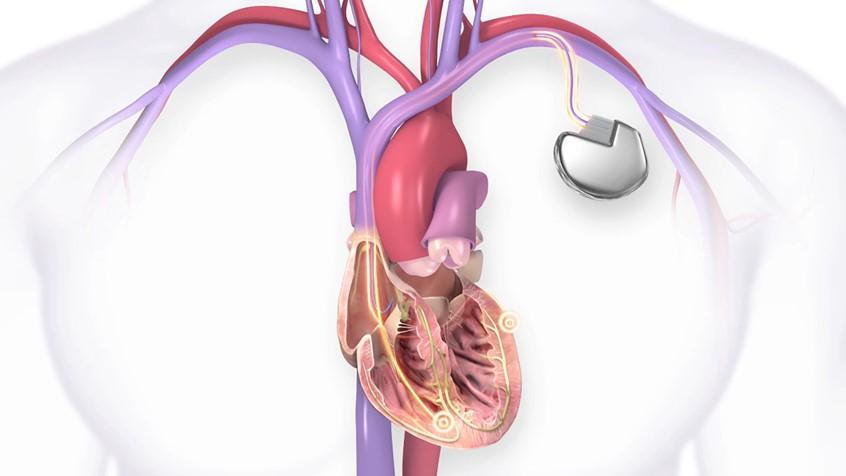
Increasing Cardiac Disease Burden Opening New Avenues The steady rise in cardiovascular disorders across the globe is significantly enhancing the growth prospects of the Cardiac Pacemaker Market. As heart rhythm abnormalities become more prevalent, particularly among aging populations, the need for advanced pacing technologies is expanding. This growing clinical demand is creating a strong...
Choose Mathura to Haridwar taxi for a stress-free journey with clean vehicles, experienced drivers, flexible timing, and reasonable fares.