


How to Store Camera Lenses in Humid Weather (Pakistan Guide)
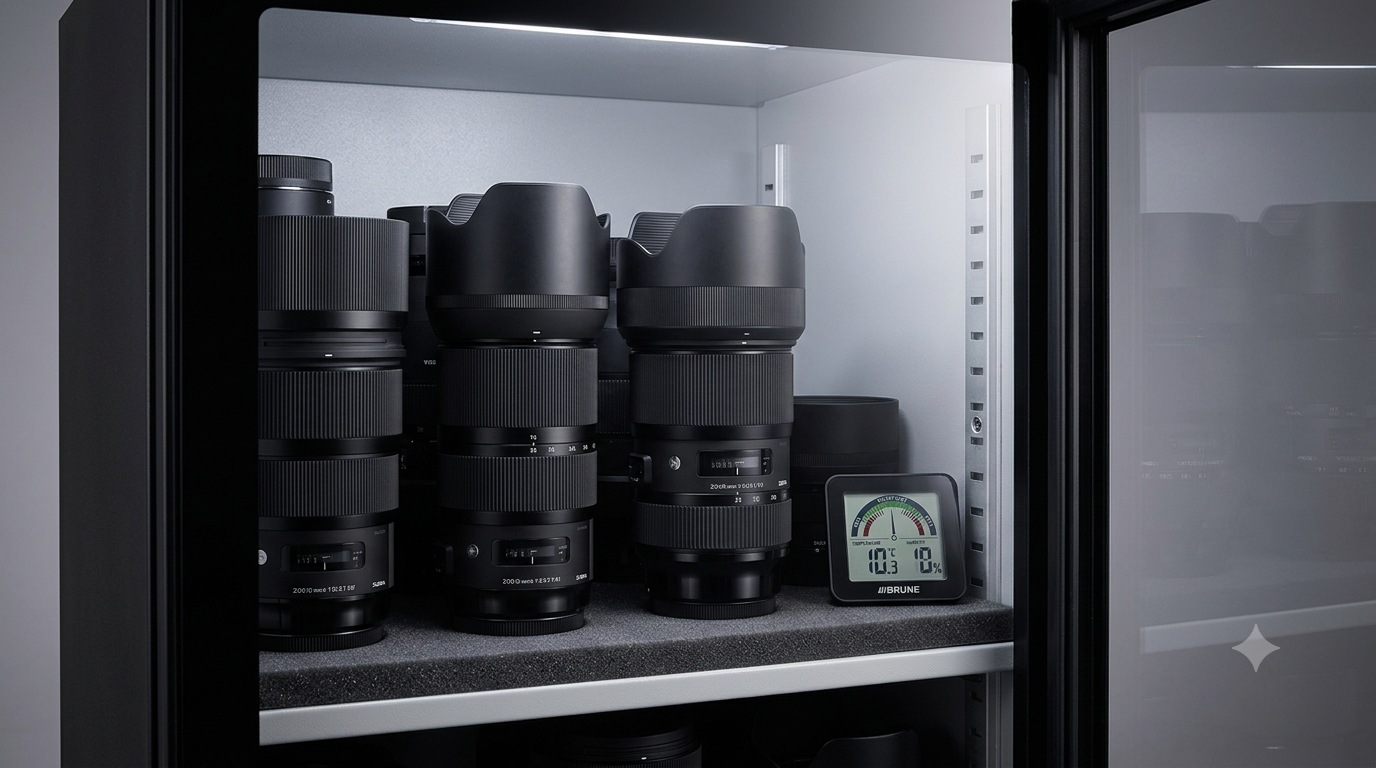
If you're storing your lenses in Karachi, coastal Sindh, or anywhere during Pakistan's monsoon months and you've noticed a faint musty smell or haze building up inside your kit bag, the humidity itself is the problem, and the fix is getting your lenses into consistently low-humidity storage, ideally below 50-55% relative humidity, before fungus has a chance to establish itself. Regular bags, cupboards, and shelves in humid climates simply don't control moisture, and that's exactly the environment fungus spores need to grow on and inside your glass. This is especially important for high-quality optics like Sigma lenses, where protecting the internal elements and coatings helps maintain long-term image quality.
This isn't a minor cosmetic concern. Lens fungus, once established, can permanently etch the coating it grows on, and by the time you notice reduced contrast or hazy patches in your images, the damage may already require professional cleaning or, in severe cases, isn't fully reversible. Pakistan's climate makes this a genuinely higher risk than it would be in a drier region — Karachi's coastal humidity, Lahore's monsoon season, and even northern areas during misty periods all create conditions where fungus favors growth.
Below is a practical breakdown of what humidity level actually triggers fungus growth, the real storage options available in Pakistan at different budget levels, and how to tell early fungus apart from other common lens issues before it spreads.
What Humidity Level Actually Causes Lens Fungus?
Fungus spores are present essentially everywhere in the air, including indoors, and they don't need much encouragement to start growing once conditions favor them. The commonly cited danger zone is relative humidity above roughly 60%, combined with a dark, still environment and some organic material to feed on — dust, skin oils, or residue left on glass surfaces. Karachi routinely sits well above that threshold for months at a stretch, and Lahore's monsoon season pushes indoor humidity up significantly even in homes with basic ventilation.
The practical target most photography guides and professional camera stores recommend is keeping lens storage between 40-50% relative humidity. Below roughly 35%, some older lens grease and rubber seals can actually dry out over very long periods, so the goal isn't to go as low as possible, it's to keep things in a stable, moderate range rather than letting storage swing with the outdoor weather.
Real scenario: A wedding photographer based in Karachi stored his kit, including a 105mm F1.4 DG DN portrait lens, in a regular cupboard through two consecutive monsoon seasons without any humidity control. By the third season, he noticed a faint web-like haze near the edge of the rear element that hadn't been there before, visible only when he checked the lens against a bright light source. A local repair shop confirmed early-stage fungus growth, likely from ambient humidity in his cupboard sitting well above 65% for extended stretches. The lens was cleanable at that stage, but continued neglect would have made the coating damage permanent.
What Are the Real Storage Options for Humid Climates in Pakistan?
Photographers in Pakistan generally have three practical tiers of humidity control, and which one makes sense depends on how much gear you own and how seriously you shoot.
Dry cabinets are purpose-built electronic cabinets that maintain a set humidity level automatically using a small internal dehumidifying element, and they're the standard solution used by professional studios and serious hobbyists. Local prices in Pakistan for a basic dry cabinet suitable for a few lenses and a body typically start somewhere in the PKR 15,000-30,000 range for smaller capacity units, climbing higher for larger cabinets that hold a full kit.
Airtight containers with silica gel are the budget alternative — a sealed plastic storage box or even a large airtight food container, combined with rechargeable or replaceable silica gel packs, can meaningfully lower humidity around your gear for a fraction of a dry cabinet's cost. This requires more manual attention since silica gel needs regular checking and recharging (many rechargeable packs change color when saturated and can be dried out in sunlight or a low oven).
Ventilated open shelving with a room dehumidifier works if you're controlling humidity for an entire room rather than just camera gear, which makes sense if you already run a dehumidifier for other reasons, but it's generally less precise and more expensive to run continuously compared to a dedicated small dry cabinet.
Real scenario: A landscape photographer in Lahore shooting frequently in the northern areas with a mix of Sigma glass, including a 100-400mm DG DN OS telephoto, initially relied on silica gel packets inside his camera bag between trips. During an unusually humid monsoon stretch, he found the silica gel saturating faster than he was recharging it, and switched to a mid-size dry cabinet instead. The upfront cost was higher, but he stopped worrying about manually managing humidity every few days, which mattered more once his kit grew to include several lenses worth protecting.
|
Storage Method |
Approx. Cost in Pakistan |
Humidity Control Precision |
Maintenance Needed |
|
Dry cabinet (electronic) |
~PKR 15,000–30,000+ depending on size |
High, automatic and consistent |
Minimal — occasional check of the display reading |
|
Airtight container + silica gel |
~PKR 1,500–4,000 for container and gel packs |
Moderate, fluctuates with outside humidity |
Regular — silica gel needs recharging or replacing |
|
Room dehumidifier + open shelving |
~PKR 20,000–50,000+ depending on unit size |
Moderate to high, depends on room sealing |
Ongoing — water tank emptying, higher electricity use |
|
Standard closed cupboard (no humidity control) |
Free (existing furniture) |
Low to none, tracks outdoor humidity |
None, but offers no real protection |
How Can You Tell If Fungus Has Already Started Growing?
Catching fungus early makes a real difference in whether it's fully cleanable or leaves lasting coating damage, so it's worth checking gear periodically rather than only noticing when image quality visibly drops.
Hold the lens up to a bright light source, a lamp or window works, and look through it from the front while rotating it slightly. Early fungus typically appears as fine, thread-like, branching patterns, sometimes described as looking like a spider web or frost pattern, usually starting near the edges of an internal element rather than the center. It's different from dust, which appears as small, scattered, solid specks, and different from a simple smudge, which looks like a soft, even haze without any branching structure.
If you catch it early and it hasn't spread significantly, professional cleaning can often fully remove it with minimal or no lasting mark, provided it hasn't etched into the coating yet. Left longer, the fungus can produce enzymes that permanently mark the coating surface even after the organism itself is removed, which is the outcome you're trying to avoid entirely.

Does It Matter Where in Pakistan You're Storing Your Gear?
Yes, meaningfully. Pakistan's regions differ enough in baseline humidity that the urgency of proper storage varies by city.
Coastal cities, primarily Karachi and other parts of Sindh near the coast, deal with consistently high ambient humidity for much of the year, making dedicated humidity control closer to essential than optional for photographers with any meaningful lens collection. Lahore and much of Punjab see a sharper seasonal swing, with monsoon months (roughly July through September) bringing humidity spikes that make storage vigilance especially important during that window, even if the rest of the year is more moderate. Islamabad and northern areas generally see lower baseline humidity than Karachi, but northern trips into misty, high-altitude terrain expose gear to damp conditions in the field even if home storage stays reasonably dry, so post-trip drying matters as much as long-term storage there.
Conclusion
The core fix is straightforward even if the investment level is a personal choice: keep your lenses in a stable 40-50% relative humidity environment rather than letting them sit in whatever your local climate happens to be doing, and check them periodically under a light source for early signs of fungus rather than waiting for a visible quality drop in your photos. If you're in Karachi or shoot through Lahore's monsoon season with more than a couple of lenses, a proper dry cabinet is worth the upfront cost; if your kit is smaller or your budget tighter, an airtight container with actively maintained silica gel is a legitimate interim solution as long as you stay disciplined about recharging it.
How often should I check my lenses for fungus if I use a dry cabinet?
A quick visual check every one to two months is generally sufficient if your dry cabinet is maintaining a stable low-humidity reading, since the risk of fungus developing is significantly reduced in a properly controlled environment. Glance at the cabinet's humidity display regularly too, since a malfunctioning unit won't announce itself otherwise.
Can I use a regular room air conditioner instead of a dry cabinet?
An air conditioner can lower humidity somewhat while running, but it's not a consistent solution since humidity rises again once it's switched off, unlike a dry cabinet that maintains a set level continuously. It can help as a supplementary measure but shouldn't be relied on as your primary long-term lens storage method.
Is silica gel really effective for humid climates like Karachi?
Silica gel can meaningfully lower humidity inside a sealed container, but its effectiveness depends entirely on how consistently you recharge or replace it, which becomes demanding in a climate as consistently humid as Karachi's. For a small kit with disciplined maintenance it can work, but most photographers with growing collections eventually find a dry cabinet less effort long-term.
Does lens fungus spread from one lens to another if stored together?
Fungus spores are present in the air generally, so storing an already-affected lens near clean ones doesn't guarantee spreading, but it does increase risk since spores can transfer between items sharing the same enclosed, humid space. If you find fungus on one lens, it's worth having it professionally cleaned and checking your other gear more closely rather than assuming it's isolated.
Can fungus damage be completely reversed with cleaning?
Early-stage fungus, caught before it has etched into the coating, can often be professionally cleaned with little to no lasting mark on image quality. More advanced fungus growth can leave permanent micro-etching on the coating surface, which may cause subtle haze or reduced contrast even after the fungus itself is removed.
Категории
Больше
"Regional Overview of Executive Summary G-CSF/PEG-G-CSF Market by Size and Share Data Bridge Market Research analyzes that the global G-CSF/ PEG-G-CSF market is expected to reach the value of USD 5,685.40 million by 2030, at a CAGR of 5.5% during the forecast period. This market report also covers pricing analysis, patent analysis, and technological advancements in depth. This...

If you've ever upgraded your driver head or considered testing a different brand, you've probably asked yourself one simple question: Can one Golf Shaft fit multiple driver heads? The answer is yes in many cases, but compatibility depends on more than simply attaching one club to another. Modern golf equipment is designed to offer flexibility, allowing golfers to keep a favorite Driver Shaft...

Introduction The jewellery business has always balanced tradition and trust. From handwritten ledgers to personal relationships with customers, the industry has thrived on time-tested practices. Yet, the modern jewellery market faces new realities—rising gold prices, complex taxation, tighter compliance, omnichannel sales, and increasing customer expectations. This is where jewellery...
The Crop Protection Chemicals Market plays a critical role in modern agriculture by helping farmers safeguard crops from pests, diseases, and weeds that threaten food production and quality. As global population growth increases pressure on agricultural output, crop protection chemicals have become essential tools for enhancing crop yield, improving food security, and ensuring...
The Senators againfind themselves in a precarious position at the All-Star break, and team leaders are starting to sound le s confident they'll be able to repeat the storybook second half they used to sneak into the playoffs a year ago. After letting a second-period lead slip awayin a 3-2 lo s tothe Sabres on Tuesday, Senators captain Erik Karl Dennis Schroder Jersey sonspoke bluntly about...