


Why Should You Study BSc Aviation? A Practical Guide for Students
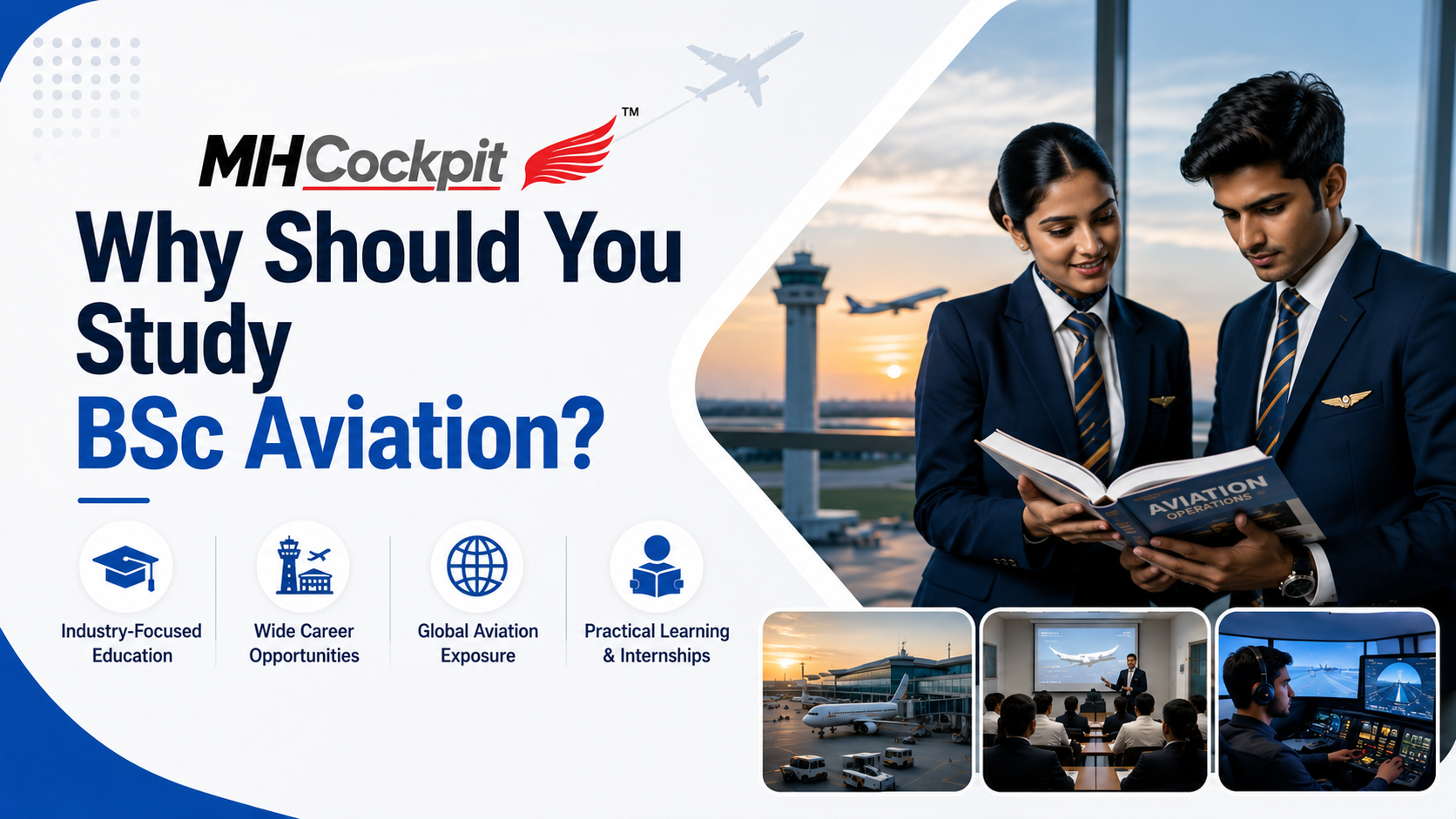
Choosing a degree after Class 12 can be difficult, especially if you already know that you want to build a career in the aviation industry. Aviation is often associated only with pilots, but the industry is much wider. Airlines, airports and aviation organisations also need people for operations, management, safety, logistics, customer service, technology and other functions.
This is where a BSc Aviation can be worth considering. It gives students an academic foundation in aviation while helping them understand how different parts of the industry work.
What Is BSc Aviation?
BSc Aviation is an undergraduate degree designed around aviation-related education. The exact syllabus can vary from one university to another, so students should always check the subjects, practical training and university structure before applying.
The programme can introduce students to areas such as aviation operations, airport management, airline operations, aviation safety and other subjects connected with the industry.
The idea is to give students more than a general degree. They get an academic background that is connected to the aviation sector.
According to information provided by MH Cockpit, BSc Aviation is among the aviation degree programmes offered through its university partnerships. These partnerships include universities offering aviation programmes alongside industry-focused learning and practical exposure.
1. It Gives You a Degree Focused on Aviation
One of the main reasons students consider BSc Aviation is that the degree is directly connected to the industry they want to enter.
A general degree can still lead to an aviation career, but students may need to learn about aviation separately. With BSc Aviation, aviation-related subjects form part of the academic programme itself.
This can help students become familiar with aviation terminology, procedures, operations and the different departments involved in the industry.
It is particularly useful for students who are already fairly certain that aviation is the field they want to work in.
2. Aviation Has More Careers Than Just Pilot Jobs
A common misunderstanding among students is that studying aviation means becoming a pilot.
That is not the case.
Aviation depends on many different professionals working together. Airports and airlines need people in operations, ground handling, customer service, cargo, administration, safety, logistics and management.
The source material used by MH Cockpit also points out that commercial pilots are only one part of the aviation ecosystem, with careers extending across operations, engineering, management, customer service, logistics, safety and technology.
This gives BSc Aviation students several areas to consider instead of limiting their career plans to the cockpit.
3. It Can Help You Understand Airport and Airline Operations
Aviation is an industry where different teams have to coordinate carefully.
For example, an airport involves passenger services, ground operations, security, baggage handling, aircraft movement, cargo and several other functions. Airlines also have their own operational and administrative departments.
Studying aviation can help students understand how these different functions fit together.
This knowledge can be useful when applying for entry-level roles in airport operations, airline operations and related aviation functions.
Of course, a degree does not guarantee a particular job. Skills, internships, communication ability and performance during recruitment also matter.
4. You Can Combine Academic Learning With Practical Exposure
Aviation is not something that students should learn only from textbooks.
The learning approach described by MH Cockpit includes classroom instruction supported by digital learning, simulator-based experiences, operational case studies, collaborative projects and exposure to aviation environments.
This type of learning can help students understand how aviation concepts are applied outside the classroom.
When comparing BSc Aviation programmes, I would therefore suggest asking the college what practical exposure is actually included. Do not simply look at the course title. Check whether students get industry visits, projects, internships, operational training or other forms of practical learning.
5. It Can Be a Starting Point for Different Aviation Careers
Another reason to consider BSc Aviation is that it does not necessarily force you into one specific career.
Depending on the programme and your additional skills, you can consider areas such as airport operations, airline operations, ground operations, aviation administration, cargo and logistics, passenger services and other aviation-related roles.
Students can also continue their education after completing the degree. The aviation programmes listed in the source material include undergraduate and postgraduate options such as BSc Aviation, BSc Aeronautical Science, BBA Aviation Management and MBA Aviation & Airport Management.
This means your career path does not have to end with the bachelor's degree.
6. It Can Be Useful for Students Interested in the Wider Aviation Industry
Some students are interested in aviation but are not sure whether they want to become pilots.
For them, BSc Aviation can be a way to enter the industry while keeping different career options open.
You can learn about the industry first and then decide which area suits your interests and abilities.
For example, you may discover that you prefer airport operations rather than flying, or that you are more interested in airline management, cargo, safety or another area.
That is one reason I would not choose an aviation degree based only on the assumption that it will lead to one particular job.
7. Industry Exposure Matters
When selecting a BSc Aviation programme, the university is only one part of the decision.
Students should also look at the practical side of the programme. Check whether the institution has aviation partnerships, internships, industry interaction and opportunities to understand real aviation environments.
MH Cockpit's material describes partnerships with more than 10 universities and aviation organisations, with the aim of combining recognised academic qualifications with industry-focused learning experiences.
That is a useful point to keep in mind when comparing colleges. The actual experience offered by each programme matters just as much as the name printed on the degree.
Is BSc Aviation Right for You?
BSc Aviation can be a good choice if you have a genuine interest in aviation and want your undergraduate education to be connected to the industry.
However, it is worth being clear about one thing: BSc Aviation does not automatically make you a commercial pilot.
If your main goal is to become an airline pilot, you will still need to follow the appropriate pilot training and licensing route separately.
If your interest is in the wider aviation sector, BSc Aviation can provide a useful academic starting point.
Before joining, compare the syllabus, university recognition, practical exposure, internship opportunities, total course cost and the career areas covered.
Final Thoughts
There is no single aviation course that is perfect for every student. The right choice depends on what you want to do after graduation.
For students who want a degree that is directly connected to aviation, BSc Aviation can be worth considering. It provides academic knowledge of the industry and can introduce students to areas beyond the cockpit, including airport and airline operations.
I would also suggest comparing several colleges before making a decision. Look at what students actually study, what practical exposure they receive and what they can realistically do after graduation.
For students researching aviation degree options, MH Cockpit can be used as one reference point, as it works with universities offering BSc Aviation and other aviation-related programmes. The aim is to connect academic education with practical aviation learning, rather than treating the degree as classroom education alone.
Ultimately, studying BSc Aviation makes the most sense when you are interested not just in aircraft, but in understanding the people, systems and operations that keep the aviation industry running.
Categorias
Leia mais
Benefits of Using Certification Exam Preparation Material Certification exams help people grow in their careers. They help you get better jobs. They also help you earn more money. Many students want to pass the 700-760 exam on the first attempt. This exam is offered by Cisco. However, exam preparation can feel difficult. There are many books to read and many topics to cover. This is why using...

"Executive Summary AI Video Analytics Market Opportunities by Size and Share CAGR Value Global AI video analytics market size was valued at USD 9.12 billion in 2023 and is projected to reach USD 78.57 billion by 2031, with a CAGR of 30.89% during the forecast period of 2024 to 2031. An international AI Video Analytics Market report lends a hand to identify how the market is...

If I want a vape that delivers sweet, juicy flavor from the first puff to the last, Fruit Paradise Oxbar is one of the first options I look at. The flavor is designed for people who enjoy fruity blends without an overpowering icy finish or harsh aftertaste. Whether I prefer tropical fruits, mixed berries, or citrus combinations, this line offers something that feels smooth and balanced. The...

According to the latest report published by Data Bridge Market Research, the Cutting Fluid Lubricants Market CAGR Value The Global Cutting Fluid Lubricants Market was valued at USD 126.46 billion in 2025 and is projected to reach USD 179.83 billion by 2033, registering a CAGR of 4.50% throughout the forecast period A number of aspects that are kept...

"In-Depth Study on Executive Summary Wound Contact Layer Dressings Market Market Size and Share CAGR Value The global wound contact layer dressings market size was valued at USD 483.16 million in 2024 and is expected to reach USD 1,311.98 million by 2032, at a CAGR of 13.3% during the forecast period The Wound Contact Layer Dressings Market Market...