


The Future is Built in Blocks: The Global Modular Data Center Industry

The Need for Speed and Agility: Core Drivers of Market Growth
In the age of digital transformation, the demand for data processing and storage capacity is insatiable, yet the traditional method of building large, monolithic data centers is often too slow and capital-intensive to keep pace. This is the challenge that the global Modular Data Center industry is solving with remarkable efficiency. A modular data center is a portable, prefabricated facility that contains all the essential components of a traditional data center—including IT infrastructure, power, and cooling—in standardized, pre-engineered modules. The primary market drivers are the critical need for rapid deployment and scalability. While a conventional data center can take years to build, a modular solution can be deployed in a matter of months or even weeks. This agility allows organizations to respond quickly to market demands and scale their infrastructure incrementally, adding new modules as capacity needs grow, which optimizes capital expenditure. Furthermore, the explosion of edge computing, driven by the Internet of Things (IoT), 5G, and AI, requires low-latency compute resources to be placed closer to end-users and data sources, a use case perfectly served by the compact and deploy-anywhere nature of modular data centers.
The Building Blocks of Agility: Deconstructing Modular Design
A modular data center is not a single entity but a synergistic system composed of distinct, purpose-built modules that can be combined to create a complete facility. The core components typically include IT modules, power modules, and cooling modules. The IT modules are the heart of the operation, containing the server racks, networking switches, and storage arrays. These are factory-built in a controlled environment, ensuring high quality and consistency, and are simply shipped to the site for integration. Power modules are self-contained units that house essential electrical infrastructure such as uninterruptible power supplies (UPS), switchgear, and backup generators, providing resilient and scalable power distribution. Cooling modules are equally critical and can be designed with a variety of technologies—from traditional chillers and CRAC units to more modern direct expansion or free-air cooling systems—to ensure the IT equipment operates within optimal temperature ranges. These modules are available in two main form factors: containerized solutions, which fit within standard ISO shipping containers for maximum portability and rapid deployment, and larger, prefabricated modules that offer greater customization and are often used for expanding existing data center facilities with seamless integration.
From the Edge to the Enterprise: Cross-Sector Deployment
The versatility and rapid deployment capabilities of modular data centers have led to their adoption across a wide spectrum of industries and use cases. Telecommunication companies are major adopters, using modular units as edge data centers to support the rollout of 5G networks and enable Multi-access Edge Computing (MEC), which brings cloud capabilities closer to mobile users. Large cloud service providers and hyperscalers leverage modular designs to rapidly expand their capacity in existing regions or to enter new markets with a smaller initial footprint that can be scaled up as demand grows. For large enterprises, modular data centers offer an ideal solution for disaster recovery, capacity augmentation of an existing brick-and-mortar facility, or data center consolidation projects. In the industrial sector, they are deployed on-site at manufacturing plants, oil rigs, or mining operations to process vast amounts of IoT data locally for real-time analytics and process control. Government and military agencies value their portability and ruggedized design for establishing secure, tactical data centers in remote or forward-operating locations, ensuring critical compute capabilities are available wherever they are needed. This wide-ranging applicability demonstrates the technology's power to deliver tailored infrastructure solutions quickly and efficiently.
Navigating Challenges and the Future of Distributed Infrastructure
While the modular data center market offers compelling advantages, it is not without its challenges. Site preparation remains a critical factor; although the modules are prefabricated, they still require a prepared site with access to reliable power, fiber optic connectivity, and a stable foundation. The logistics of transporting and installing large, heavy modules can also be complex, especially in remote or difficult-to-access locations. Additionally, while modular designs are flexible, they may offer less long-term architectural freedom compared to a custom-built, ground-up facility. Looking ahead, the future of modular data centers is incredibly bright and is being shaped by several key trends. Sustainability is a major focus, with newer designs incorporating highly efficient cooling systems and advanced power management to achieve industry-leading Power Usage Effectiveness (PUE) ratings. The integration of advanced technologies like liquid cooling is becoming more common to support high-density AI and HPC workloads. As the industry matures, there is a growing push towards greater standardization of components and interfaces, which will further improve interoperability and reduce costs. Ultimately, the modular approach aligns perfectly with the shift toward a more distributed, service-oriented IT landscape, positioning it as a key enabler of the edge computing revolution.
Explore More Like This in Our Reports:
Categorie
Leggi tutto
Starting something new can often feel confusing, especially when you’re not familiar with how a platform works. In 2026, users prefer systems that are easy to understand and simple to navigate, and this is where Gold365 has gained attention. Introduction Starting something new can often feel confusing, especially when you’re not familiar with how a platform works. In 2026, users...

Performing Umrah is one of the most spiritual journeys in a Muslim's life. Every pilgrim wants a peaceful, comfortable, and stress-free experience while traveling between the holy cities of Saudi Arabia. Whether you are arriving at the airport, traveling from Makkah to Madinah, or visiting sacred Islamic sites, choosing a reliable transportation service is essential. Umrah Ziyarat Service is...

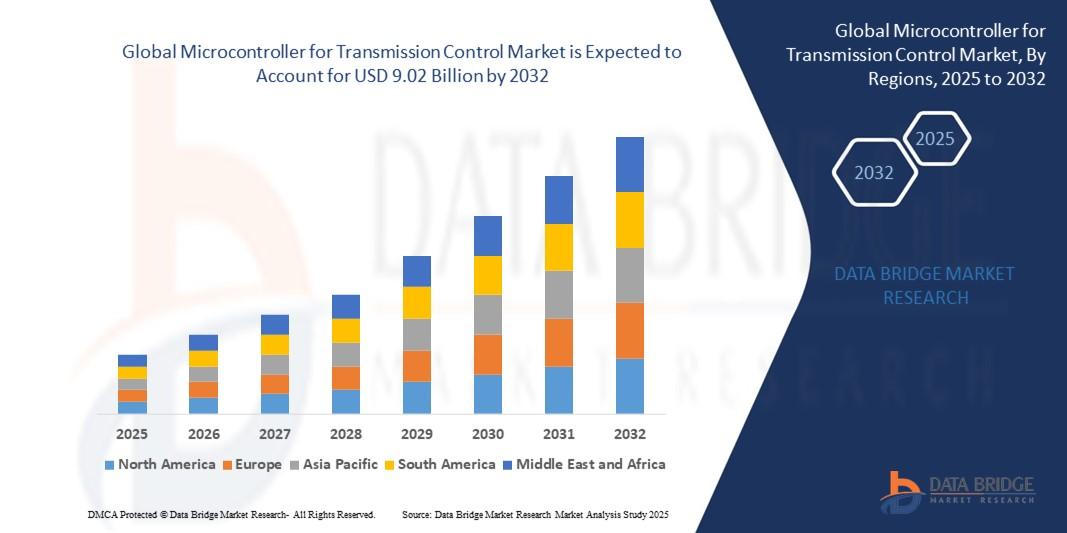
"Global Demand Outlook for Executive Summary Microcontroller for Transmission Control Market Size and Share The global microcontroller for transmission control market size was valued at USD 4.91 billion in 2024 and is expected to reach USD 9.02 billion by 2032, at a CAGR of 7.90% during the forecast period For a constantly increasing business growth and...
In today’s digital world, online entertainment has become more advanced, accessible, and enjoyable than ever before. One platform that stands out by offering a smooth, secure, and highly engaging experience is PH88. Designed for players who seek both excitement and reliability, this platform brings together sports betting, casino gaming, and rewarding promotions in one place. Whether you...
According to the latest report published by Data Bridge Market Research, the Healthcare Distribution Market Data Bridge Market Research analyses that the Healthcare Distribution Market was valued at USD 939.27 billion in 2022 and is further estimated to reach USD 1,601.82 billion by 2030, and is expected to grow at a CAGR of 6.90% during the forecast period of 2023 to...