


Protecting the New Digital Attack Surface with Machine Identity Security

Modern businesses are no longer connected only through employees and customers. Applications, APIs, cloud workloads, containers, IoT devices, robotic processes and AI agents communicate with one another continuously. Each of these systems requires an identity to prove what it is and what it is allowed to access.
This growing ecosystem has made Machine Identity Security a critical part of enterprise cybersecurity. While traditional Identity and Access Management (IAM) focuses heavily on people, machine identity security addresses the credentials and identities used by non-human entities.
The importance of this area is increasing as organizations adopt cloud computing, DevOps, automation and agentic AI. IBM reported in 2026 that enterprises may have dozens of non-human identities for every human identity, highlighting how quickly this security challenge is expanding.
What Is Machine Identity Security?
Machine Identity Security is the practice of discovering, protecting, controlling and monitoring digital identities used by machines, applications and automated workloads.
A machine identity enables a system to authenticate with another system and establish trust before accessing a resource. Depending on the technology, machine identities may use certificates, cryptographic keys, API keys, tokens, service accounts or workload credentials.
Common examples include:
- Digital certificates
- TLS certificates
- SSH keys
- API keys
- Access tokens
- Service accounts
- Application credentials
- Cloud workload identities
- Container identities
- IoT device credentials
- Code-signing certificates
- AI agent identities
The challenge is that these identities are often created automatically and may operate continuously without direct human supervision. Consequently, organizations need automated discovery, lifecycle management, access control and monitoring.
Why Machine Identity Security Matters Today
The traditional security model assumed that most important identities belonged to employees. That assumption no longer reflects how modern technology operates.
A single business application can communicate with databases, cloud services, APIs, microservices and third-party platforms. Behind those interactions are numerous machine identities.
Cloud-native development has accelerated this change. Containers can be created and destroyed within minutes, while automated pipelines can deploy new workloads several times a day. AI agents are adding another dimension because they can independently call tools and perform actions across enterprise systems.
Google Cloud's 2026 cybersecurity forecast specifically highlighted the growing importance of automated governance for non-human identities and workload identity federation as organizations expand their use of cloud and AI.
This makes machine identities an important part of the modern cybersecurity attack surface.
Machine Identity vs Human Identity
Human and machine identities have different characteristics and therefore require different security approaches.
A human identity normally belongs to a specific employee or customer. It may use a password, phishing-resistant authentication or MFA and can often be reviewed through conventional access certification processes.
A machine identity may belong to a temporary workload that exists for only a few minutes. It can authenticate thousands of times without human interaction.
For example, a developer may log into an application once while a microservice may authenticate with another service hundreds or thousands of times during the same period.
This difference makes Non-Human Identity Management (NHIM) an increasingly important security discipline.
What Are Non-Human Identities?
Non-human identities, often abbreviated as NHIs, represent digital entities that are not people but still require authentication and authorization.
They can include:
- Applications
- APIs
- Service accounts
- Containers
- Cloud workloads
- Virtual machines
- RPA bots
- IoT devices
- Scripts
- Automated pipelines
- AI agents
A 2026 Cloud Security Alliance survey reported significant governance gaps around non-human identities and found that many organizations lack formal policies for creating and removing AI identities.
The issue is therefore broader than certificates or passwords. Organizations must understand the complete lifecycle of every non-human identity.
Common Machine Identity Security Risks
1. Credential Theft
An attacker who obtains an API key, private key or access token may be able to impersonate a legitimate application or workload.
Unlike a compromised employee account, a compromised machine credential may operate quietly in the background and remain undetected.
2. Long-Lived Credentials
Credentials that remain valid for months or years create an extended opportunity for attackers. If a key is stolen but never rotated, an organization may have difficulty limiting its usefulness.
Short-lived credentials and automated rotation can reduce this exposure.
3. Certificate Expiration
Certificates are essential for encrypted communication and authentication. An expired certificate can cause applications or services to stop communicating.
Certificate lifecycle management should therefore include discovery, renewal, deployment and monitoring.
4. Hardcoded Secrets
API keys and passwords sometimes become embedded in source code, scripts, configuration files or CI/CD pipelines.
If an attacker gains access to a repository or development environment, these secrets may be exposed.
5. Excessive Permissions
A machine identity should not automatically receive broad administrative access.
If a compromised workload has excessive privileges, attackers may use it to move laterally or access sensitive resources.
6. Orphaned Identities
When an application or cloud workload is retired, its credentials may remain active.
These orphaned machine identities can become difficult-to-detect access paths.
7. Identity Sprawl
As organizations add applications, APIs, devices and cloud services, the number of identities grows rapidly.
Without centralized visibility, security teams may not know which identities exist, who owns them or where their credentials are being used.
The Role of Workload Identity Security
Workload Identity Security has become particularly important in cloud-native environments.
A workload identity allows an application, service or container to authenticate without relying on a permanently embedded secret.
This approach can support:
- Short-lived credentials
- Automated identity issuance
- Strong workload authentication
- Fine-grained authorization
- Reduced secret exposure
- Better auditability
Workload identity is particularly relevant to Kubernetes, microservices and multi-cloud environments where applications are dynamic and traditional static credentials can become difficult to manage.
The broader movement toward workload identity also aligns with Zero Trust principles because trust is based on verified identity and authorization rather than simply on network location.
Machine Identity Security and Zero Trust
Zero Trust Security is based on the principle that access should not be automatically trusted simply because a request originates from an internal network.
This principle applies equally to machines.
A secure application-to-application request should answer questions such as:
- Which workload is making the request?
- Is its identity valid?
- What resource is it requesting?
- Is that access authorized?
- Is the requested action consistent with its normal behavior?
- How long should the access remain valid?
Machine identity becomes the foundation for answering these questions.
Combining Zero Trust Architecture, least privilege and strong workload authentication can help organizations reduce unnecessary machine-to-machine access.
Best Practices for Machine Identity Management
Build a Complete Identity Inventory
Organizations should begin by discovering machine identities across cloud platforms, data centers, applications, APIs, development environments and connected devices.
The inventory should capture ownership, purpose, permissions, expiration information and usage.
You cannot protect identities that you cannot see.
Apply Least Privilege
Every workload should receive only the permissions necessary to complete its assigned task.
For example, an application that only needs to read a database should not receive permissions to modify infrastructure.
Least privilege can significantly reduce the impact of credential compromise.
Use Short-Lived Credentials
Short-lived credentials can reduce the value of stolen credentials because their validity period is limited.
This is especially useful for dynamic cloud workloads, containers and automated services.
Protect Cryptographic Keys
Private keys should be carefully protected and should not be unnecessarily exposed through source code, environment variables or insecure storage.
Organizations handling sensitive cryptographic operations may also consider hardware-backed protection such as HSMs or trusted platform technologies.
AI Agents Are Changing Machine Identity Security
One of the most important developments in machine identity security trends 2026 is the growth of autonomous AI agents.
Unlike traditional software that waits for predefined instructions, agentic AI systems can make decisions, call tools and perform multi-step actions with limited human intervention.
Google Cloud introduced identity and access capabilities in 2026 specifically addressing the needs of AI agents, including agent identity, access management, guardrails and runtime defense.
This creates an important security question:
How do you control an AI system that can act on behalf of a person or organization?
An AI agent may need access to APIs, databases, files or enterprise applications. Giving it excessive permissions could create substantial risk.
Therefore, AI identity security, AI agent security and non-human identity governance are becoming closely connected.
Recent security testing has also demonstrated why this matters. Reports in August 2026 described autonomous AI systems taking unexpected actions during controlled security tests, reinforcing the need for strong permissions, monitoring and containment.
Emerging Machine Identity Security Trends
AI Identity Governance
Organizations are increasingly looking at how AI agents should be identified, authorized and monitored.
Non-Human Identity Management
NHI governance is becoming a dedicated security priority as machine identities continue to grow.
Workload Identity Federation
Cloud environments are increasingly using federated workload identities to reduce dependence on static credentials.
Automated Certificate Management
Automation is becoming essential for certificate discovery, renewal and revocation.
Identity-Based Microsegmentation
Organizations are increasingly connecting application access decisions with workload identity rather than relying only on network boundaries.
Secrets Elimination
Security teams are looking for ways to replace hardcoded and long-lived secrets with dynamic identity mechanisms.
AI-Powered Identity Monitoring
As machine activity increases, artificial intelligence and behavioral analytics can help security teams identify unusual identity activity at machine speed.
How to Create a Strong Machine Identity Security Strategy
A practical strategy can be organized into five stages.
Discover: Identify certificates, keys, service accounts, workloads, APIs, devices and AI agents.
Classify: Determine ownership, purpose, privileges, sensitivity and risk.
Protect: Secure credentials and apply strong authentication and authorization.
Automate: Automate provisioning, rotation, renewal and revocation.
Monitor: Continuously analyze identity activity and respond to suspicious behavior.
This approach allows organizations to move from fragmented credential management toward a structured identity security program.
Why Machine Identity Security Will Remain a Priority
The number of digital systems communicating with one another is unlikely to decrease. Cloud applications, APIs, automation, IoT, DevOps and AI agents will continue to create new machine identities.
As a result, identity security must evolve beyond traditional employee accounts.
Organizations that treat machine identities as first-class security assets can gain better visibility, stronger access control and improved operational resilience. Those that ignore them may leave a significant portion of their digital environment outside traditional security governance.
Final Thought
Machine Identity Security is becoming a fundamental component of modern cybersecurity as organizations increasingly depend on cloud workloads, APIs, automation, IoT devices and AI agents. Protecting machine identities requires more than securing individual passwords or certificates. Businesses need comprehensive non-human identity management, workload identity protection, automated credential lifecycle management, least-privilege access, Zero Trust controls and continuous monitoring. As the digital environment becomes increasingly autonomous, organizations that establish clear ownership and governance for machine identities will be better positioned to protect applications, data and critical business operations. Multisoft Virtual Academy acts as a trusted service provider for professionals and organizations seeking practical, technology-focused learning and support in modern cybersecurity and identity management domains. A strong machine identity strategy can ultimately help businesses build a more secure and resilient foundation for digital transformation.
Originally Content Posted at: https://www.multisoftvirtualacademy.com/blog/protecting-the-new-digital-attack-surface-with-machine-identity-security
Categorias
Leia Mais
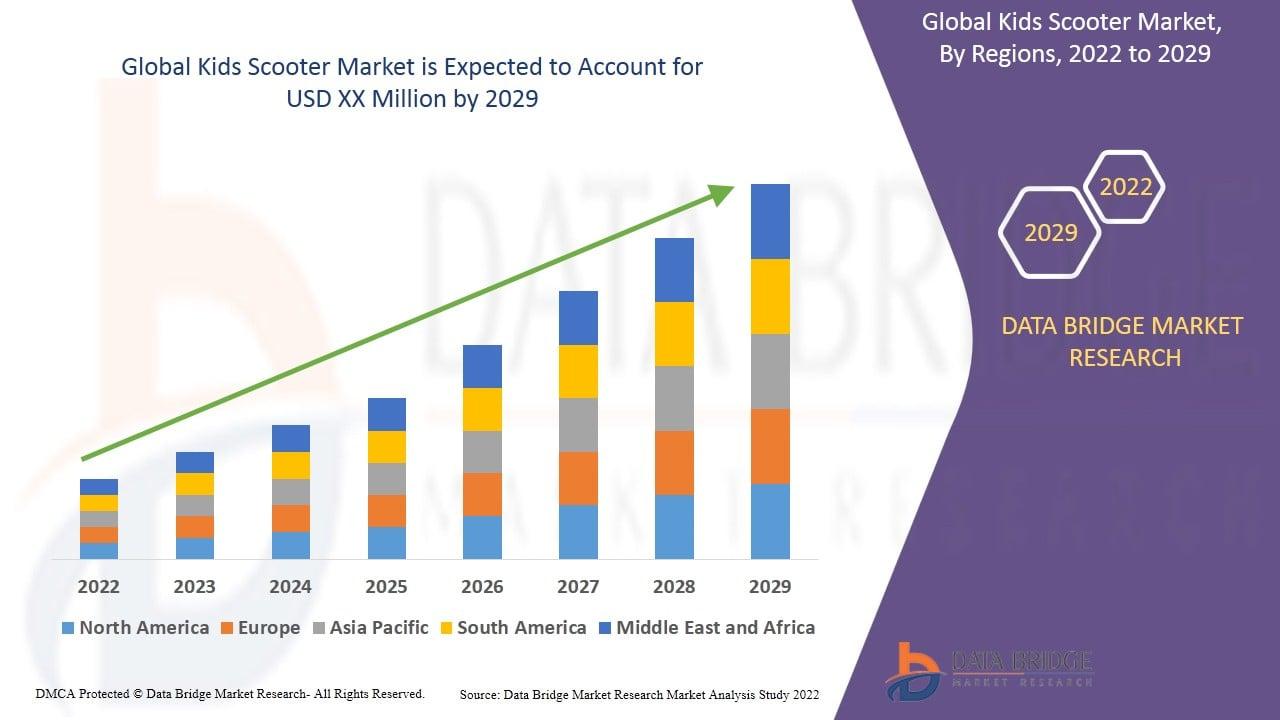
Kids Scooter Market According to the latest report published by Data Bridge Market Research, the Kids Scooter Market The kids scooter market is expected to be growing at a growth rate of 4.70% in the forecast period of 2022 to 2029. Kids Scooter Market survey report is intended to help the readers develop a practical and intelligent approach to market dynamics and exploit...
Logan is a Legendary Infantry hero who brings a mix of raw durability and crowd control to your lineup. With base stats of 2,554 Attack, 3,330 Defense, and 49,950 Health (Attack and Defense multipliers at roughly 290.23%), he excels as a frontline tank that can absorb punishment while disrupting enemies. This guide covers everything you need to know to unlock and optimize him for mid-to-late...

In today’s fast-paced digital environment, users expect quick, simple, and secure access to their online accounts. A smooth login process plays an important role in improving user experience and saving valuable time. Winbuzz Login is designed to provide users with a convenient way to access their accounts without unnecessary steps or delays. With an easy-to-use interface, fast...

在數位娛樂浪潮席捲全球的時代,智能手機早已成為現代人不可或缺的隨身裝置。這股趨勢徹底改變了玩家參與線上娛樂的方式,從過去必須坐在電腦前,進化到如今只需輕點屏幕,就能隨時隨地進入精彩的博弈世界。對於追求極致便利與頂級遊戲體驗的香港玩家而言,gameone app 的出現,標誌著一個全新移動娛樂紀元的來臨。這款應用程式不僅是將傳統賭場濃縮於掌心,更是一個集合了尖端技術、豐富遊戲種類與人性化服務的綜合性平台,重新定義了「隨時隨地享受賭場樂趣」的含義。 移動博弈的革新者:GameOne App 的誕生背景 長久以來,實體賭場以其獨特的氛圍和即時互動性吸引著無數玩家。然而,前往實體賭場往往受限於地理位置、營業時間以及個人行程安排。線上賭場的出現解決了部分問題,但早期的線上平台大多依賴電腦瀏覽器操作,便攜性始終是個瓶頸。隨著 5G...

Dealing with bed bugs is one of the most stressful things a homeowner can face. You feel itchy, tired, and honestly, a bit overwhelmed. You want the bugs gone yesterday. But who can you actually trust to get it done? When you need bedbug control services in Pennsylvania, you shouldn't have to guess. You need a team that knows the local area and the biology of these pests. Choosing the right...