


How to Choose a Budget Smartphone Without Sacrificing Everyday Performance
Buying a new smartphone does not always mean spending several hundred dollars on the latest flagship. For many people, a phone needs to handle everyday tasks reliably without putting unnecessary pressure on the budget. Calling, messaging, browsing, taking photos, watching videos, using social media, and running essential apps are the main priorities for a large number of users.
The challenge is finding a device that offers a sensible balance between price, performance, battery life, camera quality, and durability. A low price can be attractive, but the cheapest option is not automatically the best choice. Looking carefully at specifications and considering how the phone will actually be used can make the buying process much easier.
If you are searching for the best cheap phones, it helps to look beyond the price shown on the product page. A good budget smartphone should provide useful features today while remaining practical enough to use for years.
Start With Your Everyday Smartphone Needs
Before comparing individual models, think about what you actually expect from your phone.
Someone who primarily uses a smartphone for calls, messages, email, and web browsing does not necessarily need a powerful processor or an advanced camera system. On the other hand, someone who spends hours watching videos, taking pictures, using navigation, or playing demanding mobile applications may benefit from stronger hardware.
I find it useful to divide smartphone needs into a few basic categories:
- Communication and messaging
- Social media and web browsing
- Photography and video
- Streaming and entertainment
- Gaming and demanding applications
- Navigation and travel
- Work and productivity
Once you know which activities matter most, you can concentrate on the specifications that directly affect those tasks.
Look Closely at the Processor
The processor plays a major role in how a smartphone feels during everyday use. It affects application loading, multitasking, animations, gaming performance, and overall responsiveness.
Budget phones can use processors designed specifically to deliver reasonable performance while keeping the device affordable. Instead of choosing a phone based only on processor branding, consider the overall hardware configuration.
A phone with an efficient processor and sufficient RAM can feel smoother than a device with a more impressive specification on paper but poor optimization.
For basic tasks, you do not necessarily need the fastest chipset available. If you regularly switch between several applications or use more demanding software, however, investing slightly more in processing capability can make a noticeable difference.
RAM and Storage Matter More Than Many Buyers Expect
RAM determines how effectively a smartphone can keep applications available in the background. More RAM can be particularly useful if you frequently move between messaging, browsers, social media, maps, and other applications.
Storage is equally important. Applications, photos, videos, documents, and system files can consume space surprisingly quickly.
When comparing budget smartphones, I recommend checking both the internal storage capacity and whether the device supports expandable storage. A larger storage option may cost more initially, but it can be worthwhile if you take many photos or download a lot of content.
It is also worth remembering that the advertised storage is not completely available for personal files because the operating system and preinstalled software occupy part of it.
Battery Life Should Be a Major Consideration
A smartphone with excellent specifications becomes inconvenient if it constantly needs to be charged.
Battery capacity is usually listed in milliamp-hours, but capacity alone does not tell the whole story. Screen size, processor efficiency, software optimization, network usage, camera activity, and brightness all influence how long a phone lasts between charges.
If you spend considerable time away from a power outlet, battery endurance should be near the top of your checklist.
Brands such as OUKITEL have also built attention around smartphones designed with battery capacity and practical outdoor use in mind. Depending on your lifestyle, a larger battery can sometimes be more valuable than a minor improvement in another specification.
Consider the Display Quality
The display is one of the components you interact with every time you use your smartphone.
When comparing affordable phones, look at screen size, resolution, brightness, refresh rate, and panel technology. A larger screen can be useful for reading, watching videos, and browsing websites, while a smaller display may be easier to carry and operate with one hand.
Brightness deserves particular attention if you frequently use your phone outdoors. A screen that looks good indoors may become difficult to read under strong sunlight.
A higher refresh rate can also make scrolling and animations appear smoother. However, it should be considered alongside battery efficiency rather than treated as the only measure of display quality.
Do Not Ignore Camera Performance
You do not need a flagship camera system to capture useful everyday photographs.
For casual photography, factors such as image processing, autofocus, exposure, stabilization, and software can be just as important as megapixel numbers. A camera with a huge megapixel count does not automatically produce better photographs.
Think about the types of pictures you normally take. If most of your photos are family moments, food, pets, travel scenes, or social media posts, a dependable main camera may be more useful than several secondary sensors.
It is also worth checking front-camera quality if you regularly make video calls or take selfies.
Build Quality Can Make a Budget Phone a Better Investment
Price-conscious buyers sometimes focus so heavily on specifications that they overlook physical durability.
A smartphone is carried around every day, placed on tables, kept in bags, and exposed to accidental drops and environmental conditions. Strong construction can therefore be an important part of overall value.
If you work outdoors or regularly travel in demanding environments, look for features such as reinforced construction and appropriate water or dust resistance. These features may add practical value that is not immediately obvious from a basic specification comparison.
For ordinary indoor use, a slim and lightweight design may be more appealing. The right choice depends on your lifestyle rather than a universal definition of the perfect phone.
Check the Software Experience
Hardware is only one part of a smartphone. Software determines how you interact with the device and how comfortably it handles everyday tasks.
Before purchasing, consider the operating system version, user interface, available features, and expected software support. A phone should provide access to the applications and services you depend on.
Software updates are also important from a security and usability perspective. If you plan to keep your phone for several years, understanding the manufacturer's update approach can help you make a more informed purchase.
A clean, responsive interface can make an affordable phone feel considerably better in daily use.
Compare Connectivity Features
Modern smartphones can support a range of connectivity technologies, including cellular networks, Wi-Fi, Bluetooth, GPS, and sometimes NFC.
Your requirements should determine which features deserve priority. For example, someone who frequently uses wireless accessories may care about Bluetooth support, while another person may place greater importance on reliable GPS for navigation.
If you expect to keep the phone for several years, checking network compatibility is especially important. A device should support the cellular bands and network technology used by your carrier.
Think About the Total Value, Not Just the Price
A phone that costs slightly more can sometimes offer substantially better value.
Imagine two smartphones with similar prices. One has more storage, a stronger battery, better build quality, and a smoother display, while the other has a higher camera megapixel count but weaker battery performance. The better choice depends on your priorities.
I prefer to compare phones based on the features I will actually use instead of simply choosing the model with the longest specification list.
This approach can also prevent unnecessary spending. If you rarely take photographs, there may be little reason to pay extra for an advanced camera system. If battery life is critical, spending more on a larger battery could make considerably more sense.
Set a Realistic Budget Before Shopping
Having a specific spending limit makes smartphone shopping easier.
Start with the maximum amount you are comfortable spending, then identify the features that are essential. Separate those from features that would simply be nice to have.
For example, you might decide that you need:
- Reliable everyday performance
- At least a certain amount of storage
- Strong battery life
- A bright display
- Good network compatibility
- A dependable camera
Once those requirements are established, you can compare available devices without being distracted by unnecessary extras.
Read Reviews With Your Own Priorities in Mind
Reviews are useful, but remember that reviewers may have different needs from yours.
A reviewer who prioritizes mobile photography may criticize a phone's camera even though it is perfectly adequate for casual snapshots. Another reviewer focused on gaming may consider a processor too slow when it could be more than sufficient for browsing and messaging.
Look for repeated observations across several reviews. Consistent comments about battery life, display quality, software responsiveness, camera performance, or build quality are more useful than a single opinion.
A Practical Way to Make the Final Choice
Once you have narrowed down your options, compare the phones side by side.
Check the processor, RAM, storage, battery capacity, display, cameras, connectivity, durability, software, and warranty. Then consider whether each feature matters to your actual routine.
The ideal budget smartphone is not necessarily the one with the lowest price or the longest list of specifications. It is the one that provides the features you need without making you pay for capabilities you are unlikely to use.
Taking a little time to compare those details can help you find a phone that feels like a smart purchase rather than a temporary compromise. With careful research, budget-conscious shoppers can find capable smartphones that handle everyday communication, entertainment, photography, and productivity without requiring flagship-level spending.
Κατηγορίες
Διαβάζω περισσότερα
Understanding the mechanics of digital visibility has never been more critical. For independent professionals and established agencies alike, knowing the exact protocols to establish a footprint is the cornerstone of modern commerce. When entrepreneurs actively seek to Free Business Listing UK platforms, they are essentially planting digital flags in high-traffic territories. In 2026,...

A long time ago, companies stopped outsourcing only simple jobs. Now they also hire other people to do work that requires a lot of thinking. In this case, knowledge process outsourcing comes in handy. It goes beyond simple tasks and focuses on complex, high-value jobs that need knowledge, analysis, and experience. KPO services, on the other hand, do more complicated tasks like...

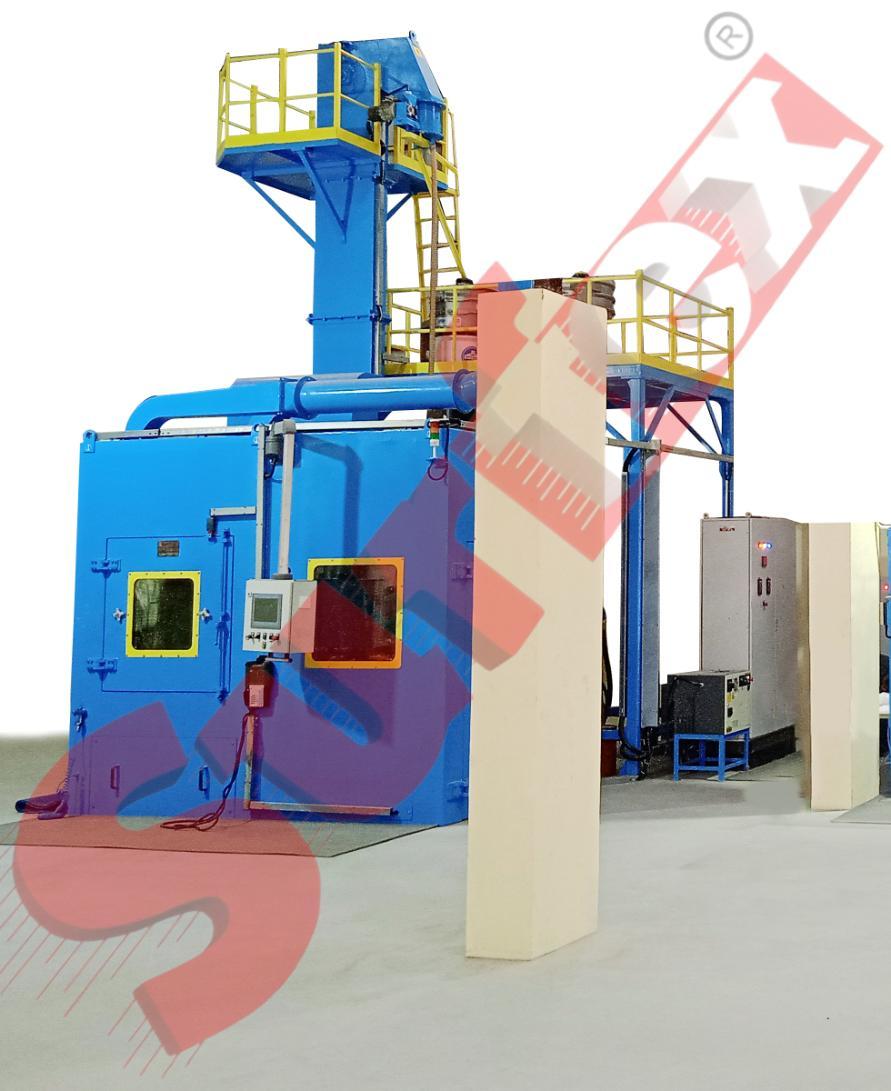
India has become one of the fastest-growing industrial manufacturing hubs in the world. Industries like automotive, aerospace, construction, railways, foundry, steel fabrication, and heavy engineering require advanced surface preparation technologies for better product quality and durability. Among these technologies, shot blasting machines play a vital role. However, choosing the right shot...
Polaris Market Research has introduced a new market research report entitled Marketing Attribution Software Market Share, Size, Trends, Industry Analysis Report, By Component (Services and Solution); By Attribution Type; By Deployment Type; By Industry Verticals; By Region; Segment Forecast, 2023 – 2032, which acts as a reliable resource for analyzing historic and forecast measures,...

The online gambling industry continues to grow rapidly, offering players around the world access to exciting casino experiences from the comfort of their homes. One name that has been gaining attention among players is miototo. Known for its diverse gaming options and user-friendly platform, Miototo is becoming a popular choice for both beginners and experienced gamblers. What is Miototo...