How Do Lightroom Presets Make Photo Editing Faster? A Complete Guide
How Do Lightroom Presets Make Photo Editing Faster? A Complete Guide
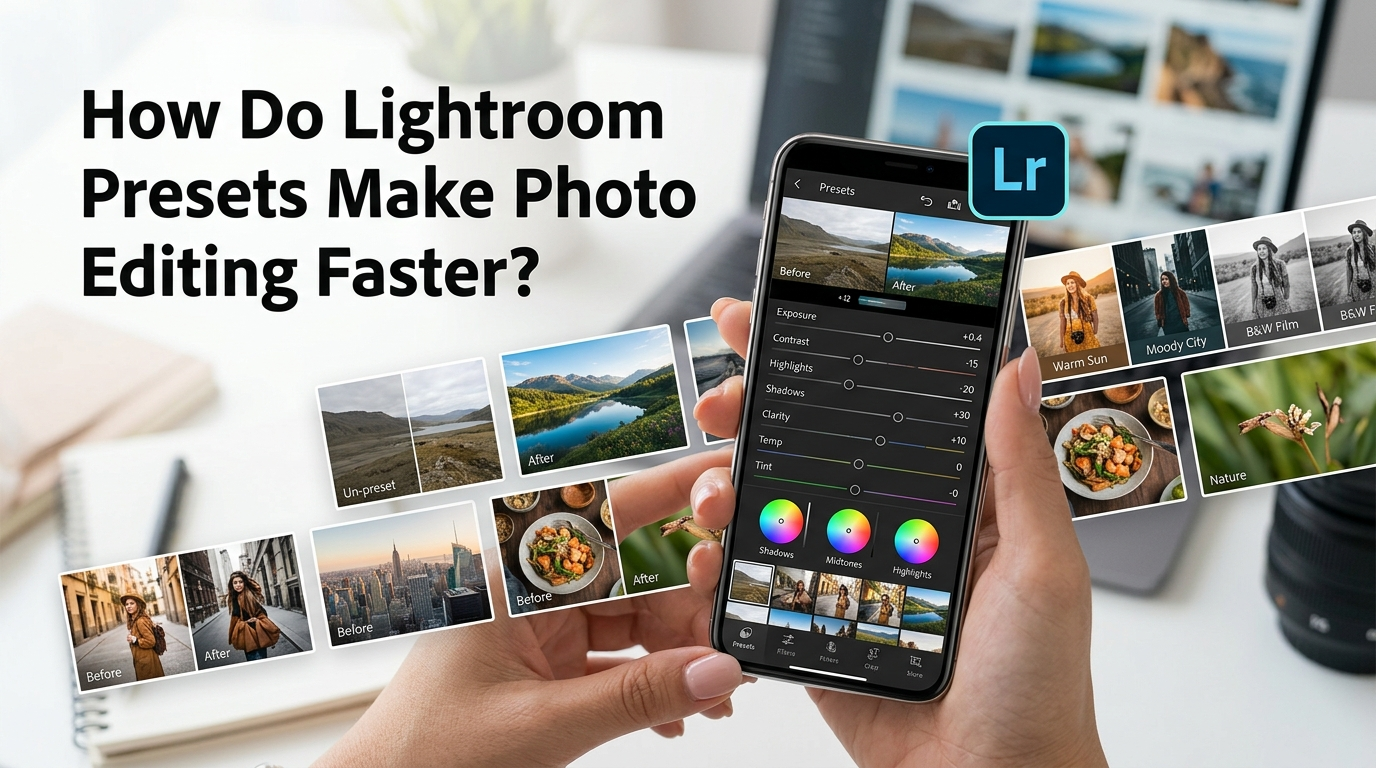
Photo editing can become time-consuming when you adjust every image manually. This is especially true when working with large collections from a wedding, trip, event, or professional photo session. Adobe Lightroom Mod APK users and mobile photographers can explore presets as a practical way to speed up repetitive editing tasks while maintaining a consistent visual style.
Lightroom presets allow multiple adjustments to be applied at once instead of changing each setting individually. They can provide a useful starting point for beginners while helping experienced photographers reduce repetitive work.
What Are Lightroom Presets?
A Lightroom preset is a saved collection of editing adjustments that can be applied to a photograph.
Instead of manually changing exposure, contrast, highlights, shadows, temperature, saturation, and other settings, a preset applies those adjustments together.
You can then modify individual settings to match the particular photograph.
Presets do not have to be treated as a final edit. They are often more useful as a starting point that helps you reach your desired look faster.
Why Do Lightroom Presets Make Editing Faster?
The biggest advantage of presets is that they reduce repetitive adjustments.
Imagine editing 50 photographs from the same event. If every image requires similar color and light adjustments, manually repeating those changes can take considerable time.
With a suitable preset, you can apply a consistent starting adjustment to multiple photographs and then make smaller corrections where necessary.
This makes the editing process more efficient without completely removing manual control.
How Presets Reduce Repetitive Adjustments
Manual editing requires you to change individual settings repeatedly.
For example, you might normally adjust:
-
Exposure
-
Contrast
-
Highlights
-
Shadows
-
Temperature
-
Tint
-
Vibrance
-
Saturation
-
Clarity
A preset can store many of these adjustments together.
Instead of repeating the same sequence for every photograph, you can apply the preset first and then concentrate on adjustments that are unique to each image.
Creating a Consistent Photo Style
Consistency is another major benefit of presets.
Photographers often want images from the same collection to have a similar appearance. Applying a suitable preset can help establish a common visual foundation across multiple photographs.
This can be particularly useful for:
-
Travel photography
-
Portrait sessions
-
Wedding photography
-
Food photography
-
Street photography
-
Social media content
-
Lifestyle photography
A consistent style can make a collection of photographs feel more organized and visually connected.
Using Presets for Multiple Photos
Presets become particularly useful when you have many photographs to edit.
For example, a photographer may return from a vacation with hundreds of images. Applying an appropriate preset can provide a similar starting point across the collection.
However, lighting conditions may differ between photographs. Some images may require additional exposure or color adjustments after the preset is applied.
The best workflow is therefore to use presets as a starting point rather than expecting one preset to perfectly edit every image.
Presets for Different Photography Styles
Different types of photography often benefit from different editing approaches.
A warm preset may work well for travel photographs, while a softer look may be more appropriate for portraits.
Other photographers may prefer:
-
Natural colors
-
Cinematic tones
-
Vintage effects
-
Black-and-white styles
-
Moody edits
-
Bright and clean looks
Experimenting with different presets can help you discover which visual styles work best for your photographs.
How Beginners Can Use Presets
Presets can be especially useful for people who are learning photo editing.
Beginners may not immediately understand how every Lightroom adjustment affects an image. Applying a preset provides an opportunity to see multiple changes at once.
After applying the preset, you can inspect the individual settings and experiment with them.
This can turn presets into a learning tool rather than simply a shortcut.
Adjusting a Preset After Applying It
Applying a preset does not mean you should leave every setting unchanged.
Every photograph has different lighting, colors, subjects, and exposure conditions.
After applying a preset, check the image carefully and adjust settings such as:
-
Exposure
-
White balance
-
Highlights
-
Shadows
-
Contrast
-
Saturation
-
Sharpness
Small adjustments can make the preset work much better with the specific photograph.
Presets vs Manual Editing
Manual editing gives you complete control over every adjustment.
Presets, on the other hand, provide a faster starting point.
Neither approach is necessarily better for every situation. Manual editing may be preferable when an image requires detailed corrections, while presets can save significant time when working with many similar photographs.
Many photographers combine both approaches.
They apply a preset first and then manually refine the result.
Common Mistakes When Using Presets
Presets can save time, but they can also create problems when used incorrectly.
Using Too Much Saturation
Some presets produce strong colors. Applying them without adjustment can make photographs appear unnatural.
Ignoring Exposure
A preset designed for one lighting condition may not work perfectly on an underexposed or overexposed image.
Using One Preset for Everything
Different photographs often require different editing approaches.
Never Making Manual Adjustments
Presets should provide a starting point rather than completely replace your judgment.
Choosing Style Over Image Quality
A dramatic effect may look interesting, but it should not compromise the quality or natural appearance of the photograph.
How to Build Your Own Preset Workflow
Creating a simple preset workflow can make regular editing much more efficient.
Start by identifying the editing adjustments you commonly use. Save those settings as a preset and test them on different photographs.
Over time, you can develop several presets for different situations.
For example, you might have separate starting points for indoor portraits, outdoor photographs, landscapes, and social media images.
This allows you to choose a suitable starting point instead of repeatedly rebuilding the same adjustments.
Lightroom Mobile and Preset Editing
Mobile photo editing has become increasingly popular because smartphones allow photographers to capture and edit images from almost anywhere.
Presets can make mobile editing particularly convenient because they reduce the number of individual adjustments required on a smaller screen.
A preset can provide a quick starting point before you make final corrections and export the image.
Adobe Lightroom and Faster Photo Editing
Adobe Lightroom provides a workflow where presets and manual adjustments can work together.
Users can apply a preset to establish a general look and then use Lightroom's editing controls to refine the photograph.
This approach can be useful for photographers who want to save time without giving up detailed control.
Users exploring modified versions should also understand that unofficial APK files can vary in source and security. It is important to consider file authenticity, permissions, and device security before installing software from outside official distribution channels.
Tips for Faster Photo Editing
You can make your workflow more efficient by following a few simple practices:
-
Organize photographs before editing.
-
Select the best images first.
-
Use presets as starting points.
-
Apply similar adjustments to groups of photographs.
-
Correct exposure before creative effects.
-
Fine-tune white balance when necessary.
-
Avoid excessive filters.
-
Review images before exporting.
-
Save frequently used settings as presets.
-
Develop a consistent editing workflow.
These habits can reduce repetitive work and make editing more organized.
When Should You Use Presets?
Presets are particularly useful when photographs share similar lighting or visual characteristics.
They can also help when you need to process many images within a limited amount of time.
However, photographs with dramatically different lighting conditions may require more individual adjustments.
Understanding when to use a preset and when to edit manually is an important part of developing an efficient workflow.
Final Thoughts
Lightroom presets can make photo editing faster by reducing repetitive adjustments and providing a consistent starting point for multiple photographs.
They are useful for beginners who are learning editing techniques and experienced photographers who want to process larger collections more efficiently.
The most effective approach is to combine presets with manual adjustments. Apply a suitable preset, review the result, and make the necessary corrections for each photograph.
When used this way, presets can save time while still allowing you to maintain control over the final appearance of your images.
Read More
Frequently Asked Questions
Can Lightroom presets really save time?
Yes. Presets apply multiple saved adjustments at once, reducing the need to manually repeat the same editing steps.
Are Lightroom presets suitable for beginners?
Yes. Presets can give beginners a useful starting point and help them understand how different adjustments change a photograph.
Can I edit a preset after applying it?
Yes. You can manually adjust individual settings after applying a preset to better match the photograph.
Should I use the same preset on every photo?
Not always. Different lighting and subjects may require different presets or additional manual adjustments.
Are presets useful for editing many photos?
Yes. They can significantly reduce repetitive work when multiple photographs require a similar editing style.
Do presets completely replace manual editing?
No. Presets are best used as a starting point, while manual adjustments help refine each individual photograph.
What types of photography can benefit from presets?
Portraits, travel, weddings, landscapes, food photography, lifestyle images, and social media content can all benefit from preset-based workflows.
Can presets help create a consistent photography style?
Yes. Using similar starting adjustments across a collection can help create a more consistent visual appearance.
Catégories
Lire la suite
Umrah planning requires commitment, patience, and time management. UK Muslims frequently seek when pricing seems to be fair and consistent. The month of March offers both comfort and affordability. The timing of bookings and their importance have been discussed in this guide. The believers are taught to act wisely by the Quran. The major concern is eliminated when Umrah packages from UK are...
sc88.website là nền tảng giải trí trực tuyến mới ra mắt, mang đến hệ sinh thái đa dạng và trải nghiệm hiện đại cho người dùng. Ngay từ khi xuất hiện, SC88 đã tạo được dấu ấn tích cực nhờ sự đầu tư bài bản về công nghệ, giao diện tối ưu và tốc độ xử lý nhanh. Trong bối cảnh nhu cầu giải trí online ngày...

https://justpaste.it/nxipl
Detailed Analysis of Executive Summary Fine Bubble Diffuser Market Size and Share CAGR Value The global fine bubble diffuser market size was valued at USD 773.98 million in 2024 and is expected to reach USD 1349.86 million by 2032, at a CAGR of 7.2% during the forecast period When market research report is brilliant and precise, it proves to be a backbone for the business that helps...
The rise of online sports betting in India has made platforms like Lotus365 incredibly popular among cricket fans, casino players, and bettors looking for a fast, reliable, all-in-one betting experience. Whether it’s IPL, BBL, international cricket, football leagues, tennis, or live casino gaming, Lotus365 delivers a streamlined interface and quick access to hundreds of markets....