Bar Refrigerator: A Complete Guide to Choosing the Right Commercial Bar Refrigerator
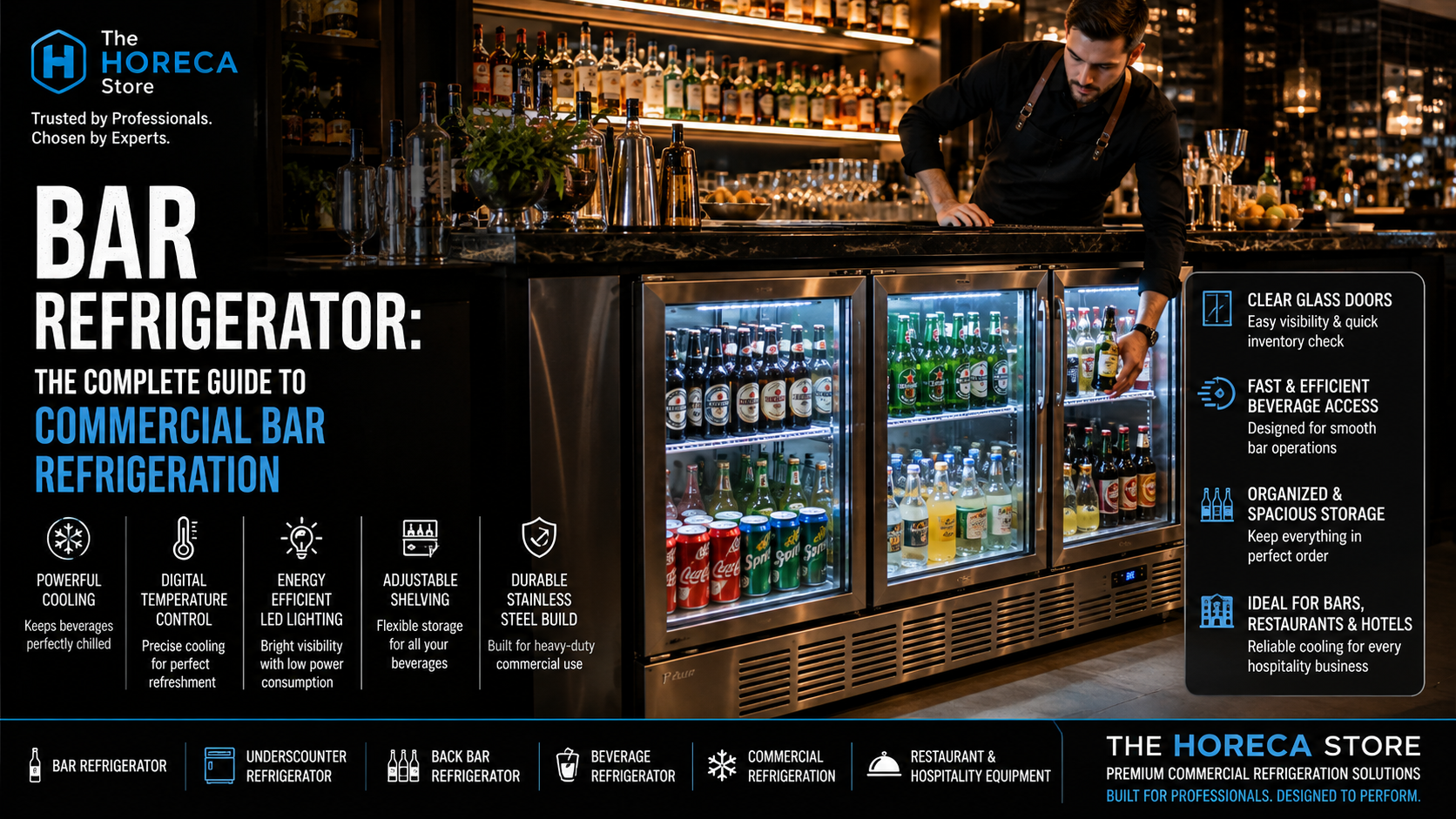
A reliable bar refrigerator is an essential piece of equipment for restaurants, bars, pubs, hotels, cafés, nightclubs, and other beverage-focused businesses. Cold beverages need to be stored at appropriate temperatures while remaining easily accessible to bartenders and service staff. The right commercial refrigerator can help improve workflow, organize beverage inventory, and support efficient customer service during busy periods.
Unlike residential refrigerators, commercial bar refrigeration equipment is designed for frequent use and demanding hospitality environments. Bartenders may open refrigerator doors repeatedly throughout a shift, so the equipment needs to provide dependable cooling and convenient access.
Whether you operate a small neighborhood bar, a high-volume restaurant, a hotel lounge, or a busy entertainment venue, choosing the right refrigeration equipment requires careful consideration of capacity, dimensions, door configuration, shelving, temperature control, construction, energy efficiency, and maintenance.
The Horeca Store this guide explains what a bar refrigerator is, the different types available, important features to consider, common applications, and how to select the right commercial refrigeration solution for your business.
What Is a Bar Refrigerator?
A bar refrigerator is a commercial refrigeration unit designed primarily for storing beverages and other products used in bars and hospitality environments.
Commercial bar refrigerators can be used to store bottled beer, canned beverages, wine, mixers, juices, water, soft drinks, garnishes, and other refrigerated products.
Depending on the design, bar refrigeration equipment can include glass-door refrigerators, back-bar refrigerators, undercounter refrigerators, bottle coolers, and other specialized configurations.
The main goal is to provide convenient refrigerated storage close to the point of beverage service.
Businesses can explore different commercial bar refrigeration solutions from The Horeca Store to find equipment suited to different bar layouts and beverage storage requirements.
Why Is Commercial Bar Refrigeration Important?
A busy bar depends on fast access to cold beverages. Bartenders need to retrieve drinks quickly without repeatedly walking to a remote storage area.
A properly positioned commercial bar refrigerator can improve workflow by keeping beverages close to the service station.
Reliable refrigeration can also help businesses maintain organized beverage inventory and provide customers with consistently chilled drinks.
During busy service periods, small improvements in accessibility can make a significant difference.
A well-designed refrigeration setup allows staff to spend more time serving customers and less time searching for or transporting beverages.
Benefits of a Commercial Bar Refrigerator
1. Convenient Beverage Storage
A commercial bar refrigerator provides dedicated refrigerated space for beverages and other bar products.
Bottles, cans, mixers, juices, and water can be organized according to the needs of the business.
2. Faster Bartender Workflow
When refrigeration is positioned near the bar, bartenders can retrieve beverages quickly.
This can help reduce unnecessary movement during busy service.
3. Better Inventory Organization
Commercial refrigeration equipment often includes adjustable shelving, allowing businesses to organize different beverage sizes and categories.
Products can be arranged according to brand, type, size, or sales volume.
4. Customer-Friendly Product Display
Glass-door bar refrigerators can make beverages visible to customers.
This can be particularly useful in bars, restaurants, convenience areas, hotels, and other customer-facing environments.
5. Designed for Frequent Use
Commercial bar refrigerators are designed for professional environments where doors may be opened frequently throughout the day.
Durable construction and commercial refrigeration components can help support regular business use.
Types of Bar Refrigerators
Different establishments require different refrigeration configurations.
Back-Bar Refrigerators
Back-bar refrigerators are designed to fit behind a bar and provide convenient access to beverages for bartenders.
They can be useful for storing beer, soft drinks, mixers, juices, water, and other frequently used products.
Some models feature glass doors, making it easy to identify beverages without opening the refrigerator.
Undercounter Bar Refrigerators
Undercounter refrigerators are designed to fit beneath counters and work surfaces.
They can be especially useful when floor space is limited.
A bartender can store frequently used beverages directly underneath the service counter, allowing quick access during busy periods.
Glass-Door Bar Refrigerators
Glass-door refrigeration provides product visibility.
These units are useful when beverage presentation is important or when employees need to identify products quickly.
Interior lighting can further improve visibility.
Bottle Coolers
Bottle coolers are designed specifically for storing bottled and canned beverages.
They are commonly used in bars, pubs, restaurants, and entertainment venues with high beverage turnover.
Wine Refrigeration
Businesses that serve wine may require specialized refrigeration designed for wine storage.
Wine storage requirements can differ from standard beverage refrigeration, so businesses should select equipment appropriate for their wine program.
Important Features to Consider
When choosing a bar refrigerator, businesses should evaluate several features.
Temperature Control
Reliable temperature control is one of the most important considerations.
A commercial refrigerator should provide the appropriate temperature range for the products being stored.
Businesses should follow manufacturer recommendations and applicable food-safety requirements.
Storage Capacity
Consider how many beverages your business typically stores.
A small café may need only a compact refrigerator, while a high-volume bar may require multiple large units.
Consider both average inventory and peak demand.
Door Configuration
Bar refrigerators are available with different door configurations.
Single-door units may be appropriate for smaller operations, while two- or multi-door models can provide greater storage capacity.
Glass doors can improve visibility, while solid doors may be preferred for back-of-house storage.
Adjustable Shelving
Adjustable shelves provide flexibility when storing bottles, cans, cartons, mixers, and other products.
The ability to adjust shelf spacing can help maximize interior space.
Interior Lighting
Interior lighting makes it easier for staff to locate products quickly.
For glass-door refrigerators, lighting can also improve product presentation.
Durable Construction
Commercial bar refrigeration equipment should be built to withstand frequent use.
Durable construction is particularly important in high-volume restaurants, bars, pubs, and hospitality environments.
Choosing the Right Size Bar Refrigerator
Selecting the correct size requires balancing storage needs with available space.
Before purchasing, measure the installation area carefully.
Consider the refrigerator's:
-
Width
-
Height
-
Depth
-
Door clearance
-
Ventilation clearance
-
Service access
-
Location relative to the bar
-
Employee movement
A refrigerator should provide sufficient storage without creating unnecessary obstacles behind the bar.
For smaller establishments, undercounter equipment may provide an efficient solution.
Larger bars may require multiple refrigerators or larger back-bar systems.
How Much Refrigeration Capacity Does a Bar Need?
The appropriate capacity depends on beverage volume and customer demand.
Start by estimating the number of beverages sold during an average service period.
Then consider peak periods such as weekends, holidays, special events, concerts, and parties.
A bar that sells a high volume of bottled and canned beverages will likely require more refrigerated storage than a cocktail-focused establishment with lower bottled beverage inventory.
Consider how frequently staff restock the refrigerator.
If employees must constantly refill the unit during service, additional capacity may improve workflow.
At the same time, an unnecessarily large refrigerator can take up valuable space and increase operating costs.
Organizing a Bar Refrigerator
Good organization can make beverage service faster and more efficient.
Keep frequently used beverages in easily accessible locations.
Group similar products together.
Separate alcoholic beverages, soft drinks, mixers, water, juices, and garnishes when appropriate.
Place high-volume products where bartenders can reach them quickly.
Use adjustable shelves to accommodate different bottle and can sizes.
Avoid overloading the refrigerator because excessive inventory can interfere with proper airflow.
An organized refrigerator can also make inventory counting and restocking easier.
Energy Efficiency Considerations
Commercial refrigeration can operate for long periods, making energy consumption an important consideration.
When comparing a bar refrigerator, review the manufacturer's energy specifications and operating requirements.
Keep doors closed whenever possible.
Inspect door gaskets regularly and replace damaged seals.
Avoid placing the refrigerator near excessive heat sources unless the equipment is designed for that environment.
Provide appropriate ventilation and clearance around the refrigeration system.
Keep condenser and ventilation areas clean according to manufacturer recommendations.
Routine maintenance can help the equipment operate efficiently.
Glass Door vs. Solid Door Bar Refrigerator
The choice between glass and solid doors depends on how the refrigerator will be used.
Glass-Door Refrigerators
Glass doors provide visibility and allow employees to identify products without opening the refrigerator.
They can also create an attractive beverage display for customer-facing environments.
Solid-Door Refrigerators
Solid doors can provide a more traditional back-of-house storage solution.
They may be suitable when product visibility is less important and the refrigerator is primarily used for storage.
Businesses should consider location, customer interaction, product presentation, and workflow when choosing between the two.
Bar Refrigerator Placement
The location of the refrigerator can have a significant effect on workflow.
A back-bar refrigerator should be positioned where bartenders can access it easily without interfering with customers or other employees.
Undercounter refrigerators should be installed where they provide convenient access to frequently used beverages.
Customer-facing glass-door units can be positioned where they are visible without blocking traffic.
Always provide appropriate clearance and ventilation according to manufacturer instructions.
Cleaning and Maintenance
Regular cleaning is essential for commercial bar refrigeration.
Clean interior shelves and surfaces regularly.
Remove spills immediately.
Inspect door gaskets for wear or damage.
Clean glass doors to maintain product visibility.
Keep ventilation and refrigeration components clean according to manufacturer recommendations.
Monitor temperatures regularly.
Remove expired or damaged products during inventory checks.
If the refrigerator develops unusual sounds, temperature problems, leaks, or other performance issues, professional service may be required.
A preventive maintenance schedule can help identify problems before they affect beverage inventory or business operations.
Common Mistakes to Avoid
One common mistake is selecting a refrigerator based only on its physical size.
A unit must also provide appropriate storage capacity and temperature performance.
Another mistake is placing the refrigerator where employees cannot access it efficiently.
Overcrowding shelves can restrict airflow and make beverages difficult to retrieve.
Leaving doors open unnecessarily can also increase the workload on the refrigeration system.
Businesses should avoid ignoring damaged door seals or unusual temperature changes.
Finally, neglecting routine cleaning and maintenance can affect equipment performance and service life.
Bar Refrigeration for Different Businesses
Restaurants
Restaurants can use bar refrigerators for beverages, mixers, juices, water, and ingredients used in beverage preparation.
Pubs and Bars
Bars and pubs often need significant refrigerated beverage storage to support high-volume service.
Hotels
Hotels can use commercial bar refrigerators in lounges, restaurants, banquet areas, and hospitality spaces.
Cafés
Cafés can use compact refrigeration to store bottled drinks, juices, milk, and other chilled products.
Nightclubs
Nightclubs can benefit from high-capacity refrigeration positioned close to beverage service stations.
Event Venues
Event venues may require flexible refrigeration for temporary or high-volume beverage service.
Why Choose The Horeca Store?
Selecting commercial refrigeration equipment from a supplier focused on hospitality and foodservice applications can help businesses find equipment suitable for demanding professional environments.
The Horeca Store provides commercial refrigeration solutions for restaurants, bars, pubs, hotels, cafés, and other foodservice businesses.
Businesses looking for a bar refrigerator can explore the bar refrigeration collection from The Horeca Store to review commercial refrigeration options.
When comparing models, consider storage capacity, dimensions, door configuration, shelving, temperature control, construction, lighting, installation requirements, energy consumption, and maintenance needs.
How to Choose the Best Bar Refrigerator
Start by identifying the types of beverages your business sells most frequently.
Estimate average and peak beverage demand.
Determine how much refrigerated storage is required.
Measure the available space behind or beneath the bar.
Decide whether glass or solid doors are more appropriate.
Consider adjustable shelving and interior lighting.
Evaluate temperature controls and operating requirements.
Think about how employees will access the refrigerator during busy service periods.
Finally, consider cleaning, maintenance, energy efficiency, and future business growth.
The best bar refrigerator should fit naturally into your bar layout while providing enough capacity for daily operations.
Final Thoughts
A bar refrigerator is an important investment for restaurants, bars, pubs, hotels, cafés, nightclubs, and other businesses that serve chilled beverages. The right commercial refrigerator can provide organized storage, convenient access, reliable temperature control, and improved workflow.
From undercounter refrigerators to large back-bar and glass-door units, there are many configurations available. The best choice depends on beverage volume, available space, customer visibility, employee workflow, and business requirements.
When selecting commercial bar refrigeration, consider capacity, dimensions, temperature control, door configuration, shelving, lighting, construction, energy efficiency, installation, and maintenance.
Proper organization and regular maintenance are equally important. Keeping products organized, monitoring temperatures, cleaning the equipment, inspecting door seals, and following manufacturer recommendations can help support dependable performance.
For professional bar refrigeration solutions, The Horeca Store provides commercial equipment for a variety of hospitality and foodservice applications. Explore the available bar refrigerator options and select equipment that matches your beverage inventory, bar layout, customer demand, and daily workflow.
Nach Verein filtern
Read More
In today’s fast-paced world, the modular kitchen is much more than a cooking space-it’s the centerpiece of modern homes. Whether you’re upgrading your house or planning a new apartment, a modular kitchen delivers elegant design, unmatched efficiency, and real lifestyle benefits, making it the true heart of contemporary living. - In this comprehensive guide, we explore why...

Healthy, youthful-looking skin is a goal for many people, but factors such as aging, sun exposure, acne scars, and lifestyle habits can affect skin texture and appearance over time. One of the most sought-after cosmetic treatments today is rf microneedling Raleigh nc, a minimally invasive procedure designed to improve skin quality and stimulate natural collagen production. Patients looking for...

Your iPhone is more than just a smartphone—it's your camera, wallet, work device, and connection to friends and family. When it gets damaged, finding the Best iPhone Repairing in San Antonio, Texas becomes a top priority. Whether you're dealing with a cracked screen, weak battery, charging issues, or water damage, choosing a trusted repair service can save you time, money, and...
Nền tảng MB66 Online Slot là một hệ thống giải trí trực tuyến được nhiều game thủ yêu thích nhờ vào bộ sưu tập trò chơi phong phú và trải nghiệm thú vị. Cổng game này mang đến nhiều trò chơi slot với nhiều chủ đề khác nhau, từ lối chơi cổ điển đến xu hướng hiện đại, thỏa mãn nhu cầu của nhiều đối tượng...

Hotshot dispatch services help independent truck drivers and small fleet owners find profitable loads, negotiate rates, manage paperwork, and reduce empty miles. A professional hotshot dispatcher allows drivers to focus on hauling freight while maximizing revenue opportunities. The hotshot trucking industry continues to expand across the United States. With increasing demand for fast and...