


Reach-In Cooler Explained: Benefits, Uses, and Buying Tips for Businesses
Introduction
A purchasing decision in commercial refrigeration is really a workflow decision. It influences product quality, labor pace, safety routines, and the confidence staff bring to every shift. The right choice is not simply the largest cabinet or the lowest quoted price. It is the option that fits the volume, layout, and service standard the operation must protect. Before comparing specifications, define what has to be stored, when it arrives, how often it is accessed, and what a difficult service period looks like.
Understanding the operating need
Begin with a simple demand picture. Estimate the busiest day rather than an average day, then account for delivery schedules, production batches, seasonality, and the amount of reserve stock that makes the team comfortable. Measure the route from receiving to storage and from storage to the point of use. A unit can be technically capable yet create friction when doors conflict with traffic, shelves do not suit common containers, or the equipment sits too far from the people who need it most. This early assessment keeps the purchase grounded in operations.
Features that shape day-to-day performance
Look beyond the headline specification
A focused feature review should cover capacity, temperature range, door configuration, shelf layout, exterior dimensions, ventilation, and service access. Look beyond the headline specification and ask how each feature changes the day-to-day experience. A door needs room to open. Shelves should support the products and containers actually used. Controls should be understandable, and components that need routine attention should not be buried. If the unit will be near customers, appearance and noise may matter; if it will be in a hot back room, ventilation and heat rejection deserve extra attention. Details such as these often determine long-term satisfaction.
Capacity and workflow planning
Translate capacity into usable space
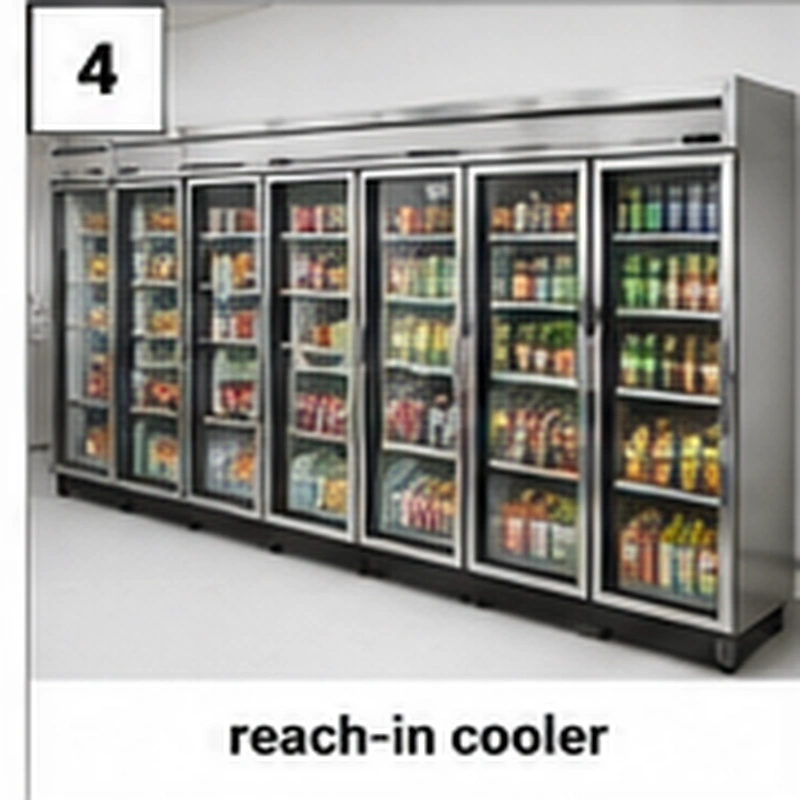
When comparing options, review the reach-in cooler against the actual loading pattern, not only the listed dimensions. Allow room for containers, air circulation, labeled zones, and the occasional surge in deliveries or production. Overfilling can reduce accessibility and make it harder for the equipment to maintain stable conditions. Too much unused capacity can consume valuable floor area and encourage poor organization. The best fit gives staff a clear place for each category of stock and still leaves enough breathing room for safe, efficient movement.
Consider the full path of a product through the space. Goods are received, checked, labeled, stored, selected, and rotated; every step should feel logical. Put frequently used items where they are easiest to reach, reserve less convenient zones for backup stock, and protect airflow around critical components. This approach turns capacity into usable capacity. It also makes training easier because employees can follow a repeatable system rather than relying on memory or searching through crowded shelves.
Installation and site readiness
Prepare the site before delivery
Site readiness is often the difference between a smooth launch and a costly surprise. Confirm doorway widths, hallway turns, ceiling clearance, floor loading, electrical requirements, drainage where relevant, and the manufacturer's required ventilation space. Think about how the unit will be delivered and positioned before it arrives. If installation work is involved, establish who is responsible for each step and what must be complete before the equipment is commissioned. A short pre-installation checklist can prevent delays, damaged finishes, and last-minute changes that compromise the layout.
The surrounding environment matters after installation as well. Heat-producing equipment, direct sun, dust, and blocked vents can place unnecessary stress on a refrigeration system. Give the equipment the clearance it needs, avoid turning a storage area into a crowded catch-all, and make sure staff know which panels must remain accessible. A well-planned location supports consistent performance and makes inspections simpler. It also helps protect the service technician's time when maintenance is needed, which can reduce disruption during busy periods.
Maintenance that protects the investment
Turn routine checks into a system
Reliable performance is created through small, repeatable actions. Good routines include date labeling, shelf zoning, gasket checks, temperature logs, condenser cleaning, and sensible loading. Assign ownership for those tasks rather than assuming someone will notice them. A simple log can capture temperatures, cleaning dates, unusual noise, frost, water, or any change in performance. These records provide early warning and help a technician diagnose an issue faster. They also reinforce the message that cold storage is part of food quality, product quality, and customer experience—not merely an appliance in the background.
Train employees on the habits that protect the investment. Doors and lids should not be held open while staff decide what they need. Warm deliveries should be processed promptly. Shelves and interior surfaces should be kept clean enough to make spills and damaged packaging visible. Staff should know the normal operating range and who to contact when a reading is outside it. Clear expectations reduce wear, support safer handling, and prevent a small issue from becoming an urgent, expensive interruption.
Managing ownership costs
Assess the cost of ownership
Operating cost should be assessed over the life of the equipment, not only on purchase day. The biggest drivers are often gasket condition, airflow, ambient heat, condenser care, lighting, and door-opening habits. Some are design choices; many are operational choices that the team controls every day. A unit that is appropriately sized, properly installed, and routinely maintained usually performs more predictably than one selected solely for its upfront price. Ask for clear information about electrical needs, cleaning intervals, recommended clearances, and parts that require periodic replacement so the budget reflects the real cost of ownership.
There is also a labor-cost dimension. Equipment that makes products easy to locate, supports logical labeling, and recovers quickly after normal access can save minutes across every shift. Those minutes add up in a busy operation. Better organization also reduces over-ordering and the chance that usable inventory expires unseen. For this reason, evaluating efficiency means looking at energy, maintenance, waste, and staff time together. The strongest choice supports all four without forcing the operation to redesign itself around the equipment.
Questions to resolve before ordering
Make the final comparison practical
Before committing, verify the specification sheet against the real site and the real menu or product mix. Ask what happens during the busiest hour, the warmest season, and an unusually large delivery. Confirm the warranty, installation scope, maintenance needs, and expected lead time. Make sure the team understands which accessories, bins, shelves, connections, or services are included and which are separate. These questions are not administrative details; they are how an organization turns a promising product into a dependable working system.
It is useful to revisit the priority list one final time. The preferred solution should align with menu needs, volume, available footprint, electrical service, access patterns, and expected growth. If several models appear similar, favor the one that makes operating standards easier to maintain, not merely the one with the longest feature list. Involve the people who receive deliveries, prep products, clean the space, and close the operation. Their observations often reveal practical issues that a floor plan or product brochure cannot show.
Conclusion
A well-chosen reach-in cooler should support the business long after the initial purchase decision. Use the title's core question as a practical test: does the option protect quality, simplify workflow, fit the site, and offer a manageable path for service and maintenance? When the answer is yes, the purchase becomes a tool for more consistent operations rather than another item to manage. Document the operating expectations from the start, and review them after the first few weeks to make small improvements while habits are still forming.
For a useful next step, compare specifications, capacity, and support options with your own site checklist before placing an order. Browse the available commercial refrigeration and foodservice solutions at The Horeca Store. A careful comparison now can help your team protect inventory, work more efficiently, and deliver the dependable experience customers expect.
Κατηγορίες
Διαβάζω περισσότερα
Education has undergone a remarkable transformation over the past decade. Technology has made learning more accessible, flexible, and personalized than ever before. As a result, more families are choosing an online school that offers students the opportunity to learn from anywhere while receiving a high-quality education. From online middle school to online high school, virtual...

Getting quality sleep has become increasingly difficult for many people today. Stressful routines, excessive screen time, anxiety, and irregular sleep patterns often make it hard to fall asleep or stay asleep throughout the night. Poor sleep not only affects your energy levels but can also impact mental clarity, mood, and overall health. Yu Sleep Supplement is designed as a natural sleep...

Netflix Brings Panama Papers Scandal to the Big Screen In a groundbreaking collaboration, Netflix has partnered with John Wells Productions to develop a feature film based on one of the most significant financial exposés of our time - the Panama Papers scandal. The streaming giant has acquired exclusive rights to the book "Panama Papers: Breaking the Story of How the World's Rich and...

Dune: Awakening Update The latest update for Dune: Awakening arrives with an extensive list of refinements. This patch implements a vast array of adjustments, addressing hundreds of points across the game. Developers have focused on correcting technical issues and closing unintended gameplay advantages. The scale of the modifications is substantial, reflecting a major effort to polish the...

Polaris Market Research has published a brand-new report titled HDPE Pipes Market Size, Share, Trends, Industry Analysis Report: By Diameter ( 3000 MM), Grade, Application, End User, and Region (North America, Europe, Asia Pacific, Latin America, and Middle East & Africa) – Market Forecast, 2025–2034 that includes extensive information and analysis of the industry...