


Efficient Rust Cleaning Laser Solutions for Industrial and Commercial Applications
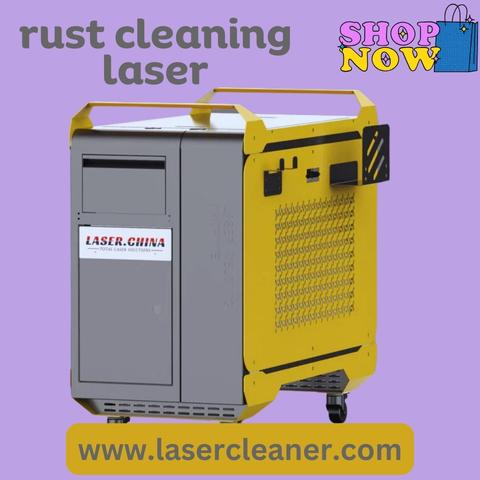
Rust is one of the most common problems faced by industries, workshops, and even households when it comes to metal surfaces. Over time, exposure to moisture, oxygen, and environmental factors leads to corrosion, which can severely affect the integrity and appearance of metal objects. The rust cleaning laser has emerged as a revolutionary tool to address this challenge, offering precise and efficient cleaning solutions across a wide range of applications.
The rust cleaning laser operates on the principle of laser ablation, where concentrated light energy interacts with the surface layer of rust. This interaction effectively removes oxidation without causing damage to the underlying metal. Unlike traditional methods of rust removal, such as sandblasting, chemical treatments, or manual scraping, rust cleaning lasers provide a controlled and focused approach, making them ideal for delicate or intricate surfaces.
Industries that rely heavily on metal components often face recurring problems with rust. Manufacturing plants, automotive workshops, and shipyards frequently encounter surfaces where rust can compromise performance and safety. In these scenarios, rust cleaning lasers can be employed to maintain the quality of tools, machinery, and structural components. The precision of the laser allows for treatment of hard-to-reach areas, ensuring that even corners, joints, and complex geometries are cleaned effectively.
One of the key aspects of rust cleaning lasers is their ability to work on a variety of metals. Steel, iron, aluminum, and other alloys can all undergo surface cleaning without fear of material loss or abrasion. The laser targets only the corrosion layer, leaving the base material intact. This characteristic makes rust cleaning lasers especially useful in industries where maintaining surface integrity is critical, such as aerospace, automotive, and heritage restoration.
Restoration of metal surfaces is another significant application of rust cleaning lasers. Antique items, sculptures, and historical artifacts often suffer from corrosion over time. Using a rust cleaning laser, conservators can carefully remove oxidation while preserving the original details and texture of the metal. This precise control over the cleaning process ensures that delicate items are restored without the risk of over-cleaning or irreversible damage.
The portability of modern rust cleaning laser systems further enhances their usability. Handheld and compact devices allow operators to work directly on site, reducing downtime and the need to transport heavy machinery or components to specialized workshops. This is particularly advantageous in industrial environments where large equipment or structures cannot be easily moved. Operators can address rust in situ, maintaining continuous production processes and minimizing operational interruptions.
In addition to industrial and restoration applications, rust cleaning lasers have found a role in maintenance operations. Bridges, pipelines, storage tanks, and other critical infrastructure often face corrosion due to environmental exposure. Using rust cleaning lasers, maintenance teams can extend the life of these assets by regularly removing surface rust and preventing further deterioration. The controlled nature of the laser ensures that maintenance work is efficient, reducing the risk of accidental damage compared to abrasive or chemical methods.
The environmental impact of rust cleaning lasers is also notable. Unlike chemical rust removers, which can produce hazardous waste and require careful disposal, laser cleaning is a non-contact and dry process. There is no need for chemical solvents, water, or abrasive materials, which reduces the environmental footprint of the cleaning process. Dust or particles generated during laser cleaning are minimal and can often be captured with simple filtration systems, making it a cleaner alternative to traditional rust removal methods.
Training and operational expertise play a significant role in maximizing the effectiveness of rust cleaning lasers. Operators must understand the principles of laser operation, surface preparation, and safety measures. Proper calibration of laser parameters, such as power, pulse duration, and scanning speed, ensures optimal removal of rust while protecting the underlying metal. As technology advances, user-friendly interfaces and automated systems are being integrated into laser cleaning devices, allowing for more consistent results with reduced operator dependency.
The adaptability of rust cleaning lasers allows them to integrate with other maintenance and production workflows. For example, in automotive manufacturing, rust cleaning lasers can be combined with surface coating and painting processes, ensuring that metals are fully prepared before finishing treatments. In industrial equipment maintenance, lasers can be used alongside inspection and monitoring systems to detect corrosion and immediately address it, creating a proactive maintenance cycle that enhances efficiency and longevity.
Safety considerations are essential when using rust cleaning lasers. While the process is contactless and avoids abrasive chemicals, the high-energy laser beam requires proper shielding, protective eyewear, and adherence to operational protocols. Modern laser systems include safety interlocks, emergency stops, and warning indicators to ensure that operators remain protected during cleaning tasks. By following safety guidelines, rust cleaning lasers can be deployed effectively without exposing personnel to undue risk.
As technology evolves, rust cleaning lasers continue to expand their applications. Research into different wavelengths, pulse formats, and automated scanning systems enhances the versatility and precision of these devices. Innovations such as robotic arms equipped with laser cleaning heads allow for continuous and high-speed treatment of large surfaces, further increasing productivity in industrial settings. Such developments highlight the growing importance of rust cleaning lasers as a reliable and innovative solution for corrosion management.
The combination of precision, efficiency, environmental friendliness, and adaptability makes the rust cleaning laser a preferred choice for industries and professionals dealing with metal corrosion. Its ability to handle diverse applications—from intricate restoration to large-scale industrial maintenance—demonstrates the value and practicality of integrating laser technology into routine operations. The focus on preserving underlying metal surfaces while effectively removing rust positions rust cleaning lasers as a forward-looking solution for metal care and maintenance.
In summary, the rust cleaning laser represents a significant advancement in the way metal surfaces are treated. By offering controlled, efficient, and environmentally friendly cleaning, it addresses challenges that traditional methods often struggle with. Its versatility across industries, portability for on-site applications, and suitability for delicate restoration projects highlight the broad potential of this technology. As more industries recognize the benefits of precision laser cleaning, the adoption of rust cleaning laser is expected to grow, shaping the future of corrosion management and metal surface care.
الأقسام
إقرأ المزيد
Debt Mutual Funds are mutual fund schemes that primarily invest in fixed-income securities such as government bonds, corporate bonds, treasury bills, commercial papers and other money-market instruments. These funds are generally considered suitable for investors looking for relatively stable returns and lower volatility compared with equity-oriented mutual funds. At Finowings, investors can...

FUN79 – Exploring Vietnam’s Popular Online Gaming Platform Introduction to FUN79 FUN79 is one of the most well-known online gaming platforms in Vietnam. It offers a large digital environment where users can explore a variety of games and interactive entertainment options. With a focus on system stability, fast performance, and security, FUN 79 has built a reputation for...

Digital Rights Groups Sound Alarm on Wisconsin's Proposed VPN Restrictions Digital freedom advocates are raising concerns about Wisconsin's age verification legislation set for a vote, with the Electronic Frontier Foundation (EFF) condemning it as "a spectacularly bad idea." The controversial bill (AB 105/SB 130) has drawn criticism primarily for its provisions requiring websites containing...

https://www.facebook.com/RetafitGermany/ https://www.facebook.com/MedicGLPGermany/ https://www.facebook.com/VitalProBreezeUnitedKingdom/ https://www.facebook.com/VitalProBreezeUK/ https://www.facebook.com/VitalCoolingBreeze.Get/ https://www.facebook.com/PowerBlastPlusCanada/ https://www.facebook.com/PowerBlastPlusCanada.Get/ https://www.facebook.com/PowerBlastPlus/...

The Middle East And Africa (Mea) Call Center Platforms Market is experiencing an unprecedented digital overhaul. Driven by rapid state-backed economic diversification and massive local cloud infrastructure investments, the regional market is moving swiftly away from rigid legacy hardware. According to comprehensive industry data, while the broader global market expands, the targeted...
