ce marking certification
CE Marking Certification
Introduction
CE marking certification is an essential requirement for manufacturers who intend to sell their products within the European Economic Area. It is a declaration by the manufacturer that the product meets all applicable European Union safety, health, and environmental protection standards. The CE mark facilitates free movement of products across EU member states and demonstrates that a company is committed to quality, regulatory compliance, and consumer safety.
Scope of CE Marking
CE marking applies to a diverse range of products, including electronics, machinery, medical devices, toys, construction products, and personal protective equipment. It is recognized not only within the EU but also globally as a mark of compliance with rigorous safety standards. The CE mark assures consumers and regulatory authorities that the product adheres to established requirements and has undergone proper evaluation processes.
Legal and Regulatory Framework
The CE mark is governed by specific EU directives that outline essential requirements for various product categories. These directives provide legal guidance on design, manufacturing, labeling, and testing requirements. Compliance with these directives is mandatory before a product can be placed on the European market. Manufacturers must identify the relevant directives for their products and ensure that all requirements are fully met to avoid legal issues or market restrictions.
Conformity Assessment Process
The process of obtaining CE marking involves a conformity assessment, which determines whether the product meets the necessary requirements. Depending on the type of product and its associated risk, the assessment can be conducted internally by the manufacturer or externally by a notified body. High-risk products, such as medical devices or industrial machinery, generally require third-party verification. This step ensures that the product is safe, reliable, and fully compliant with EU standards.
Technical Documentation and Declaration of Conformity
An important part of the CE marking process is the creation of a technical file. This file includes detailed information about the product, including design drawings, production processes, risk assessments, test results, and compliance statements. The technical file serves as proof of conformity and must be maintained for several years, depending on the product type. Once the technical file is complete, the manufacturer prepares a Declaration of Conformity, which formally states that the product meets all relevant EU directives.
Benefits of CE Marking Certification
CE marking certification provides numerous advantages for manufacturers and consumers. For businesses, it allows legal access to the European market and enhances credibility with customers, distributors, and regulatory authorities. Certified products are perceived as safer, more reliable, and of higher quality. For consumers, the CE mark provides assurance that the product has been tested and meets stringent safety and environmental standards. Certification also facilitates international trade, as CE-marked products are often accepted in other regions.
Responsibilities of the Manufacturer
Manufacturers are responsible for ensuring that their products continuously comply with CE marking requirements. This includes regular testing, process monitoring, and updating technical documentation as needed. They must also ensure that labeling is accurate and that instructions for use are clear and compliant with EU regulations. Failure to maintain compliance can result in legal penalties, product recalls, and damage to the company’s reputation.
Market Surveillance and Compliance Monitoring
CE marking certification does not end with product approval. European authorities conduct market surveillance to verify that products continue to meet EU standards. Manufacturers must be prepared for inspections, provide technical documentation upon request, and implement corrective measures when necessary. Ongoing compliance ensures sustained market access and reinforces consumer trust in the product and the brand.
Conclusion
CE marking certification is a critical step for manufacturers seeking to enter the European market. It demonstrates adherence to EU safety, health, and environmental standards and provides a competitive advantage. By following the conformity assessment process, maintaining accurate technical documentation, and ensuring ongoing compliance, manufacturers can achieve certification and uphold the quality and reliability of their products. CE marking not only facilitates regulatory approval but also strengthens brand reputation and ensures consumer confidence.
Categorias
Leia mais
According to the latest report published by Data Bridge Market Research, the Europe Anticoagulation Therapy Market The Europe anticoagulation therapy market size was valued at USD 10.06 billion in 2024 and is expected to reach USD 14.75 billion by 2032, at a CAGR of 4.9% during the forecast period Europe Anticoagulation Therapy Market survey...

Shoulder and knee pain can gradually reduce your ability to move freely and comfortably. What begins as mild discomfort can turn into long-term stiffness, swelling, and reduced strength. A modern and effective solution is PRP Injection for Shoulder & Knee in Islamabad, a regenerative treatment designed to repair damaged joint tissues naturally. At Enfield Royal Clinic in Islamabad, this...

" According to the latest report published by Data Bridge Market Research, the Asia-Pacific Road Safety Market The Asia-Pacific Road Safety Market size was valued at USD 693.8 million in 2024 and is expected to reach USD 1.74 billion by 2032, at a CAGR of 12.20% during the forecast period. Competitive analysis carried out in the credible Asia-Pacific Road...
Goa is one of India's most beloved travel destinations, known for its beautiful beaches, rich cultural heritage, and welcoming atmosphere. Every year, visitors from across the country and around the world arrive to experience its unique charm. While the state's natural beauty is a major attraction during the day, Goa Escorts nightlife is what truly sets it apart as a destination that...
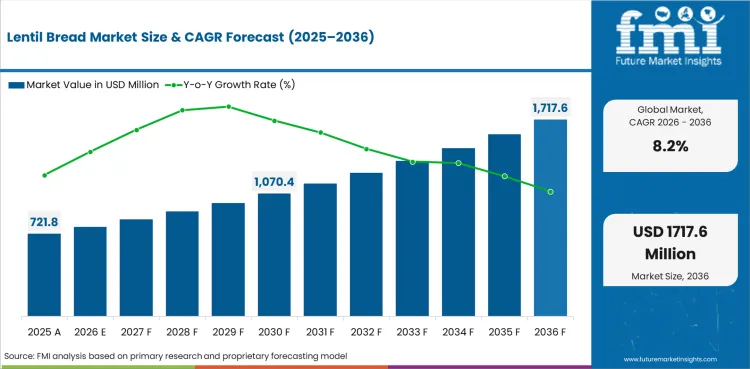
NEWARK, Del., USA | May 19, 2026 — According to Future Market Insights (FMI), the global lentil bread market is experiencing strong growth, driven by rising consumer demand for plant-based, high-protein bakery products, increasing adoption of gluten-conscious diets, and expanding retail availability of functional bread alternatives. The market is also benefiting from growing procurement...