


How Monofilament vs Multifilament Suture Performs in Veterinary Procedures
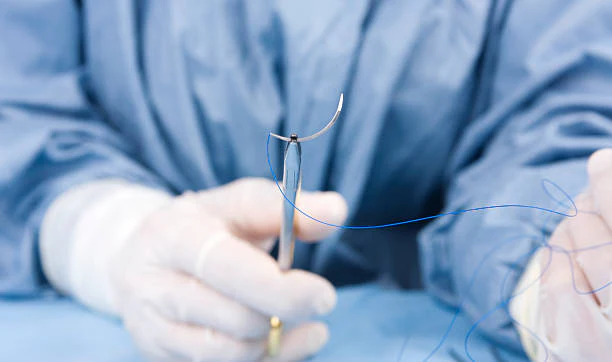
In veterinary surgery, sutures are the unsung heroes that determine how well an animal heals after a procedure. From cesarean section closures and tendon repairs to abdominal wall reconstruction and orthopedic operations, the type of suture material chosen defines not just the quality of closure but the long-term recovery of the patient.
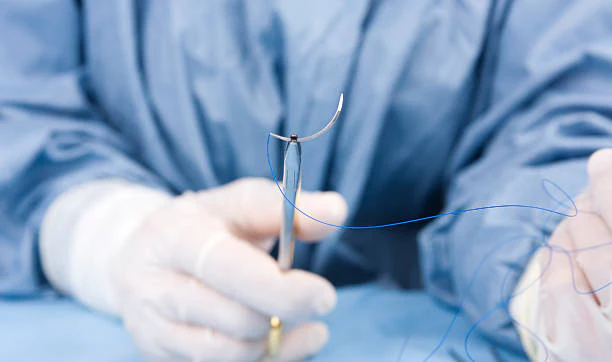
One of the most essential distinctions in suture selection lies in their physical construction, monofilament vs multifilament sutures. Understanding how each behaves during and after surgery is vital for ensuring optimal wound healing, reduced infection risk, and efficient handling for veterinary professionals.
Understanding Suture Construction
The construction of a suture refers to how the material is formed, and it directly impacts handling, tensile strength, infection control, and tissue response. Veterinary surgical sutures are primarily categorized as monofilament or multifilament, and they can be further divided based on their absorbability and composition (synthetic or natural).
Monofilament Sutures
A monofilament suture is made from a single, continuous strand of material. Its smooth, uniform surface glides through tissue easily, minimizing drag and reducing trauma during insertion. Because it lacks spaces or braids, it does not harbor bacteria or fluids, making it ideal for surgeries in contaminated or infection-prone areas.
However, monofilament sutures are less pliable and can exhibit what’s called a “memory effect”, where the suture tends to spring back into its packaged shape. This can make knot tying more challenging, requiring extra care and additional throws to secure each knot firmly.
Veterinary surgeons prefer monofilament sutures when performing abdominal wall closures, tendon repairs, and laparoscopic procedures, where precision and minimal tissue reaction are crucial.
How Monofilament Sutures Perform in Veterinary Procedures
Monofilament sutures like ASSUFIL PDO, PGCL, and ASSUNYL nylon are widely used in veterinary surgeries due to their smooth surface, tensile reliability, and low tissue reactivity.
-
Reduced Infection Risk: The single-strand design prevents bacterial infiltration and fluid retention, making them ideal for contaminated or infection-prone environments.
-
Predictable Absorption: Synthetic polymers such as Polydioxanone (PDO) and PGCL degrade via hydrolysis, providing consistent absorption timelines that align with tissue healing.
-
Tensile Strength: PDO sutures maintain up to 60–70% tensile strength for 3 weeks, ensuring long-term tissue support for slow-healing structures like fascia or tendons.
-
Applications: Commonly used in abdominal wall closures, orthopedic surgeries, laparoscopic operations, and vascular procedures.
Despite their slight stiffness, modern manufacturing techniques have improved flexibility and knot security, making ASSUFIL monofilament sutures dependable for critical procedures where long-term stability is essential.
Multifilament Sutures
Multifilament sutures, on the other hand, are made by twisting or braiding several filaments together. This structure provides greater flexibility and superior handling compared to monofilaments. The increased friction between fibers offers excellent knot security, allowing surgeons to achieve firm, reliable knots with fewer throws.
The trade-off, however, is that the braided design can trap fluids and bacteria, which may increase the risk of infection in contaminated surgical fields. This phenomenon is known as capillarity. Despite this, multifilament sutures remain popular for internal closures, soft-tissue repairs, and areas with low infection risk because of their excellent handling and reliable performance.
The choice between the two ultimately depends on the surgical site, healing speed, and the surgeon’s handling preference.
How Multifilament Sutures Perform in Veterinary Procedures
Multifilament sutures, such as ASSUFIL PGA and ASSUCROM Chromic Catgut, provide unmatched handling and ease of use. Their braided or twisted design enhances knot stability, making them suitable for internal tissue closures and surgeries requiring secure approximation.
-
Superior Knot Security: Due to friction between the braided filaments, multifilament sutures hold knots firmly with fewer throws, saving surgical time.
-
Enhanced Handling: These sutures are flexible and easy to control, even in confined spaces.
-
Versatility: Ideal for soft-tissue surgeries, cesarean section closures, and hand-sewn bowel anastomosis in animals.
-
Natural Absorption: ASSUCROM Chromic Catgut is enzymatically absorbed by the body over 90–120 days with tensile strength loss in 15-20 days from implantation, providing sufficient wound support during early healing phases.
Although multifilaments are more prone to bacterial retention, they remain invaluable in clean surgical environments due to their comfort and performance.
Key Comparison: Monofilament vs Multifilament in Veterinary Practice
|
Feature |
Monofilament Sutures |
Multifilament Sutures |
|
Structure |
Single smooth strand |
Braided or twisted strands |
|
Tissue Drag |
Minimal |
Moderate |
|
Knot Security |
Requires more throws |
Excellent, fewer throws |
|
Handling |
Slightly stiff |
Soft and flexible |
|
Infection Risk |
Low |
Higher (due to capillarity) |
|
Tensile Strength Retention |
High, long-lasting |
Moderate, decreases faster |
|
Absorption Predictability |
Consistent |
Varies by environment |
|
Typical Veterinary Use |
Orthopedic, abdominal, contaminated wounds |
Soft tissue, gastrointestinal, cesarean closures |
|
Examples (Our Range) |
PDO, PGCL, Polyamide 6 |
PGA, Chromic Catgut |
Veterinary surgeons often balance ease of use and infection control when selecting sutures. Monofilaments are used for precision and strength, while multifilaments are preferred for maneuverability and knot reliability. There are also different timelines on how long suture should stay in for each type.
Clinical Applications in Veterinary Surgery
Abdominal and Orthopedic Procedures
For large animal surgeries or mass closure of a midline laparotomy, ASSUFIL PDO monofilament sutures offer long-term tensile strength and controlled absorption. They maintain structural integrity for up to 180–210 days, ensuring secure support during prolonged healing.
Soft Tissue and Cesarean Section Closures
In procedures involving delicate or flexible tissues, such as cesarean sections or intestinal closures, PGA multifilament sutures are often preferred. Their pliability and knot stability facilitate accurate approximation without tissue damage.
Tendon and Ligament Repairs
For tendon or ligament repair, PDO and Polyamide 6 sutures are used due to their exceptional tensile retention and resistance to elongation under tension. These sutures minimize slippage and enhance structural recovery.
Mucosal or Internal Closures
Chromic Catgut (ASSUCROM) is favored for mucosal sutures and internal soft-tissue closures, where short-term tensile strength and natural absorption are desired. It dissolves enzymatically over 90–120 days, with tensile strength loss occurring in the first 15–20 days.
Skin and External Closures
ASSUNYL Polyamide 6 (Nylon) sutures remain a gold standard for skin closures and external sutures. They are durable, inert, and easy to remove, with minimal inflammatory reaction, making them ideal for post-operative cosmetic and functional outcomes.
Handling Characteristics: Knot Security and Memory
|
Handling Characteristic |
Monofilament Sutures |
Multifilament Sutures |
|
Knot Security |
The smooth surface requires additional throws to ensure secure knot formation. |
Braided texture provides excellent grip and superior knot security with fewer throws. |
|
Memory Effect |
May retain coiled shape from packaging, requiring careful tension control and handling. |
Minimal memory effect; flexible and easy to manipulate during surgery. |
|
Tissue Reaction |
Synthetic materials like PDO and PGCL show minimal inflammatory response. |
Natural sutures like Chromic Catgut may cause mild enzymatic reactions during absorption. |
These handling factors influence the surgeon’s preference based on the type of animal, tissue condition, and surgical environment.
Conclusion
The difference between monofilament and multifilament sutures is not about superiority but suitability. Each type brings unique benefits: monofilaments for clean, strength-critical procedures and multifilaments for precision and easy handling.
Gexfix International Corp., the official distributor of Assut Europe S.P.A., provides a full range of veterinary suture materials, including ASSUFIL (PGA, PGCL, PDO), ASSUCROM (Chromic Catgut), and ASSUNYL (Polyamide 6), designed to meet the complex needs of modern animal surgery.
Whether for soft tissue repair, tendon reconstruction, or abdominal closure, Gexfix delivers reliable, certified sutures that help veterinary surgeons perform with confidence and achieve optimal patient outcomes.
Nach Verein filtern
Read More
According to the latest report published by Data Bridge Market Research, the Metal Pallets Market Metal pallets market is expected to gain market growth in the forecast period of 2022 to 2029. Data Bridge Market Research analyses the market to reach at an estimated value of USD 60619.15 million by 2029 and to grow at a CAGR of 45.30% in the above-mentioned forecast period. The winning...

According to the latest report published by Data Bridge Market Research, the Endocrine Resistance–Targeting Drug Market CAGR Value This Endocrine Resistance–Targeting Drug Market research report has been formed with a nice blend of industry insight, smart and practical solutions and newest technology to endow with the better user experience. To execute market...
The global Cloud Video Streaming Market is witnessing dynamic expansion as digital consumption patterns continue to evolve across entertainment, education, enterprise, and social media platforms. Valued at USD 8.69 billion in 2025E, the market is projected to reach USD 35.21 billion by 2033, registering a strong CAGR of 19.15% during the forecast period 2026–2033. The surge in demand for...

As we age, our pores and skin evidently lose collagen, elasticity, and firmness, leading to wrinkles, fine lines, and a tired or hollow appearance. For people in search of a rejuvenated and youthful look without invasive surgery, dermal filler injections in Dubai & Abu Dhabi have emerged as one of the only answers. At Glamorous Clinic in Dubai, sufferers can enjoy safe, professional, and...

"Comprehensive Outlook on Executive Summary Chlorine Market Size and Share The global chlorine market size was valued at USD 34.32 billion in 2024 and is expected to reach USD 60.90 billion by 2032, at a CAGR of 7.43% during the forecast period The Chlorine report includes a range of inhibitors as well as driving forces of the market which are analysed in...