High-Quality Boring Tool for Accurate CNC Operations
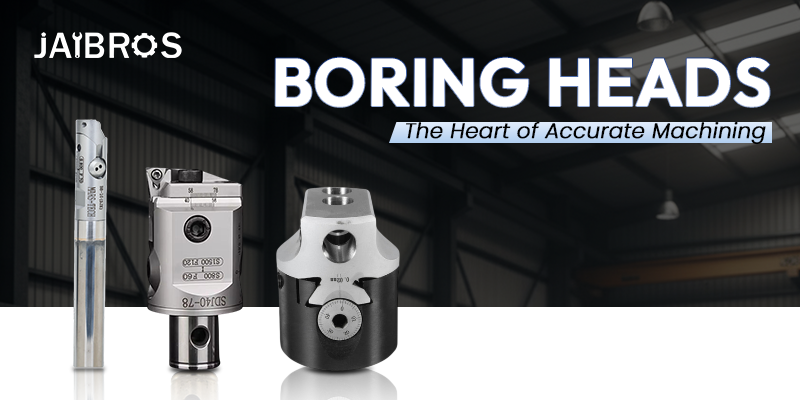
High-quality boring tool designed for accurate CNC operations, offering smooth cutting, long tool life, and reliable performance for precision machining.
Boring Tool for CNC Machining | Precise & Durable Performance
In CNC machining, achieving high precision and consistent durability is essential for manufacturing high-quality components. Among cutting tools, the boring tool plays a crucial role in refining hole sizes, improving surface finish, and maintaining tight tolerances. Whether you are working with metal, composites, or advanced alloys, selecting the right boring tool ensures accuracy, productivity, and long service life. This article explores the fundamentals of boring tools —types, applications, benefits, challenges, and best practices—focusing primarily on VMC boring heads, VMC boring bars, and VMC boring tools.
What Is a Boring Tool?
A boring tool is a cutting device used in CNC machines to enlarge an existing hole or to improve its dimensional accuracy. Unlike drilling—which creates holes from scratch—boring tools refine holes produced by drilling or casting. With CNC (Computer Numerical Control) technology, boring tools deliver incredibly tight tolerances and superior surface finishes required in industries such as aerospace, automotive, oil and gas, and medical manufacturing.
Importance of Precision in Boring Operations
Precision in boring operations determines the quality of the final machined product. Whether producing a critical engine component or a precision valve housing, even minor deviations can lead to assembly issues or functional failures. Precision boring tools maintain accuracy within microns, preserving concentricity, roundness, and surface integrity. This accuracy reduces rework, increases uptime, and enhances product reliability.
Understanding the Boring Head
The boring head is one of the most essential components when performing boring operations on CNC machines. It is adjustable and attaches to the machine spindle or turret. By adjusting the boring head, machine tools can control the cut diameter, enabling them to fine-tune holes with high precision. The boring head's flexibility makes it ideal for both roughing and finishing passes.
Role of Boring Head for VMC Machines
Vertical Machining Centres (VMCs) are widely used in modern CNC workshops. A boring head for VMC allows operators to perform horizontal and vertical boring operations with ease. These heads are designed to fit standard tool holders and can be adjusted for various cutting diameters. With VMCs, the combination of a robust boring head and advanced toolpath control software delivers accurate, repeatable performance across multiple parts.
Boring Bar for VMC Explained
The boring bar for VMC is a specific type of boring tool attachment that extends into the workpiece to reach deeper holes. It is often made from high-strength alloys with optimised geometry to prevent chatter and vibration during cutting. Boring bars for VMC machines must balance rigidity with the ability to reach deep depths, making material selection and design critical to tool performance.
Benefits of Using a Boring Tool for VMC
Integrating the right boring tool for VMC into your CNC process provides several advantages:
-
Enhanced Accuracy: Boring tools correct hole deviations caused by drilling, improving precision to exact diameter specifications.
-
Improved Surface Finish: With the proper tooling and parameters, very smooth internal finishes are achievable, reducing the need for secondary finishing operations.
-
Reduced Cycle Times: Efficient boring tools, combined with VMC capabilities, allow for faster machining speeds and feeds without compromising quality.
-
Cost Savings: Longer tool life and fewer rejects reduce overall production costs.
These benefits make boring tools essential for industries requiring high tolerance and repeatable performance.
Types of Boring Tools
Boring tools come in various designs to suit different machining needs. Common types include:
-
Adjustable Boring Heads: Allow fine diameter adjustments without changing the cutting tool.
-
Fixed-Diameter Boring Bars: Pre-set tools for consistent hole sizes.
-
Modular Boring Systems: Enable quick inserts and different head sizes for flexible machining.
-
Carbide Boring Bars: Highly wear-resistant for tough materials, including stainless steel and hardened alloys.
Each type serves a specific purpose, and selecting the right style depends on hole depth, material, required surface finish, and CNC machine capabilities.
Material Considerations for Boring Tools
The material used to make a boring tool directly influences its performance. Common materials include:
-
High-Speed Steel (HSS): Offers toughness but moderate wear resistance.
-
Carbide: Provides excellent wear resistance and high cutting speeds, making it suitable for repetitive production work.
-
Coated Carbide: Advanced coatings (TiN, TiAlN, etc.) enhance tool life by reducing friction and resisting heat.
Selecting the appropriate tool material ensures that the boring tool performs reliably under machining conditions and delivers consistent quality.
Optimising CNC Parameters for Boring
To maximise boring tool performance, the correct CNC parameters must be used. Factors such as spindle speed, feed rate, depth of cut, and coolant application must be fine-tuned based on the workpiece material and tooling. For example, lighter cuts and higher speeds with adequate coolant can significantly improve surface finish when boring a soft alloy with a boring head. Conversely, more rigid setups and precise feed control help prevent chatter when machining hardened steel.
Common Challenges in Boring Operations
Despite the advantages, boring operations can face challenges:
-
Vibration and Chatter: Especially with long boring bars, instability can degrade surface finish.
-
Tool Wear: High temperatures and abrasive materials accelerate wear.
-
Incorrect Tool Selection: A poorly selected boring tool can reduce accuracy and shorten tool life.
To mitigate these issues, machinists must ensure proper tool setup, use damping techniques, and inspect tooling regularly for wear.
Innovations in Boring Tool Technology
The machining industry is constantly evolving through innovations in boring tool design. Advanced carbide formulations, micro-grain tooling, and improved coatings have significantly expanded tool life and performance. Some modern boring heads come with digital adjustment systems and micrometre-grade controls that allow operators to set diameters with unprecedented accuracy. These innovations directly enhance production capabilities and reduce manufacturing costs.
Best Practices for Boring Tool Maintenance
Maintaining your boring tools is essential to ensure durability and precision. Best practices include:
-
Routine Inspection: Check for wear, chipping, or deformation.
-
Proper Cleaning: Remove chips and debris to prevent damage to the tool.
-
Correct Storage: Store tools in a dry, organised environment.
-
Tool Balancing: Ensure balanced setups to reduce vibration during machining.
Implementing these practices extends the life of boring tools and guarantees consistent performance.
Real-World Applications of Boring Tools
Boring tools are invaluable in several industries. In the aerospace sector, they are used to produce precision holes for fasteners and structural components. Automotive manufacturers rely on boring tools to make engine blocks, transmission housings, and suspension components. Medical device producers use them to create precise cavities in implantable components. Across these applications, the combination of a high-quality VMC boring head and advanced machining techniques produces parts that meet stringent standards.
Future Trends in CNC Boring Technology
The future of boring is tied to intelligent machining and automation. Innovative tooling with embedded sensors can monitor tool wear and cutting conditions in real time, providing feedback for predictive maintenance and optimised machining parameters. Integration with CAD/CAM systems enables seamless transitions between design and production, further enhancing precision and efficiency. As manufacturers adopt Industry 4.0 principles, boring tools will become more connected, adaptive, and performance-driven.
Choosing the Right Supplier for Boring Tools
Selecting a reliable supplier ensures access to high-quality boring heads, VMC boring bars, and complete tool systems backed by technical support. A reputable supplier offers a broad range of tooling options, customisation services, and after-sales assistance. When evaluating suppliers, consider their industry reputation, tooling warranties, material certifications, and ability to deliver solutions tailored to your machining needs.
Company Bio:
Jaibros is a trusted name in the CNC tooling industry, dedicated to supplying high-quality, precision-engineered cutting tools that enable accurate, efficient machining. With a strong focus on performance, durability, and consistency, Jaibros offers a wide range of solutions, including boring tools, boring heads, VMC boring bars, and other CNC accessories designed to meet modern manufacturing demands. Backed by industry expertise and a customer-first approach, Jaibros helps manufacturers enhance productivity, achieve tight tolerances, and maintain reliable machining standards across diverse industrial applications.
Conclusion
Boring tools are indispensable in CNC machining, delivering high precision, improved surface finish, and operational efficiency. From the versatile boring head for VMC to specialised boring bar systems, choosing the proper tooling and machining parameters enhances productivity and cost-effectiveness. Supported by adequate maintenance and technological innovation, these tools help manufacturers achieve complex geometries with confidence. As CNC technology evolves, so will the capabilities of boring tools—driving greater performance, adaptability, and competitive advantage in today’s manufacturing landscape.
Categorie
Leggi tutto
"North America Powder Sulfur Market Summary According to the latest report published by Data Bridge Market Research, the North America Powder Sulfur Market Data Bridge Market Research analyzes that the North America powder sulfur market is expected to reach USD 222,238.39 thousand by 2030 from USD 174,261.07 thousand in 2022, growing with a substantial CAGR of 3.1% in the forecast...

According to the latest report published by Data Bridge Market Research, the Cricket Ball Market Global cricket ball market was valued at USD 220.92 million in 2021 and is expected to reach USD 336.48 million by 2029, registering a CAGR of 5.40% during the forecast period of 2022-2029. Cricket Ball Market report offers a thorough overview of product specification, technology,...

Selecting the right Power Barrow Manufacturer can significantly influence productivity and operational efficiency on construction sites and landscaping projects. A reliable manufacturer focuses on durable designs, ergonomic handling, and consistent performance, ensuring each unit meets the rigorous demands of material transport. For professionals who handle soil, gravel, or construction...
Old gold jewelry often sits forgotten in drawers, tucked away in jewelry boxes, or hidden in family heirlooms. Yet every unwanted ring, broken necklace, or outdated bracelet holds significant value. Today, every reputable Gold Buyer in Australia plays an important role in transforming this idle wealth into valuable new products through a sustainable recycling process. Instead of relying solely...
The journey toward property ownership has shifted away from a one-size-fits-all model, especially for those who don't have a standard paycheck. Many self-employed individuals find that a 1099 loan provides the necessary leverage to secure a home without the traditional headache of providing years of complex tax filings. By focusing on your gross income rather than the net figures after...