


Role of CNC Tool Technology in Modern Manufacturing
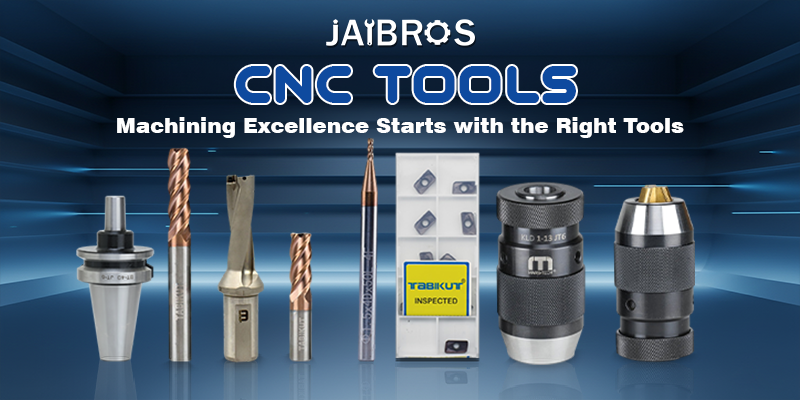
Discover how CNC tool technology improves accuracy, productivity, automation, and efficiency in modern manufacturing processes.
How Advanced CNC Tool Technology Supports Modern Production
Modern manufacturing has evolved rapidly with the adoption of advanced automation and precision engineering. At the heart of this transformation lies the CNC tool, which plays a vital role in achieving accuracy, consistency, and efficiency. As industries demand higher productivity and tighter tolerances, tool technology continues to shape how components are designed and manufactured.
Understanding CNC Tool Technology
Tool technology refers to the design, materials, coatings, and performance capabilities of cutting tools used in machining. A well-engineered CNC tool ensures reliable cutting action, controlled material removal, and stable machining performance. Modern CNC machine tools are capable of high speeds and complex movements, but their performance depends heavily on the quality and design of the tooling system used.
With continuous innovation, tooling has become more application-specific, allowing manufacturers to achieve better results across different materials and operations.
Advancements in Tool Materials and Coatings
One of the biggest developments in machining is the improvement of tool materials and surface coatings. Advanced carbide grades, heat-resistant alloys, and wear-resistant coatings have significantly enhanced cutting performance. These improvements allow a CNC tool to operate at higher speeds while maintaining edge strength and surface finish.
Such advancements reduce tool wear, improve chip control, and increase productivity in demanding operations such as CNC milling and high-volume production.
Improving Accuracy and Consistency
Precision is a critical requirement in modern manufacturing. Advanced tool geometries and tighter manufacturing tolerances help achieve consistent results across long production runs. A properly designed CNC tool maintains dimensional accuracy, reducing variations between parts and minimizing rework.
This level of consistency is especially important in industries such as automotive, aerospace, and engineering, where quality standards are extremely strict.
Another important benefit
modern CNC tool technology is its contribution to faster cycle times. With improved heat resistance and wear protection, tools can operate at higher speeds and feeds without compromising performance. This allows manufacturers to increase output while maintaining stable machining conditions. Advanced tool designs also support better chip evacuation, which is especially important in high-speed CNC milling operations. Efficient chip control prevents tool damage and ensures uninterrupted machining.
Enhancing Production Efficiency
Efficiency is not just about speed—it is about reliability and process stability. Modern tooling solutions enable higher feed rates, reduced cycle times, and smoother cutting action. High-performance CNC tools allow manufacturers to optimize machining parameters without sacrificing quality.
This efficiency also helps businesses manage operational costs more effectively, particularly when considering investments such as CNC machine price and long-term machine utilization.
Supporting Automation and Smart Manufacturing
Automation and digital manufacturing rely heavily on predictable and repeatable processes. Advanced tooling technology supports automated tool changes, adaptive machining, and unmanned production cycles. A reliable CNC tool ensures stable performance even during extended machining hours.
When combined with modern CNC machine tools, advanced tooling enables manufacturers to implement smart manufacturing strategies with minimal operator intervention.
Modern manufacturing relies heavily on advanced machining processes, and continuous innovation in CNC tool technology has played a major role in improving overall production efficiency. Today’s tools are designed with superior materials, optimized geometries, and advanced coatings that allow manufacturers to machine complex components with higher accuracy and consistency. A high-quality CNC tool helps reduce vibration during cutting operations, resulting in better surface finish and tighter dimensional control. This improvement directly minimizes rework and scrap, saving both time and material costs.
Sustainability and Cost Control
Sustainability has become an important focus in manufacturing. Longer tool life and reduced scrap rates contribute to lower material waste and energy consumption. An optimized CNC tool helps manufacturers achieve sustainable production by reducing frequent replacements and minimizing downtime.
In addition, modern CNC tool solutions are compatible with a wide range of CNC machine tools, making them suitable for diverse manufacturing applications. Whether producing automotive parts, aerospace components, or industrial machinery, reliable tools enhance machine utilization and process stability. By investing in advanced tooling technology, manufacturers can achieve consistent quality, longer tool life, and improved productivity—key factors for staying competitive in today’s demanding manufacturing environment.
Conclusion
The role of tooling technology in modern manufacturing cannot be overstated. From improving accuracy and efficiency to supporting automation and sustainability, the CNC tool is a key contributor to successful machining operations. As manufacturing continues to evolve, investing in advanced tooling solutions will remain critical for maintaining productivity and quality.
For manufacturers seeking reliable and precision-engineered tooling solutions, Jaibros offers a wide range of high-quality CNC cutting tools designed to meet modern industrial requirements. With a strong focus on innovation, durability, and performance, Jaibros supports businesses in achieving consistent results and long-term manufacturing success.
FAQs
1. What is CNC tool technology?
It refers to the design, materials, and performance features of cutting tools used in CNC machining.
2. How does tooling technology affect manufacturing efficiency?
Advanced tooling allows faster machining, longer tool life, and reduced downtime.
3. Why are modern tool coatings important?
They reduce wear, improve heat resistance, and extend tool life.
4. How does tooling support automation?
Reliable tools ensure consistent performance during automated and unmanned machining cycles.
5. Can better tooling reduce manufacturing costs?
Yes, it lowers scrap rates, reduces tool changes, and improves machine utilization
Категории
Больше
Explore global procurement solutions with Oddway International and competitive sildigra 250mg tablets price offers. We assist buyers in evaluating sildigra 250mg tablets price and understanding sildigra 250 mg cost. As a recognized sildigra tablets exporter, we provide trusted erectile dysfunction drugs for sildigra tablet USA and international markets. Bulk order available for wholesalers and...

After swearing allegiance to House Harkonnen in Dune: Awakening, your path diverges from the main story and trade-post contracts into a faction questline built on treachery, theft, and assassination. To start, speak to Maxim Kazmir at The Anvil tradepost—he stands a few meters from his Atreides rival, Anton Tolliver. Complete the two preliminary missions involving forged documents and...

The Cartekit CarPlay Adapter is a compact wireless adapter that enables wireless Apple CarPlay functionality in vehicles that already support wired Apple CarPlay. Instead of plugging your iPhone into your car with a Lightning or USB cable every time you drive, the adapter connects to your vehicle's USB port and communicates wirelessly with your iPhone via Bluetooth and Wi-Fi. Official...

Season 7: Love Unveiled Washington, DC, sets the stage for romance's return this autumn as Love Is Blind embarks on its seventh season. Singles dive into an unconventional quest for connection, stripped of phones and visual cues, relying solely on conversation to forge bonds. Within the secluded pods, potential partners discover if a deep emotional foundation can truly blossom into lasting...

A special betting ID is a have-to-have requirement in today's speedy-growing online cricket entertainment company for clients who want brief right of access to stay in cricket markets and persevere with making a bet experience. Whether you are a newbie or an expert player, selecting a dependable platform for online cricket identification can make all of the difference. A trusted provider ways...
