


Understanding the Importance of Chamfer Tools in Machining
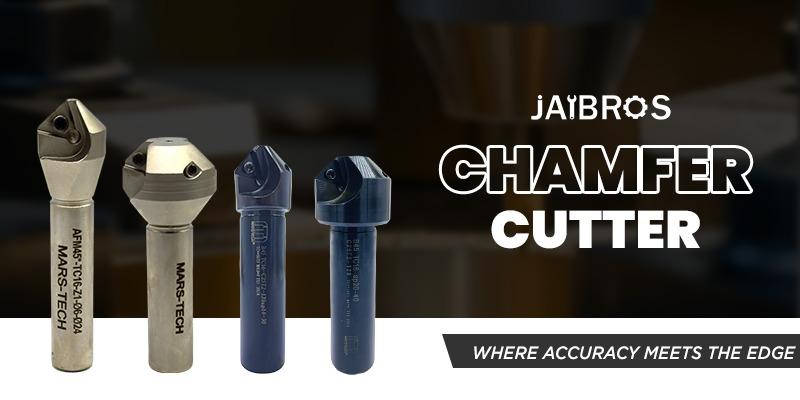
Discover why chamfer tools are essential in precision machining, improving safety, assembly, edge quality, and CNC machining accuracy.
Role of Chamfer Tools in High-Precision Machining
Precision machining is defined by accuracy, consistency, and attention to detail. While most focus is placed on dimensions, tolerances, and surface finish, edge quality is equally critical. Sharp edges left after machining can affect assembly, safety, durability, and overall product performance. This is where a chamfer tool becomes an essential part of the machining process rather than just a finishing accessory.
In modern CNC environments, chamfering is no longer optional. It is a controlled, repeatable operation that supports quality standards across industries such as automotive, aerospace, engineering, and industrial manufacturing.
Understanding Chamfering in Precision Machining
Chamfering is the process of creating a beveled edge between two intersecting surfaces. This bevel removes sharp corners that are produced during drilling, milling, or turning operations. Although the chamfer may appear small, its impact on part functionality is significant.
Using a chamfer tool ensures that the bevel is uniform and consistent across multiple components. This consistency is crucial in precision machining, where even minor variations can lead to assembly issues or part rejection.
Improving Assembly and Fitment
One of the primary reasons chamfering is important is improved assembly. Sharp edges can prevent parts from aligning properly, especially in press-fit, bolted, or sliding assemblies. Chamfered edges act as a guide, allowing components to fit together smoothly.
In high-volume production, improper edge finishing can slow down assembly lines and increase rejection rates. By incorporating chamfering into CNC programs, manufacturers reduce these risks and achieve smoother, faster assembly processes.
Enhancing Safety on the Shop Floor and Beyond
Sharp edges are a safety hazard for machinists, inspectors, and end users. Handling parts with unfinished edges increases the risk of cuts and injuries during production and installation.
Chamfering removes these sharp corners, making components safer to handle throughout their lifecycle. In industries where safety standards are strict, proper edge finishing is not just recommended—it is required.
Reducing Stress Concentration and Increasing Part Life
Sharp corners act as stress concentrators, which can lead to cracks or premature failure under load, vibration, or thermal stress. Chamfered edges help distribute stress more evenly across the part.
By using a chamfer tool during machining, manufacturers improve the mechanical strength and durability of components. This is particularly important for parts subjected to repeated stress, such as shafts, housings, and structural components.
Achieving Better Surface Finish and Visual Quality
Precision machining is not only about function but also about appearance. Clean, uniform edges contribute to a professional finish and reflect high manufacturing standards.
Consistent chamfers improve the overall look of machined parts, which is especially important for components that are visible in final assemblies. Chamfering also eliminates burrs that can affect surface finish and interfere with coatings or treatments.
Supporting CNC Automation and Repeatability
Modern CNC machining relies heavily on automation. Manual deburring or edge finishing introduces inconsistency and increases labor costs.
By programming chamfering operations directly into the CNC cycle, manufacturers achieve repeatable and reliable results. A properly selected chamfer tool allows chamfers to be applied accurately across thousands of identical parts with minimal variation.
Importance of Chamfer Angles in Precision Machining
Chamfer angle selection plays a crucial role in both function and strength. The chamfer tool 45 degree option is the most commonly used because it provides a balanced edge suitable for general-purpose applications.
Different angles may be specified based on design requirements, assembly needs, or stress considerations. Selecting the correct angle ensures that chamfers meet engineering drawings and functional expectations without compromising part integrity.
Role of Back Chamfering in Complex Components
Not all edges are easily accessible. Internal holes, cross-drilled features, and reverse edges often require specialized solutions. A back chamfer tool is designed specifically to machine edges on the backside of a feature.
In CNC milling environments, a back chamfer tool for VMC allows machinists to complete internal chamfering in a single setup. This reduces part repositioning, improves accuracy, and saves valuable machining time.
Improving Efficiency and Reducing Rework
Parts with sharp or uneven edges often fail quality inspections, leading to rework or scrap. Chamfering helps eliminate these issues by producing consistent, compliant edges from the start.
When chamfering is planned correctly, it adds minimal cycle time while significantly reducing downstream problems. Over time, the use of a chamfer tool contributes to smoother workflows and lower production costs.
Meeting Industry Standards and Design Specifications
Many engineering drawings specify chamfer dimensions as part of functional and safety requirements. Ignoring these specifications can result in non-compliant parts and costly delays.
Chamfering ensures that components meet design intent and industry standards. Consistent edge finishing is often a key factor in passing inspections and maintaining customer trust.
Adaptability Across Materials and Applications
Chamfering is required across a wide range of materials, including steel, aluminum, cast iron, and engineering plastics. With proper tooling and cutting parameters, clean chamfers can be achieved regardless of material hardness.
Selecting the right machining strategy ensures tool life is maintained while achieving consistent edge quality. In precision machining, this adaptability is a major advantage.
Conclusion
Chamfering is a critical element of precision machining that directly affects safety, assembly, durability, and quality. From reducing stress concentration to improving automation and consistency, chamfering adds value at every stage of the manufacturing process.
When integrated correctly, a chamfer tool becomes a key contributor to reliable and repeatable CNC machine tool . For manufacturers aiming to meet high-quality standards and efficient production goals, proper chamfering is essential. In demanding machining environments, the correct use of a chamfer tool helps achieve precision, performance, and long-term reliability.
FAQs
1. Why are chamfer tools important in precision machining?
They remove sharp edges, improve assembly, enhance safety, and reduce stress concentration in machined parts.
2. What is the most commonly used chamfer angle?
A 45-degree chamfer is widely used because it offers a good balance between strength and ease of assembly.
3. When is a back chamfer tool required?
It is used for chamfering internal or reverse edges that cannot be reached with standard tools.
4. Can chamfering be automated in CNC machining?
Yes, chamfering can be programmed into CNC operations for consistent and repeatable edge finishing.
5. Does chamfering significantly increase machining time?
When planned properly, chamfering adds minimal cycle time and often reduces rework and inspection issues.
Categories
Read More
In recent years, the global Power MOSFET Market has undergone a transformative journey, fueled by evolving consumer demands, cutting-edge innovations, and an increasing focus on sustainability. Our comprehensive Power MOSFET Market Research Report unveils key strategic insights, highlighting growth trends, market dynamics, competitive landscapes, and emerging opportunities. Power...

Netflix at Venice Film Festival Netflix will unveil five original films globally at the upcoming Venice Film Festival. Esteemed filmmakers like Pablo Larraín, Wes Anderson, Bradley Cooper, David Fincher, and J.A. Bayona are featured. The 80th edition of this prestigious event runs from August 30 to September 9. Stay updated for announcements on when these movies will stream on Netflix....

Yellow Kratom Strain is a distinctive variety known for its smooth profile and specialized preparation process. Unlike traditional kratom types, yellow strains are typically created through unique drying or blending methods that give them their characteristic color and balanced nature. This makes Yellow Kratom Strain a popular choice for individuals seeking a natural option to include...

The Indian Premier League (IPL) is one of the most exciting cricket tournaments in the world, attracting millions of fans every season. Along with the thrill of matches, IPL betting has become increasingly popular among enthusiasts who want to make the games even more engaging. Platforms like Reddybook offer a smooth and user-friendly experience, allowing users to explore various...

In recent years, the global Satellite Spectrum Monitoring Market has undergone a transformative journey, fueled by evolving consumer demands, cutting-edge innovations, and an increasing focus on sustainability. Our comprehensive Satellite Spectrum Monitoring Market Research Report unveils key strategic insights, highlighting growth trends, market dynamics, competitive landscapes,...