


Top Technology Trends That Will Shape the Future
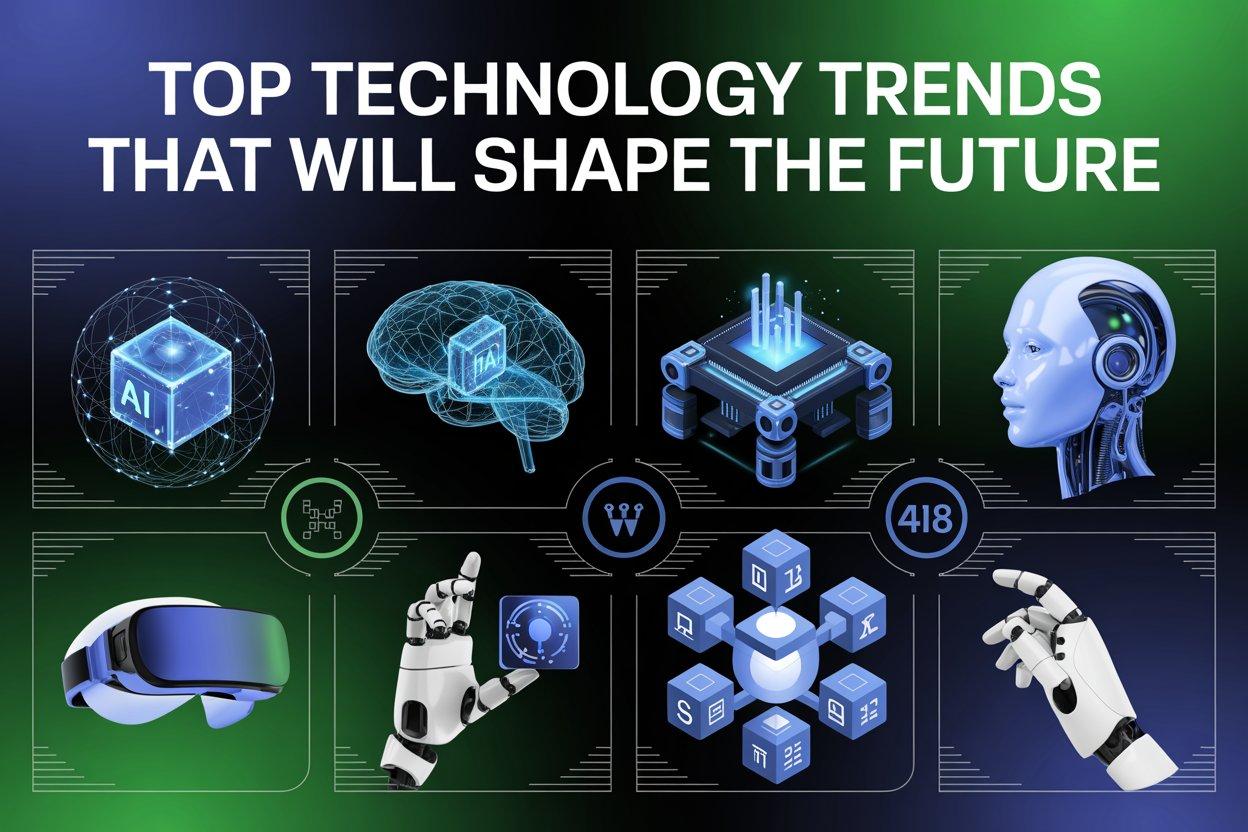
The speed of innovation is constant, continuously redefining how we engage and connect in digital spaces. Businesses are using tools like customer journey analytics to understand behavior, anticipate needs, and deliver experiences that feel personal and seamless. These insights are just the beginning. The next wave of technologies, from AI and brain-computer interfaces to space-based networks and synthetic senses, promises to rewrite how you live, work, and connect, creating interactions that are smarter, faster, and more human-centered than ever before.
7 Breakthrough Technologies Poised to Change Tomorrow
As current trends move forward, the next wave will change how you interact with people, tools, and spaces.
1. Your Thoughts Could Soon Drive Technology
Your thoughts could soon control screens, toys, and even machines around you. Brain-computer interfaces are leaving the lab and entering real tests with humans. The potential goes beyond gaming or therapy; your mind might become the interface itself. Imagine composing a message, moving a robotic arm, or navigating a game with sheer concentration. These devices will start simple, but will gradually blend into daily life. The line between thought and action will feel almost invisible. In addition, your attention and intentions will guide digital actions.
2. Molecular Manufacturing Will Reshape Production
Imagine machines that construct things at the molecular scale. Molecular manufacturing could turn products into a sequence of atomic placements. Items stronger than steel yet featherlight might become common. Additionally, local production could replace massive supply chains. From healthcare to electronics and even meals, the impact is massive. Soon, human creativity might connect directly to matter, producing objects on demand. Moreover, the way things are made and delivered could shift forever, challenging assumptions about manufacturing, logistics, and the limits of materials.
3. AI Will Predict Your Needs
Artificial intelligence will not just respond but anticipate. Ambient AI systems will watch patterns in your daily life and suggest actions before you even notice. Your fridge might reorder groceries automatically, and your calendar will adjust with subtle nudges. These systems will know your daily rhythm like a close assistant. So, in the near future, decisions and actions could be suggested before you even think. Everything will feel seamless, almost invisible, yet perfectly accurate.
As intelligent systems become more embedded in daily decision-making, dependable IT Services will be essential to support data accuracy, system reliability, and seamless user experiences at scale.
4. Quantum Communication Will Change Security
Think about sending messages that are unhackable. Quantum communication promises exactly that by leveraging entanglement. Unlike traditional networks, it could detect eavesdropping instantly. Early quantum networks are drawing heavy investment from nations and tech giants. They could safeguard banking, infrastructure, and personal privacy beyond what current encryption allows. Satellites may soon make secure, planet-wide connections possible. Even though initially growth will be slow, the shift is inevitable.
When the technology becomes mainstream, the way you view digital trust and data protection will have to change entirely. The rules of secure communication will no longer be what you take for granted today.
As these advanced systems move closer to everyday use, businesses will need reliable digital foundations to support them. Many organizations will turn to specialized IT Services to manage complex infrastructure, security, and data flows, while selectively adopting outsourcing to scale innovation efficiently without slowing internal operations.
5. Autonomous AI Agents Will Act Independently
Robots and software will stop waiting for instructions and start taking initiative. Autonomous AI agents will monitor markets, manage logistics, or even plan events. They will learn from outcomes and adjust strategies independently. That means your role will shift to oversight, not constant control. They will collaborate, negotiate, and even troubleshoot minor issues. In addition, ethical questions will explode because their decision-making will be opaque. The speed and scale of operations they enable will dwarf human capabilities. Soon, you could delegate complex tasks without micromanaging every detail.
6. Space-Based Internet Will Connect Everywhere
Global connectivity is moving from ground networks to orbiting satellites. Space-based internet constellations are already delivering reliable access in isolated areas. Your device could connect anywhere on Earth, from mountains to seas. Latency will drop, and bandwidth will expand as networks scale. Moreover, emergency response and remote education will benefit massively. This trend could make AR and VR usable anywhere on the planet.
7. Synthetic Senses Will Expand Human Perception
Humans may gain vision beyond visible light, hear ultra-high frequencies, or sense magnetic fields. In addition, awareness will extend beyond what is naturally possible. You could navigate low visibility areas or detect chemical changes instantly. Its early uses will appear in defense, healthcare, and personal exploration. Moreover, adaptation will take time, and ethical concerns will arise. Likewise, enhancements may feel unusual initially, yet the opportunities will be extraordinary. Your body and mind could experience the world in ways no unaugmented human ever could.
Conclusion
The future of technology promises to reshape everything: how we live, how we work, and how we connect. From mind-controlled devices to products built one atom at a time, the potential is vast. Trends like AR in digital marketing are evolving, giving users natural ways to explore and interact. Meanwhile, emerging innovations such as global connectivity, autonomous AI, and synthetic senses will create immersive, responsive, and deeply personal experiences that merge the digital and physical worlds.
Категории
Больше
Whether you're a newcomer or a veteran, Arc Raiders is a game that rewards careful planning, strategy, and knowing the little details that can make a big difference. After countless hours exploring its mechanics, I've compiled some of the most valuable tips and tricks I wish I'd known sooner. 1. Inventory Weight Affects Noise One subtle but important mechanic in ARC Raiders Loot for sale is how...

Bimodal HDPE Market Size, Share and Growth Report (2025–2034) The global Bimodal HDPE Market is witnessing steady growth, driven by increasing demand from the packaging, construction, and automotive industries. Bimodal HDPE is known for its dual molecular weight distribution, which delivers an excellent combination of strength, flexibility, chemical resistance, and durability. These...

Where Streetwear Meets Artful Edge: In the crowded universe of streetwear, it takes more than bold logos and hype to leave a lasting mark. Ninth Hall has carved out a space that feels both daring and thoughtful, blending urban energy with artistic sensibility. Among its most recognizable pieces, the Ninth Hall Hoodie has emerged as a signature statement a garment that’s as much about...

The Inbec Tablet Cost is a crucial factor for healthcare buyers in the USA. As a leading medicine supplier, Oddway International ensures competitive pricing and quality assurance. Our role as a pharmaceutical exporter and pharmaceutical supplier allows us to provide seamless access to this essential medication. Understanding Inbec Tablet Cost When considering the Inbec Tablet Cost, it's...

The modern gentleman understands that true style transcends trends and mass-market solutions. It emerges from garments crafted with precision, intention, and deep understanding of individual preferences. This philosophy defines the essence of bespoke tailors—artisans committed to creating clothing that serves as a second skin, perfectly aligned with body proportions and personal...
