


Why Knurling Tool Choice Affects Machining Accuracy
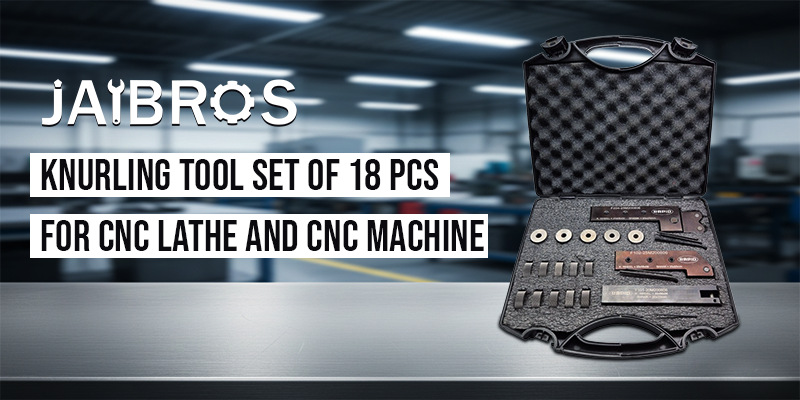
Discover why knurling tool selection is crucial for machining accuracy. Learn about CNC knurling tools, setup impact, and performance benefits.
Why Knurling Tool Selection Is Critical for Accuracy
In precision machining, even small details can have a major impact on final product quality. While turning, milling, and drilling receive a lot of attention, surface-forming operations like knurling are often underestimated. However, improper knurling can lead to poor grip, uneven patterns, surface damage, and dimensional inaccuracies. This is why selecting the right knurling tool is critical for achieving machining accuracy, consistency, and professional results.
Knurling is not just about adding texture—it directly influences functionality, usability, and appearance of machined components. Inaccurate knurling can affect assembly, safety, and long-term performance, especially in precision-driven industries.
Understanding Knurling in Machining
Knurling tool is a forming process that creates patterned ridges on the surface of a cylindrical workpiece. Unlike cutting operations, knurling displaces material rather than removing it. This makes the process highly dependent on tool design, rigidity, and correct selection.
A properly selected knurling tool ensures uniform pressure distribution, clean pattern formation, and minimal stress on both the workpiece and machine. Poor tool choice, on the other hand, can result in double tracking, torn surfaces, and inconsistent knurl depth.
Why Tool Selection Directly Impacts Machining Accuracy
Machining accuracy is not limited to dimensional tolerances alone. Surface finish, pattern consistency, and part usability are also key aspects of accuracy. Knurling plays a significant role in all of these areas.
Impact on Dimensional Control
Incorrect tool selection can cause excessive material displacement, slightly altering the part diameter. This may lead to fitment issues during assembly, especially in precision components.
Pattern Consistency
Different tools create different knurl profiles. A mismatched pattern or incorrect pitch can lead to uneven or overlapping knurls, reducing both grip and visual quality.
Machine Load and Stability
A poorly matched tool increases cutting forces, which can introduce vibration and affect overall machining accuracy.
Choosing the right knurling tool minimizes these risks and ensures predictable results.
Types of Knurling Tools and Their Applications
Understanding tool types helps machinists make informed selection decisions.
Single-Wheel Knurling Tools
These are commonly used for light-duty applications and for smaller diameters. They are simple to use but may require careful pressure control.
Multi-Wheel Knurling Tools
Designed for heavier applications, these tools provide better balance and reduced radial load, improving accuracy and surface quality.
Scissor-Type Knurling Tools
These apply equal pressure from both sides of the workpiece, minimizing deflection and improving concentricity.
Selecting the appropriate type ensures the knurling process complements the overall machining strategy.
CNC Machining and Knurling Tool Selection
In modern manufacturing, knurling is frequently performed on CNC machines. CNC environments demand consistency, repeatability, and minimal variation between parts.
A knurling tool for CNC turning is specifically designed to handle controlled feed rates and consistent pressure application. These tools integrate smoothly into CNC programs, reducing manual intervention and improving repeatability.
Using a knurling tool for CNC setups allows manufacturers to achieve uniform knurls across high-volume production runs while maintaining tight tolerances.
A properly matched CNC knurling tool further enhances accuracy by minimizing vibration and ensuring stable contact throughout the operation.
Material Compatibility and Tool Selection
Different materials respond differently to knurling. Softer materials such as aluminum and brass form knurls easily, while harder materials like stainless steel require robust tooling.
Incorrect tool selection for a given material can result in:
-
Shallow or incomplete knurls
-
Surface tearing
-
Excessive tool wear
A suitable knurling tool matched to material hardness ensures clean pattern formation without damaging the workpiece.
Knurling Tool Price vs Performance
When selecting knurling equipment, knurling tool price is often a deciding factor. However, focusing solely on cost can lead to long-term inefficiencies.
Lower-priced tools may:
-
Wear out quickly
-
Produce inconsistent patterns
-
Increase scrap rates
Higher-quality tools typically offer better durability, accuracy, and repeatability. Over time, they reduce rework, downtime, and tool replacement costs, making them more economical in production environments.
Common Accuracy Issues Caused by Poor Tool Selection
Using the wrong tool often leads to recurring machining problems.
Double Tracking
Occurs when knurl pitch does not match the workpiece diameter or when the tool lacks rigidity.
Distorted Knurl Patterns
Caused by uneven pressure or improper wheel alignment.
Excessive Vibration
Results from inadequate tool strength or unsuitable design for the application.
A well-chosen knurling tool significantly reduces these issues and improves overall machining accuracy.
Best Practices for Selecting the Right Knurling Tool
To ensure accurate and reliable keyword results, consider the following:
-
Match tool type to workpiece diameter and material
-
Choose appropriate knurl pattern and pitch
-
Ensure compatibility with CNC or manual machines
-
Prioritize rigidity and balance
-
Consider long-term performance over initial cost
These practices help maintain accuracy and extend tool life.
Importance of Tool Selection in Precision Industries
Industries such as automotive, aerospace, electronics, and industrial machinery demand consistent surface quality and reliable grip features. In these sectors, even minor surface inaccuracies can impact safety, performance, or usability.
Accurate knurling ensures:
-
Better operator grip
-
Improved assembly efficiency
-
Enhanced product appearance
-
Reduced rejection rates
A dependable knurling tool supports quality standards and operational efficiency in precision manufacturing.
Conclusion
Knurling may appear to be a simple operation, but its impact on machining accuracy is significant. From dimensional control to surface consistency, every aspect of knurling depends on proper tool selection. Choosing the right tool ensures clean patterns, reliable grip, and minimal variation between parts.
In both manual and CNC tool machining environments, selecting the appropriate tooling improves productivity, reduces defects, and enhances overall product quality. By understanding material behavior, machine capability, and application requirements, manufacturers can achieve consistent and accurate knurling results. Ultimately, investing in the right knurling tool is an essential step toward precision, efficiency, and long-term machining success.
FAQs
1. Why is knurling tool selection important in machining?
Proper selection ensures accurate knurl patterns, consistent grip, and minimal impact on part dimensions.
2. Can knurling affect machining accuracy?
Yes, incorrect tool selection can cause surface distortion, vibration, and dimensional variation.
3. Are knurling tools suitable for CNC machines?
Yes, specially designed tools are widely used in CNC turning for consistent , repeatable results.
4. How does material type influence knurling tool choice?
Harder materials require more rigid tools, while softer materials need controlled pressure to avoid deformation.
5. Should knurling tool price be the main selection factor?
No, long-term accuracy, durability, and performance are more important than initial cost.
Kategoriler
Read More
According to the latest report published by Data Bridge Market Research, the Soy Yogurt Market The global soy yogurt market size was valued at USD 680.41 million in 2024 and is expected to reach USD 2154.89 million by 2032, at a CAGR of 15.5% during the forecast period Thorough and transparent research studies conducted by a team work of experts in...

Sunitinib Malate Market: Market Overview, Growth Drivers & Therapeutic Applications Introduction The global healthcare landscape has witnessed a transformative decade in oncology, and at the center of this transformation sits the rapidly expanding Sunitinib Malate Market. As the burden of cancer continues to grow worldwide, pharmaceutical innovators and healthcare systems alike are turning...

Spoken English classes are designed to help individuals improve their communication skills with confidence and clarity. These courses provide grammar, vocabulary, pronunciation, and real-time conversation practice to enhance fluency in situations. Whether student, job seeker, or working professional, enrolling in training programs like those offered by FITA Academy can provide structured...

Bringing Global Inspiration to Your Everyday Life In today’s fast-paced world, brands that capture the spirit of global culture stand out. Amirishoes is more than just a name — it’s a lifestyle statement, inspired by diverse traditions, trends, and innovations from every corner of the globe. From fashion essentials to luxury accessories, Amirishoes blends the artistry of...

Visita un'autentica enoteca italiana su venereristorante.it, dove il fascino rustico incontra l'eleganza. Esplora un'ampia selezione di vini regionali, abbinati a piatti gourmet realizzati secondo le ricette tradizionali italiane. enoteca italiana