Excavation Services: Expert Site Preparation and Grading Solutions
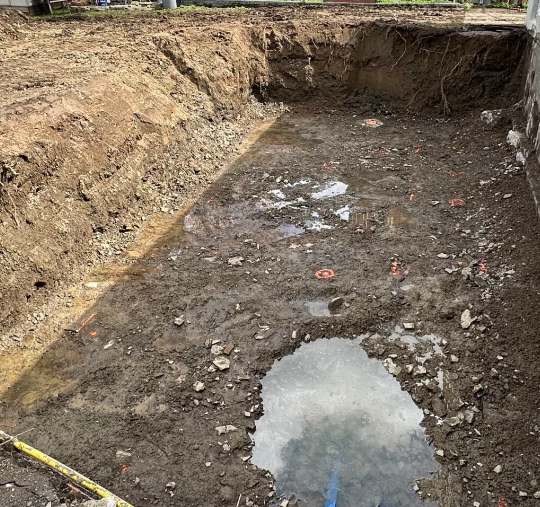
You need excavation that matches your project's scale, site conditions, and budget, whether you’re preparing a foundation, digging utility trenches, or clearing a site for redevelopment. Professional excavation services ensure safe, code-compliant earthmoving, protect nearby structures and utilities, and keep your schedule on track.
This article breaks down common types of excavation—from trenching to site grading—and highlights the practical factors you must weigh, like soil type, access, permits, and equipment choices, so you can plan confidently.
Keep reading to learn how to spot reputable contractors, estimate costs, and avoid common pitfalls that can derail timelines and inflate budgets.
Types of Excavation Services
You’ll find work ranging from small backyard digs to multi-acre commercial site preparation, each requiring different equipment, safety checks, and permits. Key decisions include soil testing, drainage planning, and matching machinery to site constraints.
Residential Excavation
Residential excavation covers foundations, basements, pools, and small grading projects on private property. You should expect a site survey and soil report first; these determine excavation depth, shoring needs, and whether rock removal or dewatering is required.
Contractors typically use mini-excavators, skid steers, and backhoes for tight yards. You must verify utility locates and local permits before digging to avoid service disruptions and fines. For foundations and basements, precise elevation control and compaction of backfill matter for long-term structural performance.
Safety and neighbor impact matter: expect erosion control, dust suppression, and restoration of landscape or hardscape. Get a written scope that lists excavation limits, disposal plans for spoils, and responsibility for regrading and final compaction.
Commercial Site Preparation
Commercial site prep includes clearing, mass grading, demolition, and creating engineered pads for buildings or parking lots. You’ll need a detailed earthwork plan with cut-and-fill quantities, stormwater controls, and trucking logistics to manage large material volumes efficiently.
Heavy equipment—large excavators, wheel loaders, scrapers, and graders—handles rapid material movement and fine-grade work. Your contractor should supply compaction testing reports and verify subgrade bearing capacity for foundations, pavements, and utility trenches.
Expect coordination with civil engineers, environmental consultants, and permitting agencies. Address contaminated soils, wetlands, or protected trees early to avoid schedule delays and costly remediation.
Trenching and Utilities
Trenching installs water, sewer, storm, gas, electrical, and telecom lines and demands precise depth and slope control. You must ensure utility locate and conflict maps are current; striking existing lines risks injury and major liabilities.
Trenches require shoring, shielding, or benching based on depth and soil type; competent-person inspections are mandatory. Backfill material and compaction specs affect future settlement; contractors should provide lift thickness, compaction method, and testing frequency.
Connectors, bedding, and tracer wires often need specified materials and installation tolerances. Plan for traffic control, surface restoration, and sequencing to minimize downtime for adjacent businesses or neighborhoods.
Land Clearing
Land clearing readies a site by removing trees, brush, stumps, and debris while protecting soil and nearby resources. You should obtain tree-protection permits and erosion-control permits where required before work begins.
Methods range from mechanical mulching and felling to selective removal; stump grinding and root grub-outs prevent regrowth. Salvageable timber or biomass may be recycled or sold, reducing disposal costs.
Erosion control—silt fences, sediment basins, and temporary seeding—prevents downstream impacts. Ensure the contractor documents disposal routes, biomass handling, and post-clearing stabilization measures.
Key Considerations for Excavation Projects
You need clear site data, the right machines, and strict safety and environmental controls to keep costs predictable and risks low. Prioritize utility mapping, layer-specific soil handling, machine-match to task, and regulatory compliance.
Site Assessment and Planning
Begin with a thorough site survey that includes utility locates (electric, gas, telecom), soil borings to determine bearing capacity, and a topographic map with contours at 0.5–1.0 m intervals. Verify setback, easement, and floodplain limits against municipal records before equipment mobilization.
Create a phased excavation plan with depths, shore/benching requirements, and spoil-storage zones. List required permits (grading, erosion control, dewatering) and a timeline tied to weather windows. Use a simple checklist: utilities located, borings completed, permits in hand, access routes confirmed.
Estimate volumes using cross-sections or 3D site models to set haul and disposal budgets. Specify soil classifications for reuse versus off-site disposal to avoid unexpected disposal fees. Assign roles: competent person for trenching, traffic control lead, and environmental monitor.
Equipment and Technologies Used
Select machines by task: mini-excavators for tight residential digs, 20–40 tonne hydraulic excavators for foundation trenches, and wheel loaders or articulated dumpers for bulk haul. Match bucket size to soil type to optimize cycle time and reduce over-excavation.
Leverage technology to improve accuracy and safety. Use GPS/grade-control for cut/fill accuracy within ±25 mm on foundations, and utility-detection ground-penetrating radar (GPR) where records are incomplete. Consider telematics for fuel and maintenance tracking to control operating costs.
Detail attachments and support gear: hydraulic breakers for rock, compaction plates for backfill, trench boxes for personnel safety, and dewatering pumps sized by expected groundwater inflow (l/s). Confirm transport permits and site access width for delivery of large equipment.
Safety and Environmental Standards
Comply with local occupational safety regulations for excavation depth and protective systems; require a competent person to inspect trenches daily and after events like heavy rain. Implement trench protective systems (sloping, shoring, trench boxes) based on soil type and depth.
Control environmental risks with erosion-and-sediment controls: silt fences, stabilized construction entrances, and staged stockpiles covered during rain. Manage contaminated soils per regulatory guidance—segregate, test, and document chain-of-custody for disposal or remediation.
Establish emergency procedures: utility strike response, confined-space rescue, and spill containment. Maintain records: daily safety inspections, permit copies, and soil testing results to demonstrate compliance during audits or inspections.
Categorias
Leia mais
The market research for the global Postnatal Health Supplements market is an accumulation of first-hand facts and quantitative and qualitative evaluation and analysis for the forecast period (2024-2032). The report offers a comprehensive assessment of macro-economic indicators, parent market trends, and several factors influencing the market dynamics. In addition, it also...

There’s a moment we’ve all experienced—you sit down on your sofa after a long day, expecting comfort… and instead, you feel the springs, the sag, or that awkward dip in the middle. That’s when it hits you—your sofa isn’t what it used to be. But here’s the thing: comfort doesn’t have to disappear just because your sofa has aged. In fact,...

Polaris Market Research has announced the latest report, namely Drone Mapping Software Market Share, Size, Trends, Industry Analysis Report, By Type (Open Source, Close Source); By Application (Control and Data Capture, Image Processing, Analytics), By End-Use (Construction, Mining, Agriculture, Military); By Region; Segment Forecast, 2021 - 2028, that examines the overall market condition...

is rendered even more purple when next to its complement of yellow. But for now, they are leaning into their genuine fandom for the label that was once a moodboard fixation for a young Essex music fan who only recently, she admits, got to grips with Fashion with a capital F. His detractors flung it all at him: cynicism, fascism, opportunism, voyeurism, snobbishness. I like to be playful, try...

Explore Tigerexch – the final vacation spot for online gaming and sports activities making a bet. Discover functions, bonuses, sport alternatives, FAQs, consumer reviews, and why tigerexchange is turning into the preferred preference for smart gamers globally. Online gaming has evolved right into an interesting digital revel in which method meets amusement. If you’re trying...