


Whipping Cream Manufacturing Plant Project Report for Investors: Cost, Revenue & ROI
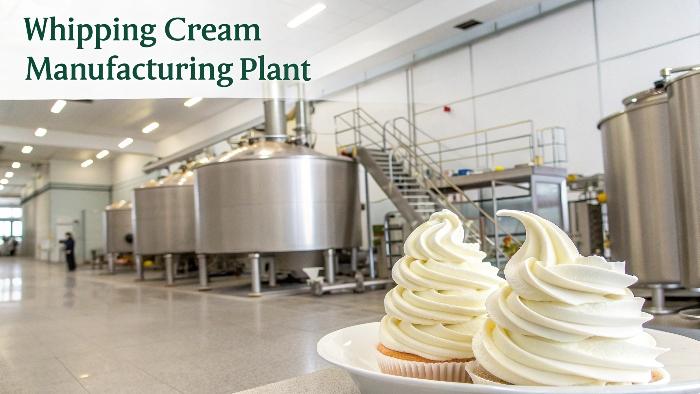
IMARC Group’s “Whipping Cream Manufacturing Plant Project Report: Industry Trends, Plant Setup, Machinery, Raw Materials, Investment Opportunities, Cost and Revenue” provides a comprehensive roadmap for establishing a whipping cream production facility. The report covers critical operational aspects including raw milk and cream sourcing, processing technology, utility requirements, machinery specifications, plant layout planning, cold-chain infrastructure, quality control systems, packaging solutions, and logistics.
The study also presents a detailed financial evaluation, covering capital investment, installation and commissioning costs, operating expenses, fixed and variable costs, revenue projections, profitability analysis, ROI, payback period, and net present value (NPV). This structured assessment helps entrepreneurs and investors evaluate feasibility before developing a whipping cream manufacturing plant business plan.
What is Whipping Cream?
Whipping cream is a high-fat dairy product made by separating cream from milk and processing it to achieve a smooth texture and stable whipping properties. It is widely used in bakeries, confectionery, desserts, beverages, and foodservice applications for toppings, fillings, and decorative purposes. Whipping cream is valued for its rich mouthfeel, stability, and ability to incorporate air when whipped.
The quality of whipping cream depends on fat content, homogenization efficiency, freshness of raw milk, thermal processing, emulsifier use (if applicable), microbial safety, and compliance with dairy food standards.
Request to Get the Sample Report: https://www.imarcgroup.com/whipping-cream-manufacturing-plant-project-report/requestsample
How is Whipping Cream Manufactured?
The whipping cream manufacturing process involves controlled dairy processing steps to ensure safety, consistency, and performance:
-
Milk Reception and Testing: Raw milk is received and tested for fat content, purity, acidity, and microbial quality.
-
Cream Separation: Milk is passed through centrifugal separators to extract cream with the desired fat level.
-
Standardization: Fat content is adjusted to meet product specifications.
-
Homogenization: Cream is homogenized to improve texture, stability, and whipping performance.
-
Pasteurization or UHT Processing: Heat treatment ensures microbial safety and shelf stability.
-
Cooling and Aging: The cream is cooled and aged to enhance whipping characteristics.
-
Filling and Packaging: Finished whipping cream is packed into cartons, bottles, or aerosol containers under hygienic conditions.
Market Trends and Drivers of Whipping Cream Manufacturing:
The whipping cream market is growing steadily due to:
-
Rising consumption of bakery and confectionery products
-
Expansion of café culture and premium dessert offerings
-
Increasing demand from hotels, restaurants, and catering services
-
Growth in ready-to-eat and convenience food segments
-
Product innovation in flavored, plant-based, and long-life whipping creams
-
Rising disposable incomes and urban lifestyles
These trends create strong commercial potential for whipping cream manufacturing projects.
Plant Capacity Overview:
The capacity of a whipping cream manufacturing plant depends on:
-
Milk and Cream Handling Capacity: Determines daily processing volume.
-
Separation and Homogenization Efficiency: Affects output consistency and quality.
-
Thermal Processing Technology: Pasteurization or UHT systems influence throughput.
-
Cold Storage and Packaging Lines: Impact final dispatch volume.
-
Automation Level: Improves productivity and reduces manual handling.
Proper capacity planning directly influences operational efficiency and overall project cost.
Key Aspects to Setup a Whipping Cream Manufacturing Plant
- Location to Setup Plant
Should be close to milk collection centers with access to cold-chain logistics, clean water, electricity, and transportation. - Market Research and Demand Analysis
Includes demand assessment from bakeries, foodservice chains, retail markets, and export opportunities. - Plant Layout and Infrastructure
Includes milk reception, separation units, processing halls, cold storage, packaging sections, quality labs, and warehouses. - Construction and Setup Requirements
Food-grade flooring, hygienic walls, drainage systems, HVAC, cold rooms, and effluent treatment facilities. - Procurement of Equipment and Machinery
Milk separators, homogenizers, pasteurizers or UHT units, cooling systems, storage tanks, filling machines, and packaging equipment. - Documentation and Licenses
Includes dairy processing licenses, food safety certification, pollution control approval, factory registration, and quality compliance. - Cost Analysis
Covers land, civil construction, machinery procurement, utilities, manpower, cold-chain setup, and working capital.
Raw Materials List:
A whipping cream manufacturing plant typically requires:
-
Raw milk or cream
-
Emulsifiers and stabilizers (if required)
-
Food-grade packaging materials
-
Cleaning and sanitation chemicals
-
Utilities such as water, electricity, and refrigeration energy
Project Economics:
-
Capital Investment
-
Operating Costs
-
Revenue Projections
-
Fixed and Variable Expenses
-
Profitability Estimates
-
Taxation and Depreciation
-
ROI, NPV, and Break-even Analysis
Ask An Analyst: https://www.imarcgroup.com/request?type=report&id=27952&flag=C
Conclusion:
Setting up a whipping cream manufacturing plant offers strong growth potential due to rising demand from bakeries, foodservice outlets, and retail markets. With proper plant setup, cold-chain infrastructure, regulatory compliance, and efficient operations, manufacturers can ensure consistent product quality and profitability. Strategic planning, cost control, and market-driven production can help achieve sustainable returns and long-term business success.
About Us
IMARC is a global market research and consulting firm providing feasibility studies, project reports, factory setup guidance, regulatory advisory, and financial modeling. We help businesses reduce investment risk and establish efficient food and dairy processing plants.
Our Expertise Includes:
-
Feasibility Studies and Business Planning
-
Dairy Plant Setup and Optimization
-
Regulatory and Licensing Support
-
Market Research and Competitive Benchmarking
-
Financial Modeling and Cost Analysis
Contact Us:
IMARC Group
134 N 4th St. Brooklyn, NY 11249, USA
Email: sales[@]imarcgroup.com
Tel No: (D) +91 120 433 0800
United States: +1-201971-6302
Категории
Больше
Bước Đi Chiến Lược Giúp Chủ Shop Giảm Thất Thoát Và Bảo Vệ Gian Hàng Trong môi trường thương mại điện tử cạnh tranh khốc liệt như Shopee, một đánh giá xấu hay một lần khiếu nại thiếu hàng cũng có thể khiến doanh thu sụt giảm nghiêm trọng. Thực tế cho thấy, phần lớn rủi ro của người bán không nằm ở sản phẩm,...

The 5G Base Station Market Size is witnessing exponential growth as global demand for high-speed connectivity, low latency, and advanced digital infrastructure continues to surge. The market is valued at USD 53.74 billion in 2025E and is projected to reach USD 443.78 billion by 2033, growing at a remarkable CAGR of 30.2% during the forecast period 2026–2033. 5G base stations form the...

Pelvic floor physiotherapy is really important for our health. It helps to make the muscles in our floor strong. These muscles do a lot of things for us. They help us control our bladder and bowels. They also help us have sex.. They keep our core stable.. A lot of people do not know about pelvic floor health. They do not understand how important it is. This article is going to tell you about...
"Polyoxin Market Summary: According to the latest report published by Data Bridge Market Research, the Polyoxin Market The global polyoxin market size was valued at USD 1.57 billion in 2025 and is expected to reach USD 2.12 billion by 2033, at a CAGR of3.80% during the forecast period Polyoxin Market report offers a thorough overview of product specification, technology, product type...

Data Bridge Market Research analyses a growth rate in postmenopausal vaginal atrophy treatment market in the forecast period 2023-2030. The expected CAGR of postmenopausal vaginal atrophy treatment market is tend to be around 7.50% in the mentioned forecast period. The market value is USD 2.52 billion in 2022, and it would grow upto USD 4.5 billion by 2030. IntroductionPostmenopausal vaginal...