


Competitive Landscape in the EFB Market: Platform Ecosystems, Partnerships, and Differentiation Strategies
The electronic flight bag (EFB) market is moving into a high-focus decade as airlines, business aviation operators, and defense fleets accelerate cockpit digitization to improve safety, reduce operating cost, and standardize flight operations across increasingly complex networks. An EFB replaces (or dramatically reduces) paper-based flight documentation by delivering charts, manuals, flight planning outputs, weather, NOTAMs, performance calculations, weight-and-balance tools, and operational checklists through certified software and managed devices. What makes the market structurally durable is that EFB adoption is no longer a “nice-to-have” technology upgrade—it is a workflow operating system that connects dispatch, flight crew, maintenance, and compliance in a single digital chain of custody. Between 2025 and 2034, growth is expected to remain constructive as fleets expand, regulatory documentation becomes more audit-intensive, connected aircraft programs scale, and operators seek measurable improvements in on-time performance, fuel efficiency, and human-factor reliability.
Market Overview
The Global Electronic Flight Bag Market was valued at $ 4.77 billion in 2025 and is projected to reach $ 12.2 billion by 2034, growing at a CAGR of 11.01%.
Industry Size and Market Structure
From a market structure perspective, the EFB market spans both hardware and software, but value creation increasingly concentrates in software, data services, and lifecycle management. On the hardware side, operators deploy tablet-based EFBs (often ruggedized for cockpit use) or installed/embedded EFB solutions integrated with aircraft power, mounts, and connectivity. On the software side, EFB platforms provide charting and navigation data, document libraries, flight planning integration, performance and takeoff/landing calculations, electronic logbooks, and operational workflow tools that standardize how crews execute procedures. The market also includes device management, cybersecurity controls, content currency services, and integration layers connecting the EFB to avionics, onboard connectivity, dispatch systems, and maintenance platforms.
Commercially, EFB procurement is typically driven by program-level decisions rather than ad hoc purchases. Large airlines adopt fleet-wide standards, negotiate multi-year content and software licensing, and build governance around data updates, crew training, and operational approvals. Business aviation tends to prioritize flexibility and premium usability, often selecting solutions that simplify cross-border operations and reduce pilot workload in smaller crews. Defense and government fleets often focus on security hardening, mission-specific overlays, offline resilience, and strict configuration control. Over the forecast period, value capture is expected to shift toward vendors that can deliver an integrated ecosystem—content + applications + secure device management + connectivity-aware workflows—because operators increasingly buy “assurance outcomes” (currency, compliance, reliability) rather than standalone apps.
Key Growth Trends Shaping 2025–2034
A defining trend is the evolution of the EFB from a document viewer into a connected operational decision tool. EFBs are becoming more tightly linked with real-time data—weather updates, route changes, runway conditions, turbulence intelligence, and operational messages—so crews can make faster, more consistent decisions while reducing radio load and last-minute ambiguity. This increases demand for robust synchronization, intelligent alerting, and cockpit-friendly interfaces that reduce distraction.
Second, performance and fuel optimization workflows are becoming a central EFB value proposition. Airlines increasingly treat the EFB as the “last-mile” interface for performance calculations, weight-and-balance verification, and operational guidance that influences fuel burn and safety margins. As fuel cost volatility persists, even small improvements in takeoff performance selection, taxi planning, or diversion decision logic can produce meaningful financial impact at scale. This supports investment in performance modules, integrated runway analysis, and standardized calculation governance.
Third, electronic tech logs and maintenance-aware EFB workflows are expanding. In many operations, the boundary between flight operations and maintenance documentation is shrinking: pilots report defects digitally, maintenance reviews in near real time, and records become easier to audit. This trend increases demand for EFB platforms that can handle controlled documentation, digital signatures where applicable, and integration with maintenance and reliability systems.
Fourth, EFB governance is maturing into “fleet device operations.” Operators are standardizing device models, mounts, charging strategies, update windows, and role-based access controls. The market is increasingly influenced by enterprise mobility management, secure content distribution, and resilient offline modes to ensure crews can operate safely even when connectivity is limited.
Fifth, cybersecurity and data integrity are becoming primary purchasing criteria. As EFBs integrate more deeply with enterprise systems and, in some cases, aircraft data networks, operators demand strong authentication, encryption, secure update pipelines, and audit trails. Vendors that can demonstrate disciplined security engineering and operational hardening gain advantage, especially in government, defense, and highly regulated airline environments.
Finally, global fleet growth and modernization in emerging markets is expanding the addressable base. Newer operators often leapfrog directly into paperless operations rather than transitioning gradually, which increases adoption of integrated EFB suites, subscription content models, and cloud-enabled governance—provided connectivity and training infrastructure can support the shift.
Core Drivers of Demand
The strongest driver is operational efficiency and standardization. EFBs reduce the cost and complexity of paper distribution, cut cockpit preparation time, and standardize how crews access procedures, briefings, and operational data. This helps operators reduce variation across bases, improve consistency in abnormal situations, and support faster network scaling.
A second driver is safety and compliance. EFBs improve currency control—ensuring crews operate from the latest manuals, charts, and bulletins—and enable audit-ready traceability for document updates and operational references. In safety-critical environments, the ability to prove “who had what information, when” becomes increasingly valuable.
Third, workforce and training dynamics support adoption. Airlines face ongoing pilot mobility and mixed-experience crews; EFB interfaces, guided workflows, and standardized modules can reduce cognitive load and improve procedural reliability, particularly during irregular operations.
Finally, sustainability and waste reduction contribute incremental value. Paper reduction is not the sole driver, but it complements broader airline decarbonization narratives and helps align operational modernization with ESG reporting.
Browse more information:
https://www.oganalysis.com/industry-reports/electronic-flight-bag-market
Challenges and Constraints
Despite strong fundamentals, the market faces constraints that influence buying decisions. The first is operational change management. EFB programs succeed when airlines build disciplined governance—training, SOP updates, fallback procedures, and update control. Without this, digitization can introduce confusion, inconsistent use, or overreliance on tools without proper cross-checking.
Second, connectivity variability remains a practical limitation. While the EFB is increasingly connected, operations must remain safe under weak or absent connectivity. This requires strong offline capability, reliable caching, and clear human-centered design that avoids “workflow breakage” when networks fail.
Third, device reliability and cockpit ergonomics matter. Battery management, mount integrity, glare, heat, and human-factor usability can affect real-world performance. Operators increasingly value vendors and integrators that treat the EFB as a cockpit system—tested and managed—rather than a consumer device in a cockpit.
Fourth, cybersecurity risks and regulatory scrutiny are rising. As EFBs become more integrated and data-rich, the consequences of compromised devices or malicious updates increase. Vendors and operators must invest in secure architectures, monitoring, and incident response readiness.
Segmentation Outlook
By EFB class, demand typically segments into portable solutions (often used as Class 1/2 depending on integration and approvals) and installed solutions (often aligned with higher integration requirements). Portable EFBs remain dominant due to flexibility and cost effectiveness, while installed solutions and higher-integration configurations grow where operators want tighter cockpit integration, higher reliability, or standardized power/connectivity.
By component, the market divides into hardware (devices, mounts, charging, accessories), software applications (charts, documents, performance, flight planning interfaces, tech logs), and services (content subscriptions, integration, device management, cybersecurity, support, training). Over time, software and services are expected to take a larger share of value as operators prioritize integration, compliance readiness, and lifecycle support.
By end user, commercial airlines remain the largest demand center due to fleet scale and operational complexity, while business aviation emphasizes premium usability and cross-border flexibility. Defense and government fleets represent a high-value segment where security hardening, offline resilience, and mission overlays are decisive.
Key Market Players
Airbus SAS, Astronautics Corporation of America, Avilution LLC, Avionics Innovations Inc., AvioVision, Bluebox Aviation Systems Ltd., Boeing Digital Solutions Inc., CMC Electronics Inc., DAC International Inc., Shanghai Deer Jet Aviation Co.Ltd., Esterline Technologies Corporation, Flightman, Flygprestanda AB, GE Aviation, Honeywell International Inc., International Flight Support, L3Harris Technologies Inc., Lufthansa Systems GmbH & Co. KG., Navarro AB, Raytheon Technologies Corporation, Rockwell Collins Inc., Teledyne Technologies Inc., The Boeing Company, Thales Group, Universal Avionics Systems Corporation, AirFusion Inc., Apprimus Informatik GmbH, Anuvu Operations LLC, Collins Aerospace, Scandinavian Avionics A/S .
Regional Dynamics
North America and Europe remain high-value markets due to mature adoption, strong compliance expectations, and continued upgrades toward deeper integration and analytics-driven workflows. Growth increasingly comes from modernization of legacy EFB programs, expansion into maintenance and connected operations, and multi-site standardization. Asia-Pacific is expected to be a major growth engine through 2034 due to fleet expansion, rapid airline growth in several markets, and modernization of operational infrastructure. The Middle East shows sustained momentum tied to large widebody fleets and premium operational standards, while Latin America and Africa offer selective growth opportunities driven by fleet renewal, low-cost carrier expansion, and operational digitization—balanced by connectivity and training constraints.
Competitive Landscape and Forecast Perspective (2025–2034)
Competition spans avionics OEMs, flight operations software providers, navigation content companies, and enterprise mobility/security vendors. Differentiation increasingly depends on workflow integration, usability, reliability under real-world constraints, and lifecycle support rather than basic chart display. Winning strategies through 2034 are expected to include: (1) expanding connected EFB workflows that improve decision speed while preserving offline resilience, (2) integrating performance, fuel optimization, and operational guidance into standardized modules, (3) strengthening secure device management, audit trails, and cybersecurity hardening, (4) building robust integration toolkits across dispatch, maintenance, and connectivity ecosystems, and (5) providing strong training and change-management support that accelerates safe adoption across diverse fleets.
Looking ahead, the electronic flight bag market is positioned for sustained growth as cockpit digitization becomes a foundational requirement for efficiency, compliance, and operational resilience. The decade to 2034 will reward suppliers that treat the EFB as a complete operating system—content + applications + governance + security + integration—enabling operators to reduce complexity, improve consistency, and scale modern flight operations with confidence.
Browse Related Reports:
https://www.oganalysis.com/industry-reports/turret-system-market
https://www.oganalysis.com/industry-reports/turboprop-engine-market
https://www.oganalysis.com/industry-reports/torpedo-market
https://www.oganalysis.com/industry-reports/thrust-vector-control-market
Categories
Read More
The perimeter security market is experiencing significant growth, driven by the increasing need for enhanced security measures across various sectors. As threats to physical premises evolve, organizations are investing in advanced technologies to safeguard their assets. The global perimeter security market is projected to witness substantial expansion by 2034, fueled by innovations in...

Attention all computer users: think carefully before responding to suspicious requests. Imagine receiving an urgent call or email claiming there's a critical issue with your device. Should you grant remote access to a supposed tech support agent? Or perhaps, a warning flashes on your screen indicating "suspicious activity" or a "security threat." Is it safe to call the provided number to speak...

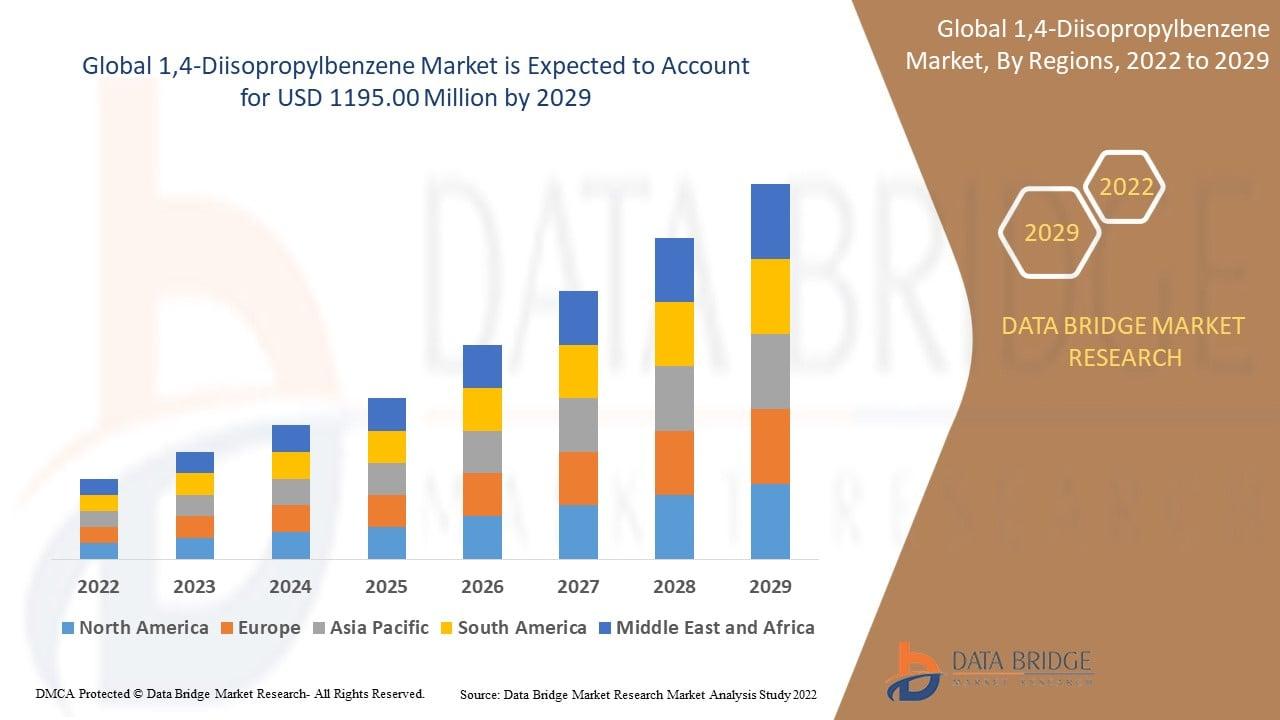
According to the latest report published by Data Bridge Market Research, the 1,4-Diisopropylbenzene Market The 1,4-diisopropylbenzene market was valued at USD 695.50 million in 2021 and is expected to reach USD 1195.00 million by 2029, registering a CAGR of 7.00 % during the forecast period of 2022 to 2029. In addition to the market insights such as market value, growth rate, market...
Polaris Market Research has introduced the latest market research report titled Internet of Things Analytics Market Size, Share, Trends, Industry Analysis Report: By Component (Solutions and Services), Organization Size, Deployment, Type, Application, End Use, and Region (North America, Europe, Asia Pacific, Latin America, and Middle East & Africa) – Market Forecast,...

" Exactitude Consultancy That Adds Flavour To Your Success" Neurodiagnostics Market analysis: EEG, EMG, and sleep monitoring devices. Trends in brain health diagnostics and neurological disorder management. Exactitude Consultancy has just launched its latest market research report, titled "Neurodiagnostics Market: Market Size, Share, Growth Outlook & Industry Analysis Report:...