


What Should Buyers Know About Pure Silver Metallic Yarn?
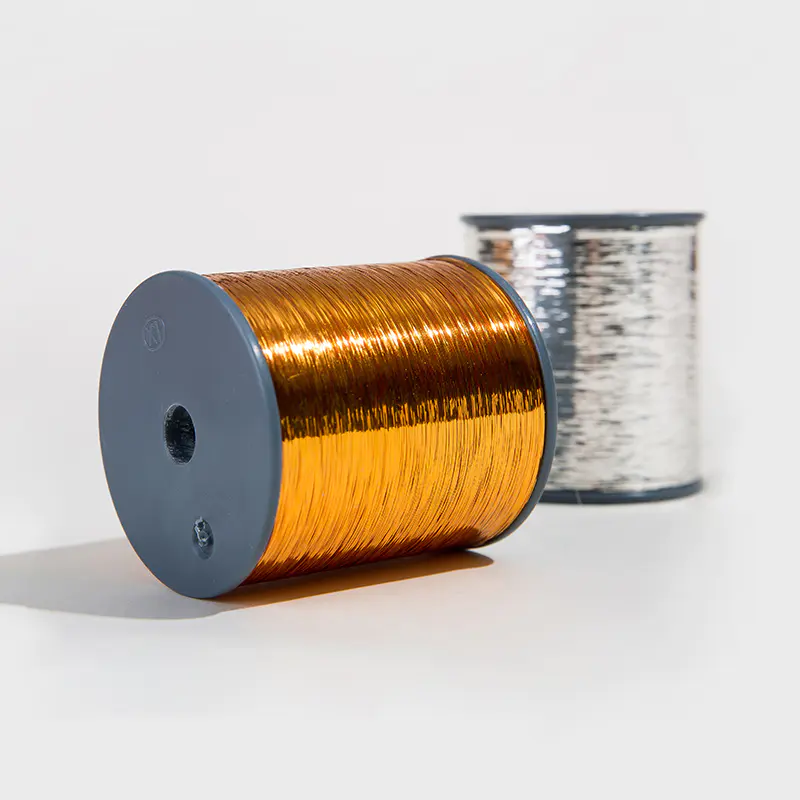
Pure Silver Metallic Yarn is a specialized material used in both the textile and industrial sectors for its aesthetic appeal, conductivity, and durability. Unlike conventional threads, this yarn incorporates fine layers of pure silver, either as a coating or through a composite structure, creating a reflective, metallic finish. Understanding the production, applications, and properties of Pure Silver Metallic Yarn helps designers, manufacturers, and buyers make informed decisions for fashion, technical textiles, and functional products.
The manufacturing process of Pure Silver Metallic Yarn begins with a base filament, often polyester, nylon, or cotton, which provides strength and flexibility. A thin layer of pure silver is then deposited onto this base using techniques such as electroplating, vacuum deposition, or metallization. Some manufacturers also produce composite yarns by twisting silver wire or foil with textile fibers. Each method ensures that the silver layer adheres uniformly while maintaining the flexibility required for weaving or knitting.
One key characteristic of Pure Silver Metallic Yarn is its conductivity. Because silver is an excellent conductor of electricity, this yarn can be used in smart textiles, wearable electronics, and electromagnetic shielding fabrics. Electrical signals can pass along the yarn without significant loss, making it suitable for applications such as touch-sensitive panels, heated garments, and medical monitoring textiles. This functionality distinguishes Pure Silver Metallic Yarn from decorative metallic threads.
In addition to technical uses, Pure Silver Metallic Yarn is valued for its visual appeal. The metallic luster adds shimmer to fabrics, making it popular in fashion design, embroidery, and home décor. Designers use it in evening wear, costumes, and decorative textiles to create reflective patterns and accents. Factories producing Pure Silver Metallic Yarn pay careful attention to the finish and smoothness of the coating to prevent flaking, which could compromise both appearance and performance.
Durability is another important factor. Pure Silver Metallic Yarn is often combined with protective coatings or encapsulated within fibers to prevent tarnishing and maintain conductivity over time. Some yarns are treated to resist abrasion and washing, making them suitable for garments and items that require repeated use. Manufacturers often conduct mechanical and chemical tests to ensure that the yarn retains its properties during production, weaving, and daily use.
Customization is common in Pure Silver Metallic Yarn production. Yarns can vary in thickness, strand count, and metallic intensity to match specific design or technical requirements. Some suppliers offer pre-twisted yarns with multiple fibers to increase tensile strength or create particular visual effects. This flexibility allows textile manufacturers to integrate Pure Silver Metallic Yarn seamlessly into different fabrics, embroidery designs, or functional textile systems.
Sustainability is an emerging consideration in this field. Because silver is a precious metal, factories producing Pure Silver Metallic Yarn may implement recycling programs and minimize waste during coating and spinning processes. Efficient production methods ensure that the final yarn meets performance standards while reducing environmental impact.
In conclusion, Pure Silver Metallic Yarn combines the aesthetic appeal of metallic threads with the technical benefits of conductive silver. From fashion applications to smart textiles and industrial fabrics, it provides unique properties that enhance both appearance and functionality. By understanding production methods, durability, and customization options, designers and buyers can make informed choices when incorporating Pure Silver Metallic Yarn into textiles, ensuring reliable performance, visual appeal, and long-term usability.
Categorias
Leia mais
The demand for activated carbon in Europe is experiencing remarkable growth, with projections estimating the market could reach USD 3.83 billion by 2035. This substantial increase is indicative of a broader trend towards environmental accountability and health consciousness among consumers and industries alike. The market is forecasted to grow at a CAGR of 7.61%, driven by the pressing need for...

The global Release Liner Market is set to witness consistent growth over the coming decade, driven by rising demand across packaging, healthcare, and industrial sectors. According to the latest market analysis, the release liner market size was valued at USD 13.45 billion in 2025 and is projected to reach USD 22.54 billion by 2035, expanding at a compound annual growth rate (CAGR) of...

Parivrtta Trikonasana, commonly known as Revolved Triangle Pose, is a dynamic standing yoga posture that combines balance, strength, flexibility, and deep spinal rotation. The Sanskrit word parivrtta means revolved or twisted, trikona means triangle, and asana means posture. As the name suggests, the body forms a triangular shape while the torso twists deeply over the legs. Practicing this pose...

Polaris Market Research has announced the latest report, namely Ultracapacitors Market Size, Share, Trends, Industry Analysis Report: By Type (Double Layered Capacitors, Pseudocapacitors, and Hybrid Capacitors), Power, Application, and Region (North America, Europe, Asia Pacific, Latin America, and Middle East & Africa) – Market Forecast, 2025–2034, that examines the...
Polaris Market Research has introduced the latest market research report titled Dental Articulators Market Share, Size, Trends, Industry Analysis Report, By Product Type (Fully-Adjustable Articulators, Semi-Adjustable Articulators, Non-Arcon Articulators, Arcon Articulators, Non-Adaptable Articulators, Virtual Articulators); By Material Type; By End-Use; By Region; Segment Forecast, 2022 -...
