


What Is a Feeler Gauge? Uses, Types & Measurement Guide
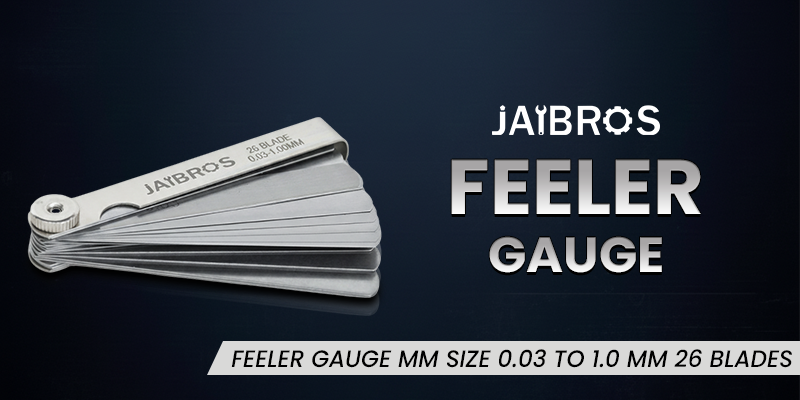
Discover what a feeler gauge is, its types, common uses, and how it ensures precise gap and clearance measurement.
What Is a Feeler Gauge?
A feeler gauge is a precision measuring tool used to measure small gaps, clearances, or tolerances between tw o components. It consists of a set of thin metal blades (also called leaves), each with a specific thickness marked on it. By inserting one or more blades into a gap, users can determine the exact clearance with high accuracy.
Feeler gauges are widely used in mechanical engineering, automotive servicing, CNC machining, tool setup, and maintenance work. Their simplicity, reliability, and accuracy make them an essential tool in both workshops and industrial environments.
Feeler Gauge Uses in Industrial and Mechanical Applications
The feeler gauge use spans across many industries due to its ability to measure extremely small spaces that cannot be measured with rulers or calipers.
One of the most common uses of a feeler gauge is in automotive maintenance, especially for checking valve clearance in engines. Correct valve clearance ensures optimal engine performance, fuel efficiency, and long engine life.
In CNC machining and manufacturing, feeler gauges are used to check tool alignment, machine setup accuracy, and spacing between machine components. Proper clearance measurement helps avoid tool wear, machining errors, and vibration issues.
Types of Feeler Gauges
Feeler gauges are available in different types, each designed for specific applications and measurement requirements.
Standard Blade Feeler Gauge
This is the most common type of feeler gauge. It consists of straight metal blades attached to a pivoted holder. These gauges are widely used in automotive, machining, and general mechanical work.
Taper Feeler Gauge
Taper feeler gauges have blades that gradually increase in thickness along their length. They are ideal for measuring gaps that vary across the surface or where gradual insertion is required.
Offset Feeler Gauge
Offset feeler gauges have bent blades that allow measurement in hard-to-reach or confined spaces. These are especially useful in complex machinery and engine compartments.
Brass and Plastic Feeler Gauges
Non-metallic feeler gauges are used in applications where surface damage or electrical conductivity must be avoided. Brass gauges are softer and reduce the risk of scratching delicate parts.
Feeler Gauge Least Count Explained
The feeler gauge's least count is the smallest thickness the gauge can accurately measure. Most standard feeler gauges have a least count ranging from 0.02 mm to 0.05 mm, depending on the quality and design.
A lower least count means higher measurement precision, which is critical in CNC machining, high-performance engines, and precision assembly work. Selecting the correct feeler gauge least count depends on the tolerance requirements of your application.
How to Use a Feeler Gauge Correctly
Using a feeler gauge correctly ensures accurate measurements and prevents component damage. Start by cleaning the surfaces where the gap needs to be measured. Dirt or oil can affect accuracy. Select a blade with a clearance close to the expected clearance and gently insert it into the gap. The correct blade will slide in with slight resistance, but should not be forced or bent. If the blade does not fit, choose a thinner one. If it fits too easily, use a thicker blade.
Importance of Feeler Gauges in CNC Machining
In CNC machining, precision is critical. Feeler gauges help machinists ensure proper tool positioning, alignment, and spacing. Incorrect clearances can result in tool breakage, dimensional inaccuracies, and poor surface finish. During machine setup, feeler gauges are used to verify spindle alignment, fixture gaps, and tool offsets. This improves machining accuracy and extends tool life. Manufacturers and machinists rely on feeler gauges as part of their quality control and inspection processes, ensuring consistent and repeatable machining results.
Feeler Gauge Set and Its Advantages
A feeler gauge set typically includes multiple blades with varying thicknesses, all housed in a compact holder. This allows users to measure a wide range of clearances with a single tool. The main advantage of a feeler gauge set is versatility. Instead of purchasing individual blades, users can handle multiple applications using one set. This makes it cost-effective and convenient for workshops and industrial use. High-quality feeler gauge sets are made from hardened steel, stainless steel, or alloy steel, offering durability and resistance to wear and corrosion.
Feeler Gauge Price and Buying Considerations
The feeler gauge price varies depending on factors such as material quality, number of blades, brand, and accuracy level. Basic feeler gauge sets are generally affordable and suitable for general maintenance work. Professional-grade feeler gauges with higher precision, corrosion resistance, and specialized designs may cost more but offer better durability and accuracy. When selecting a feeler gauge, buyers should consider the required measurement range, least count, blade material, and application type. Investing in a quality feeler gauge ensures reliable performance and long-term value.
Common Industries Using Feeler Gauges
Feeler gauges are widely used across many industries due to their precision and ease of use. Automotive workshops rely on them for engine tuning and maintenance. Manufacturing units use them for machine setup and quality inspection. CNC machining centers depend on feeler gauges for accurate tool alignment and clearance checks. They are also used in aerospace, power generation, heavy machinery, and maintenance engineering, making them a universally essential measurement tool.
Maintenance and Care of Feeler Gauges
Proper care ensures long service life and consistent accuracy. After use, feeler gauge blades should be cleaned and lightly oiled to prevent rust. Blades should never be bent or forced into gaps, as this can affect thickness accuracy. Storing the gauge in a dry environment and using protective cases helps maintain blade condition. Regular inspection ensures that the markings remain readable and blades stay flat.
Jaibros – Precision Tools for Modern Engineering
Jaibros is a trusted manufacturer and supplier of high-performance CNC cutting tools and precision engineering solutions designed to meet modern industrial demands. With a strong focus on quality, durability, and accuracy, Jaibros delivers reliable tools that enhance machining productivity. The company specializes in a wide range of tooling solutions, including turning inserts, milling cutters, grooving tools, drill bits, and precision measurement support tools for CNC and industrial applications. Jaibros combines advanced manufacturing technology with strict quality control to ensure consistent performance across all products.
Frequently Asked Questions (FAQs)
What is a feeler gauge used for?
A feeler gauge is used to measure small gaps, clearances, and tolerances between two components. It is commonly used in automotive engines, CNC machining, mechanical assembly, and maintenance work where precise spacing is critical.
How does a feeler gauge work?
A feeler gauge works by inserting thin metal blades of known thickness into a gap. The blade that fits with slight resistance indicates the exact clearance between the parts, ensuring accurate measurement.
What are the different types of feeler gauges?
The main types of feeler gauges include standard blade feeler gauges, taper feeler gauges, offset feeler gauges, and non-metallic options such as brass and plastic feeler gauges. Each type is designed for specific measurement needs and accessibility conditions.
What is the least count of a feeler gauge?
The least count of a feeler gauge refers to the smallest thickness it can measure accurately. Most standard feeler gauges have a least count ranging from 0.02 mm to 0.05 mm, depending on quality and design.
Why are feeler gauges important in CNC machining?
In CNC machining, feeler gauges ensure correct tool alignment, spacing, and setup accuracy. Proper clearance measurement helps prevent tool wear, machining errors, vibration, and poor surface finish, improving overall productivity and precision.
Conclusion
A feeler gauge is a simple yet powerful measuring tool essential for accurate clearance measurement in mechanical and industrial applications. Understanding feeler gauge use, types, least count, and selection criteria helps users achieve precise and reliable results. Whether used in automotive servicing, CNC machining, or mechanical maintenance, feeler gauges play a crucial role in ensuring performance, safety, and efficiency. Choosing a quality feeler gauge set at the right price enhances productivity and measurement accuracy.
Категории
Больше
Triple Green CBD Gummies >>>Triple Green Farms CBD Gummies, we believe wellness should be simple, natural, and effective. Our gummies are crafted to help you find calm in the chaos, support better sleep, and bring balance back to your everyday life. OFFICIAL FACEBOOK PAGE>>https://www.facebook.com/TripleGreenCBDGummiesUS/ Blogs>>>>...

"Executive Summary North America Polyether Ether Ketone (PEEK) Market: Share, Size & Strategic Insights CAGR Value Data Bridge Market Research analyses that the market is growing with a CAGR of 5.1% in the forecast period of 2022 to 2029 and is expected to reach USD 252.66 million by 2029. The key topics that have been described in this North America Polyether Ether Ketone (PEEK)...

Website : https://planetjunior.pk/ Number : 03062046666 Address : Naqi Market, 75 Shahrah-e-Quaid-e-Azam, Mozang Chungi, Lahore, 54000 Planet Junior is Pakistan's best toy store offering a wide range of toys, baby products, educational games, ride-ons, playhouses, STEM toys, and kids’ accessories designed to make learning and play more fun and engaging for children of all ages. The...

Introduction Tyler The Creator Merch has become one of the most influential collections in modern streetwear, combining bold creativity, vibrant colors, and premium-quality apparel. Inspired by Tyler, The Creator's unique artistic vision, every piece reflects individuality, confidence, and originality. Fans around the world appreciate the distinctive graphics, oversized silhouettes, and...

Il termine casino non AAMS viene utilizzato comunemente per descrivere piattaforme di gioco online che non operano sotto la licenza italiana precedentemente associata ad AAMS, oggi ADM (Agenzia delle Dogane e dei Monopoli). Questi siti possono essere autorizzati da organismi di regolamentazione stranieri, a seconda del Paese in cui sono stabiliti. Prima di prendere in considerazione...
