EPR Battery Waste Management in India – Register Now
Environmentally friendly battery waste management is only one side of the story the other is compliance with Indian laws. Extended Producer Responsibility (EPR) and Battery Waste Management Rules, 2022, are a must, know for batteries manufacturers, importers, and sellers.
In this article, we clarify battery EPR, necessary registrations and certifications, the working of the CPCB portal, and ways in which your business can be compliant, gain consumer trust, and promote sustainability.
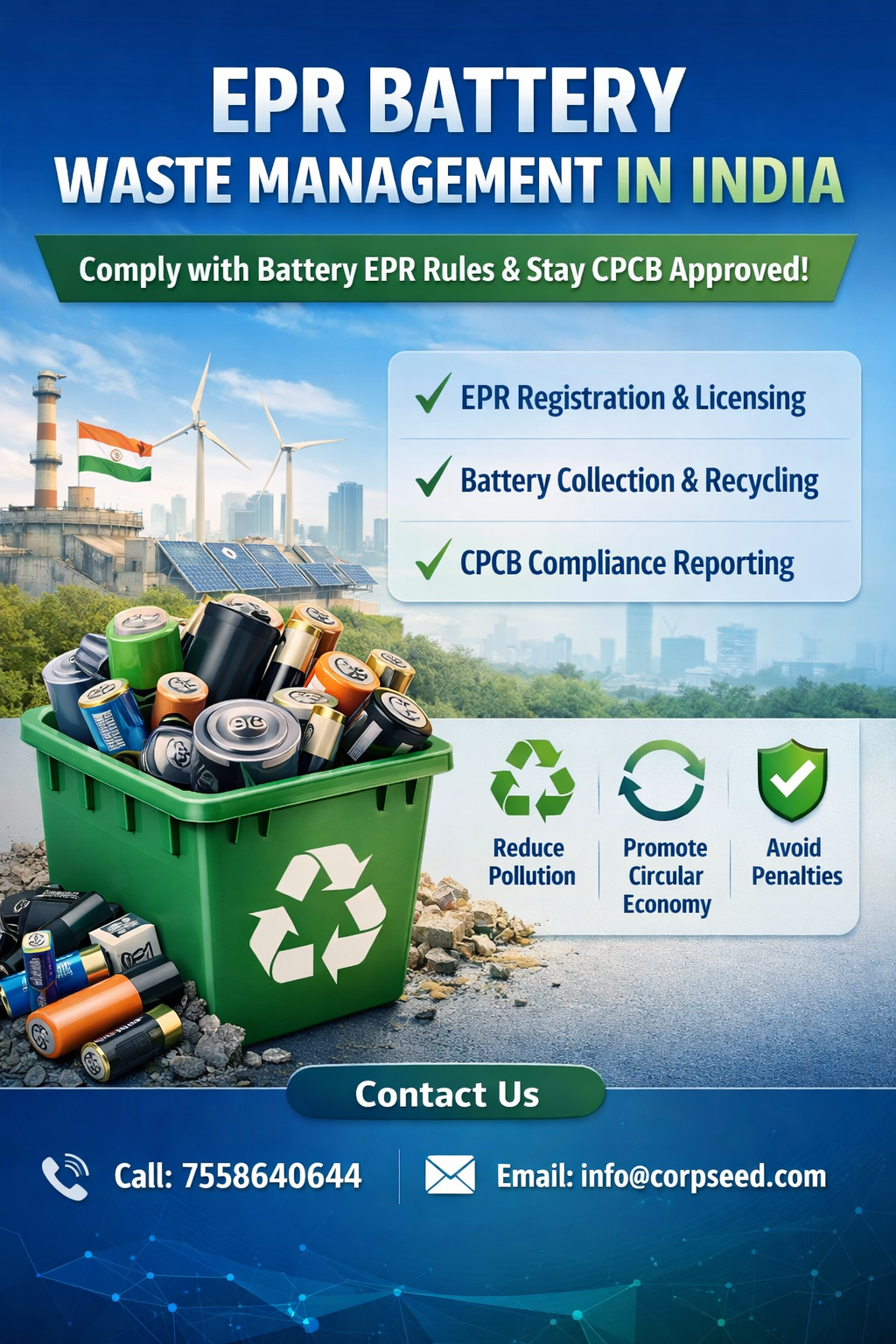
What is EPR for Battery Waste?
Extended Producer Responsibility (EPR) is an environmental policy approach that obliges producers to be responsible for the entire lifecycle of their products, batteries in this case, including collection, recycling, and disposal. The new Battery Waste Management Rules, 2022 extend this obligation to all kinds of batteries: portable, industrial, automotive, electric vehicle batteries, and so on.
Cumulatively, producers are now made accountable for the proper handling and recycling of batteries under EPR instead of merely dumping waste in landfills or polluting soil and water via battery Disposal. EPR also helps to reduce the environmental impact while creating a circular economy.
Why EPR Matters
EPR is a kind of solution to:
Environmental Protection: Battery contains heavy and hazardous elements and to some extent, lithium is a reactive element and both lead and lithium are dangerous to human health and the environment. EPR ensures that the batteries are recycled in a safe way instead of being disposed of in an unsafe manner.
Circular Economy: Battery waste is recycled back into new batteries or materials for other purposes.
Legal Compliance: If you dont register for EPR or dont meet the reporting targets, you can be fined and have to pay environmental compensation under CPCB rules.
Brand Trust: The customers see EPR, compliant companies as environmentally responsible.
EPR Registration, License & Certification
Here are the mandatory formalities you need to go through legally if you want to be a part of battery EPR system:
1. Register for EPR for managing battery waste
Producers, importers, brand owners, and distributors are all required to make registration with the EPR Battery Portal which is under the Central Pollution Control Board (CPCB) for guidelines compliance.
Furnishing detailed information on company and products
What types and quantities of batteries have been released into the market
Uploading the necessary corporate documents
Choosing your role (producer, recycler, refurbisher) on the portal
After you've registered, you will receive a unique EPR registration number that you must use in compliance filings and product information.
2. EPR Battery License / Authorization
While license refers to a legal permission and a certification to a formal confirmation of certain standards, what matters is that an EPR authorization is obtained from the CPCB. This is what legally allows your company to carry out activities under the EPR rules.
The EPR certificate of a company needs to be regularly renewed and kept current with the changes in the business activities.
3. EPR Certification for Battery Waste
The EPR certificate that you hold is a proof of your capability to meet the collection and recycling targets for your products. The certificates are usually issued by the recycling or refurbishing units that are approved under the Battery Waste Rules.
Producers can buy EPR credits from the recyclers after the latter submit a proof of recycling. Those credits will be counted as your contribution towards the annual obligation.
How the EPR Battery Portal Works
The EPR portal for battery waste management (eprbattery.cpcb.gov.in) will be your one, stop platform for compliance. It would help you:
Register your business and assign roles
File annual and quarterly returns
Track EPR obligations and certificate purchases
Upload documents and monitor compliance progress
Pay required fees and manage renewals
The portal is a tool for transparency, through it, CPCB can see the lay out of the performance, make sure the targets are met, and impose penalties, if necessary.
Key Compliance Requirements
This is what you are required to do to remain in compliance every year:
Submit an EPR plan and data It should show your commitment targets, collection plan, recycling route, and timelines.
Adhere to collection and recycling targets These vary based on the type and volume of batteries you put on the market.
Report on time Producers submit annual returns, whereas recyclers and refurbishers file quarterly returns.
Buy EPR certificates This will guarantee that your obligations are fulfilled even if you subcontract recycling work.
Not complying with these requirements may result in environmental compensation and/or enforcement actions.
Who Needs EPR for Battery Waste?
Battery Waste Management Rules have set a compliance requirement for the following entities:
Manufacturers and Importers of batteries
Brand Owners who offer batteries under their own label
Recyclers and Refurbishers of waste batteries
Bulk Consumers or Dealers involved in the distribution of batteries
Re, sell and Export businesses handling battery waste
FAQs
1. Is EPR registration compulsory for all battery manufacturers in India?
Yes, any company that brings batteries into the Indian market is required to do EPR registration and fulfill compliance targets.
2. What is an EPR certificate for battery waste?
It certifies that you have achieved your recycling/refurbishment goals, normally being issued through the EPR portal or by partners in the recyclable industry.
3. How frequently do I need to submit a report on EPR compliance?
Manufacturers submit yearly reports whereas recyclers/refurbishers upload data quarterly.
4. What are the consequences if I dont comply?
Failure to comply may result in environmental compensation fines and business operation limitations.
Closing Words
Battery waste is one of the major contributors to the environmental degradation in India, and EPR is a mechanism that ensures that producers shoulder the responsibility at all stages.
Your company can be in line with regulations, contribute to environmental protection, and earn the trust of green customers by enrolling your company on the CPCB battery portal, obtaining EPR certification, and fulfilling your recycling duties.
Do you require assistance in EPR battery registration, license, or certificate in India? Professional help can streamline the paperwork and make compliance easier.
Categorias
Leia Mais
Nouveau Talent FC 26 Une nouvelle recrue vient d’être intégrée dans la DCE sur FC 26 : il s’agit de Yan Diomandé, présenté dans sa version Future Stars. Ce jeune joueur ivoirien, Yan Diomandé 🇨🇮⚡, se distingue par son dynamisme et son audace sur le terrain. Doté d’un profil offensif moderne, il impressionne par sa...

Netflix has officially greenlit a third installment of the popular multi-camera sitcom Alexa & Katie, which will consist of 16 episodes divided into two halves. The show centers on two best friends navigating the hurdles of high school life, while also tackling the emotional journey of Alexa’s ongoing fight against cancer. Starring Paris Berelc as Alexa and Isabel May as Katie, the...

Today’s search landscape demands a forward-thinking approach that focuses on both user experience and ranking signals, which is what you get when you work with the Best SEO company in Atlanta. PearPixels emphasizes relevant content, structured data, site health, and user-centric optimization to deliver measurable improvements. Their team monitors performance trends and adapts strategies...

Pune, the vibrant educational and IT hub of Maharashtra, is known for its perfect blend of culture, modernity, and cosmopolitan lifestyle. Amid its bustling streets, luxurious hotels, and serene outskirts, the demand for sophisticated companionship has grown significantly among professionals, business travelers, and high-profile individuals seeking memorable experiences. Top class call girls in...

"Executive Summary: Video and Voice Call Mobile VoIP Market Size and Share by Application & Industry CAGR Value The global video and voice call mobile VoIP market size was valued at USD 15.2 billion in 2024 and is projected to reach USD 65.79 billion by 2032, with a CAGR of 20.10% during the forecast period of 2020.1 to 2032 The leading Video and Voice Call Mobile VoIP...