


What Are Grooving Tools and Why Are They Important?
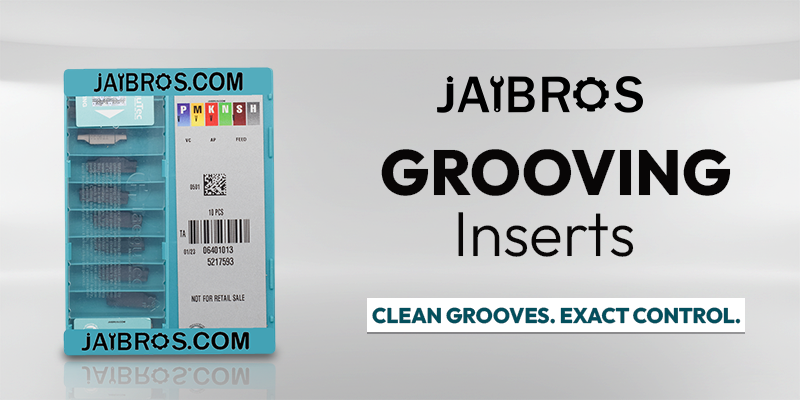
Grooving is more than cutting a slot. Learn about grooving inserts, tools, and why correct selection improves machining accuracy.
What Is a Grooving Tool and How It Works
A grooving tool is a cutting tool used on a lathe machine to make narrow cuts or channels. It is mainly used for making grooves, parting operations, and sometimes internal cutting. The tool moves straight into the rotating workpiece and removes material in a controlled way.
The cutting part of the tool holds a small insert that actually does the cutting. This insert takes all the cutting load and heat. A grooving insert is designed in such a way that it can cut smoothly without vibration. The tool body supports the insert and keeps it stable during operation. Good support is very important because grooving involves deep cuts in a narrow space.
Understanding Grooving Insert Specifications
Specifications help users choose the correct insert for their job. The size of the insert decides the width of the groove. Thickness affects strength, while the cutting edge shape affects surface finish. Insert material is also important. Most inserts are made from carbide because it is hard and heat resistant.
A grooving insert usually comes with details such as width, maximum cutting depth, and recommended cutting conditions. Some inserts are designed for shallow grooves, while others are made for deeper cuts. The chip breaker design helps control chips and avoid jamming during cutting. Correct specifications help increase tool life and improve work quality.
Different Types of Grooving Inserts
There are many types of inserts available depending on the job. External grooving inserts are used to cut grooves on the outer surface of a workpiece. Internal grooving inserts are used for cutting grooves inside holes or bores. Parting inserts are used to cut off a component completely.
A grooving insert can also be classified by its cutting direction. Some are neutral, while others are left-hand or right-hand cutting. The choice depends on machine setup and cutting direction. Some inserts are coated to reduce heat and wear, while others are uncoated for softer materials. Choosing the right type helps avoid tool breakage and improves safety.
Grooving Tool Holder and Its Importance
The tool holder is the body that holds the insert in place. It connects the insert to the machine. A strong and well-designed holder reduces vibration and improves cutting accuracy. Poor holders can cause chatter, rough surface finish, and early insert damage.
A grooving insert must match perfectly with its tool holder. If the fit is loose or incorrect, the insert may move during cutting. Tool holders come in different sizes and shapes for external and internal grooving. Correct clamping ensures that cutting forces are evenly distributed and the insert stays stable throughout the operation.
How to Select the Right Grooving Setup
Choosing the right setup depends on the work material, groove size, and machine capacity. Hard materials need strong inserts and rigid holders. Soft materials may need sharper cutting edges. Cutting speed and feed should be set carefully to avoid overheating.
Using the correct grooving insert helps reduce tool wear and improves accuracy. Always check insert compatibility with the holder. Machine alignment and proper coolant flow also play an important role. A balanced setup not only improves tool life but also saves time and reduces machining cost.
Maintenance and Handling Tips
Grooving tools should be handled with care. Inserts are sharp and can break if dropped. Always clean the holder seat before fixing an insert. Dirt or chips under the insert can affect accuracy. Regular inspection helps detect wear early.
A grooving insert should be replaced when the cutting edge becomes dull or chipped. Do not continue using a worn insert as it can damage the workpiece and the tool holder. Proper storage in dry and clean conditions helps maintain tool quality for a longer time.
Why Grooving Accuracy Matters in Machining
Grooves are often used for sealing rings, snap rings, and oil channels. If the groove size is incorrect, parts may fail during use. Accuracy in grooving improves product performance and safety. This is why correct tool selection and setup are very important.
Using the right tools ensures smooth operation, less rework, and better productivity. Grooving may look simple, but it needs attention to detail and proper understanding of tools and inserts.
Where Can You Get Quality Workshop Tools?
Jaibros is a reliable place for workshop and industrial tool needs because it focuses on quality, accuracy, and practical use. The platform offers a wide range of measuring and machining tools that are suitable for daily workshop work, inspection tasks, and training use. Products are clearly listed with proper details, making it easier for users to choose the right tool for their requirement. Jaibros is known for supporting machinists, technicians, and industries by providing tools that help improve measurement accuracy and work efficiency without confusion.
Conclusion
Grooving is an essential machining process used in many industries. Understanding grooving tools, insert types, specifications, and holders helps achieve better results. A grooving insert plays a key role in cutting accuracy, surface finish, and tool life. By selecting the right insert and holder, maintaining proper setup, and following safe practices, machining work becomes more reliable and efficient.
Frequently Asked Questions
Q1. What is grooving used for in machining?
Grooving is used in machining to cut narrow slots or channels on metal parts. These grooves are needed for rings, seals, clips, or oil paths to help parts fit and work properly.
Q2. Can one insert be used for all grooving jobs?
No, one insert cannot be used for all grooving jobs. Different groove widths, depths, and materials require different insert sizes and shapes to ensure accurate cutting and long tool life.
Q3. Why is tool holder quality important?
Tool holder quality is important because it keeps the insert stable during cutting. A strong holder reduces vibration, improves cutting accuracy, and helps achieve a better surface finish.
Q4. When should an insert be replaced?
An insert should be replaced when the cutting edge becomes dull, chipped, or worn out. Using a damaged insert can reduce cutting accuracy and may harm the workpiece or tool holder.
Q5. Is grooving only done on lathe machines?
Grooving is mainly done on lathe machines, especially for round parts. However, with the right tools, grooving can also be performed on other machines like CNC machining centers.
Catégories
Lire la suite
Keeping fish as pets is both relaxing and rewarding. Watching fish swim peacefully in a clean, colorful aquarium can reduce stress and bring life to any space. However, fish require more than just water and a tank to thrive. Having the right fish supplies is essential for maintaining a healthy environment and ensuring your fish live long, happy lives. In this article, we’ll explore the...

Trembling with anticipation, Chrishell Stause experienced profound spiritual validation on Tyler Henry's new Netflix series. Her entire body shook, heart racing as the medium connected her with parents lost tragically close together. Jeff passed in 2019, Ranae in 2020 - gone too soon. This live encounter offered cherished confirmation: Mom's messages Stause had intuitively felt were...

As preparations build for major future fixtures like Australia vs Chile at the Rugby World Cup 2027, Izaia Perese has made a big choice for his career. He will return to Australian rugby after two years in England. His move starts a fresh chapter for the Queensland Reds. The decision comes at an important time for Australian rugby, as coaches actively seek more experienced players back at...

When it comes to choosing the best hospital in Varanasi, patients look for experienced doctors, advanced medical technology, quality treatment, and compassionate care. Whether you need emergency treatment, surgery, maternity care, cardiology services, or specialized consultations, selecting the right hospital can make a significant difference in your recovery. Among the leading healthcare...

The industrial desiccant dehumidifier market is witnessing significant growth due to the increasing need for humidity control across various industrial sectors. Industrial desiccant dehumidifiers are widely used to maintain optimal moisture levels in manufacturing facilities, warehouses, pharmaceutical plants, food processing units, and electronics production centers....
