


Micro-Personalization vs. Privacy: Navigating the Ethical Tightrope of Modern CX
In 2026, the mantra for Customer Experience (CX) has evolved from "know your customer" to "anticipate your customer." As the CX analytics market climbs toward its projected $70 billion future, a new term has entered the executive lexicon: Micro-Personalization. This is the ability of a brand to adapt its digital interface, tone, and offers in real-time based on a user’s immediate context and emotional state. However, as AI becomes more perceptive—reading sentiment in voice tones and frustration in mouse movements—the line between "helpful" and "creepy" has never been thinner.
The Rise of the "Creepiness Factor"
In the early 2020s, personalization was often synonymous with surveillance. Third-party cookies tracked users across the web, leading to ads that followed you like ghosts. In 2026, the consumer has fought back. With 62% of consumers reporting a feeling of lost control over their private information, and 41% finding personalized texts from unknown brands "creepy," the industry has hit a psychological ceiling.
Analytics can now tell a retailer that a customer is likely pregnant based on changes in their vitamin purchases, or that a bank user is stressed because they are clicking "refresh" on their balance page every ten minutes. The ethical question for 2026 isn't can we use this data, but should we? Brands that cross the line into invasive territory don't just lose a sale; they suffer a "trust tax" that can take years to recover from.
The "Value Exchange" Economy
The solution to this tension is the Value Exchange. In 2026, data is no longer something brands "take"; it is something customers "trade." Leading enterprises have discovered that 82% of consumers are perfectly willing to share personal data if—and only if—it results in a demonstrably better experience.
This has led to the rise of Zero-Party Data. Unlike behavioral tracking (which is inferred), zero-party data is information a customer intentionally shares, such as through preference centers, onboarding quizzes, or lifestyle surveys. By shifting the focus to consented data, brands are finding that their analytics models are actually more accurate. When a customer tells you, "I prefer eco-friendly products and shopping on weekends," the AI doesn't have to guess. This "Privacy-First Personalization" creates a foundation of transparency that actually deepens loyalty.
The Role of "Silent" Contextual Intelligence
One of the most exciting ethical innovations of 2026 is Contextual Intelligence. This allows for micro-personalization without using Personally Identifiable Information (PII). Instead of knowing who you are, the AI focuses on how you are acting in the moment.
For example, if a user is frantically clicking through a support page at midnight, the system recognizes a "high-frustration, high-urgency" context. The website can instinctively shift its layout to highlight a "Direct Chat" button or a "Quick Resolution" path, rather than showing a generic promotional banner. This is personalization at its best: it respects the user’s identity while solving their immediate problem. It’s the digital equivalent of a store clerk "reading the room" without needing to see the customer’s ID.
Transparency as a Competitive Advantage
In 2026, Transparency Dashboards have become a standard feature for top-tier brands. Just as you can check your privacy settings on a social media app, customers can now see a "Why am I seeing this?" button on product recommendations.
This radical honesty is a powerful marketing tool. When a brand says, "We suggested this item because you previously viewed similar styles," it demystifies the AI. It shifts the perception of the algorithm from a hidden spy to a helpful concierge. Furthermore, with the maturation of the EU AI Act and similar global regulations, this transparency is no longer just "nice to have"—it is a legal requirement for any company operating at scale.
Categorie
Leggi tutto
Polaris Market Research has introduced the latest market research report titled Gluten-Free Baking Mixes Market Size, Share, Trends, Industry Analysis Report : By Product, Distribution Channel, Nature (Organic and Conventional), Ingredient Base, and Region – Market Forecast, 2026–2034 that highlights the major revenue stream for the forecast period. The report contains...

One day you’re just living your life - then comes a thought: maybe something new is starting inside. That idea shifts everything. Health matters more now, money feels different, love gets tested, time stretches strangely. Answers do not come fast. But learning helps steady the ground beneath you. Signing up for parenting lessons while still expecting doesn’t just fill gaps - it...

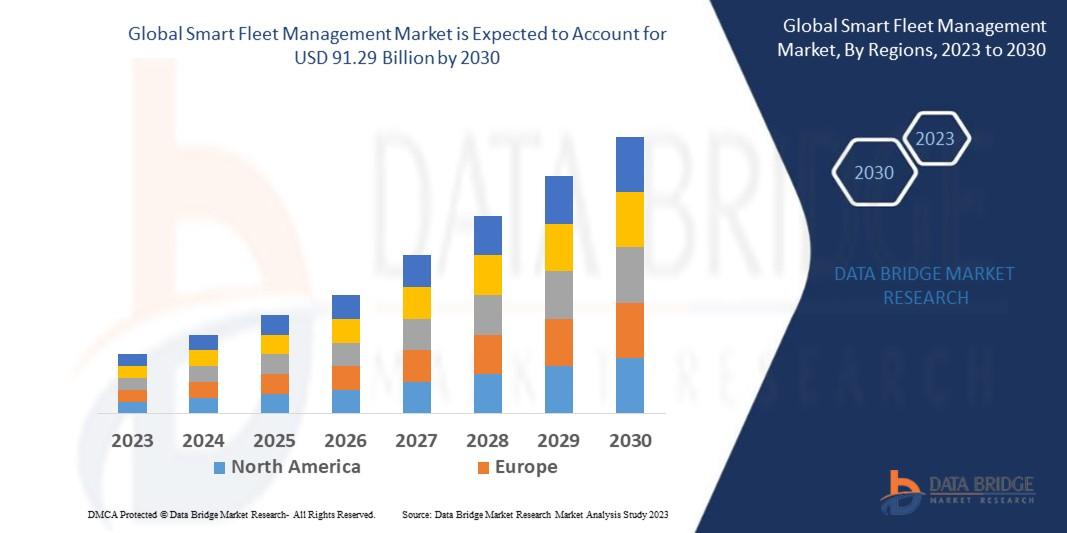
The Smart Fleet Management Market has emerged as one of the fastest-growing segments within the automotive and transportation industries. As fleets across logistics, construction, public transport, retail distribution, and industrial operations embrace digital transformation, smart fleet solutions are becoming mission-critical. These intelligent systems—powered by IoT, AI,...
The traditional approach to digital learning is undergoing a massive shift. While standard learning platforms have served us well for years, the rise of Artificial Intelligence has introduced a more dynamic, personalized, and efficient way to manage education. An AI LMS (Artificial Intelligence Learning Management System) is no longer just a repository for PDFs and videos; it is an intelligent...

The Global Automotive Wheel Rims Market report assesses the historical and current data along with a thorough analysis of the market dynamics. The report also sheds light on the significant market growth driving and restraining factors that are anticipated to influence the market growth through the forecast period. The report explores the effects of the pandemic on the market and...