


Central Limit Theorem Explained Simply
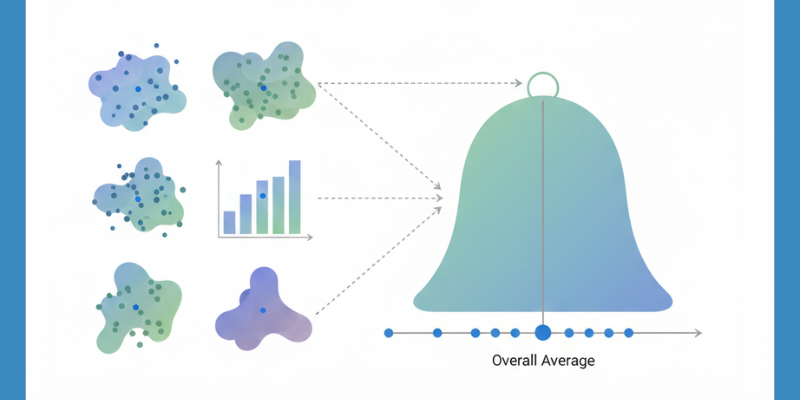
Statistics often feels complex, but some ideas quietly make everything easier to understand. One such idea is the Central Limit Theorem. At its core, this theorem explains why averages behave predictably even when individual data points do not. It helps data scientists trust results drawn from samples rather than entire populations.
The theorem shows that when you take enough random samples, their averages form a normal distribution. This happens regardless of how the original data looks. Because of this, many statistical methods work reliably in real life. If you want to learn such foundational ideas in a structured way, consider enrolling in the Data Science Course in Mumbai at FITA Academy to build a strong statistical intuition along with practical skills.
Understanding Samples and Populations
To understand the Central Limit Theorem, it is important to know the difference between a population and a sample. A population includes every possible data point related to a question. A sample is a smaller group taken from that population. In most real situations, collecting population data is impossible.
Sampling becomes the practical choice. Different samples taken from the same population will vary slightly. However, their averages reveal something powerful. When samples are large enough, their mean values tend to cluster around the true population mean. This predictable behavior is what makes statistical inference reliable.
Why the Normal Distribution Appears
One of the most surprising parts of the Central Limit Theorem is the appearance of the normal distribution. Even if the original data is skewed or uneven, the distribution of sample means becomes bell-shaped. This happens because random variation balances out as the sample size grows. Extreme values lose influence when averaged with many others. Over repeated sampling, the means settle into a familiar pattern. This explains why the normal distribution appears so often in analytics, quality control, and research studies.
Why Sample Size Matters
Sample size plays a key role in how quickly the Central Limit Theorem takes effect. Small samples can still show irregular patterns. As more samples are collected, the distribution of sample means becomes increasingly even and symmetrical.
In practice, a sample size of thirty is often considered sufficient. Larger samples reduce uncertainty and improve accuracy. This is why analysts aim for adequate data before drawing conclusions. For learners who want to practice these ideas with hands-on examples, taking a Data Science Course in Kolkata can help reinforce statistical thinking through guided exercises and real datasets.
Practical Importance in Data Science
The Central Limit Theorem supports many tools used in data science. Confidence intervals rely on it to estimate ranges for unknown values. Hypothesis testing depends on it to compare expectations with results. Machine learning models also benefit from assumptions rooted in this theorem. It allows data professionals to make predictions even when data is imperfect. Without it, much of modern analytics would lose reliability. Understanding this theorem gives confidence when interpreting results and communicating insights to stakeholders.
Common Misunderstandings
A common mistake is thinking the theorem makes all data normal. It does not change the original data. It only affects the distribution of sample averages. Another misunderstanding is ignoring the sample size. The theorem works best with sufficiently large samples. It also does not remove bias from poor data collection. Random sampling is still essential. Knowing these limits helps avoid incorrect conclusions and overconfidence.
The Central Limit Theorem is fundamental to the fields of statistics and data science. It explains why sampling works and why averages tell meaningful stories. By understanding it, analysts can make informed decisions with limited data. This knowledge improves accuracy, clarity, and trust in results. If you want to master such core statistical concepts and apply them confidently, join a Data Science Course in Delhi to strengthen your foundation while preparing for real-world data challenges ahead.
Also check: How to Avoid Misleading Graphs in Data Analytics
Categorii
Citeste mai mult
Sector 150, Noida, has become one of the most searched micro-markets in NCR, especially among end-users and investors looking for low-density living, green surroundings and future-ready infrastructure. A large part of this attention is driven by the rise of premium residential supply and evolving connectivity along the Noida Expressway. In this context, projects in Sector 150, Noida, are...

"According to the latest report published by Data Bridge Market Research, the Neonatal (Preterm) Infant Care Market The global neonatal (preterm) infant care market size was valued at USD 3.57 billion in 2025 and is expected to reach USD 6.08 billion by 2033, at a CAGR of 6.90% during the forecast period Neonatal (Preterm) Infant Care Market report...

Seca Farms CBD Gummies paintings by means of interacting with the body’s endocannabinoid machine (ECS). This gadget performs a vital position in preserving stability in several bodily features, together with temper, sleep, ache response, and immune function. Facebook Page>> https://www.facebook.com/SecaFarmsCBDGummiesUS/ https://www.facebook.com/TrySecaFarmsCBDGummies/...

Executive Summary Europe Printing Inks/Packaging Inks Market Data Bridge Market Research analyses that the market is growing with a CAGR of 6.6% in the forecast period of 2021 to 2028 and is expected to reach USD 3,788.89 million by 2028 The global Europe Printing Inks/Packaging Inks Market report has been generated with the appropriate expertises that employ established and unswerving...

Hair loss can gradually affect hair density, appearance, and personal confidence. While temporary solutions may improve the look of thinning hair, many individuals search for a more effective approach that focuses on long-term restoration. FUE hair transplant in Dubai is an advanced technique that helps restore lost hair by relocating healthy follicles to areas affected by hair loss....
