What is a crypto token launch
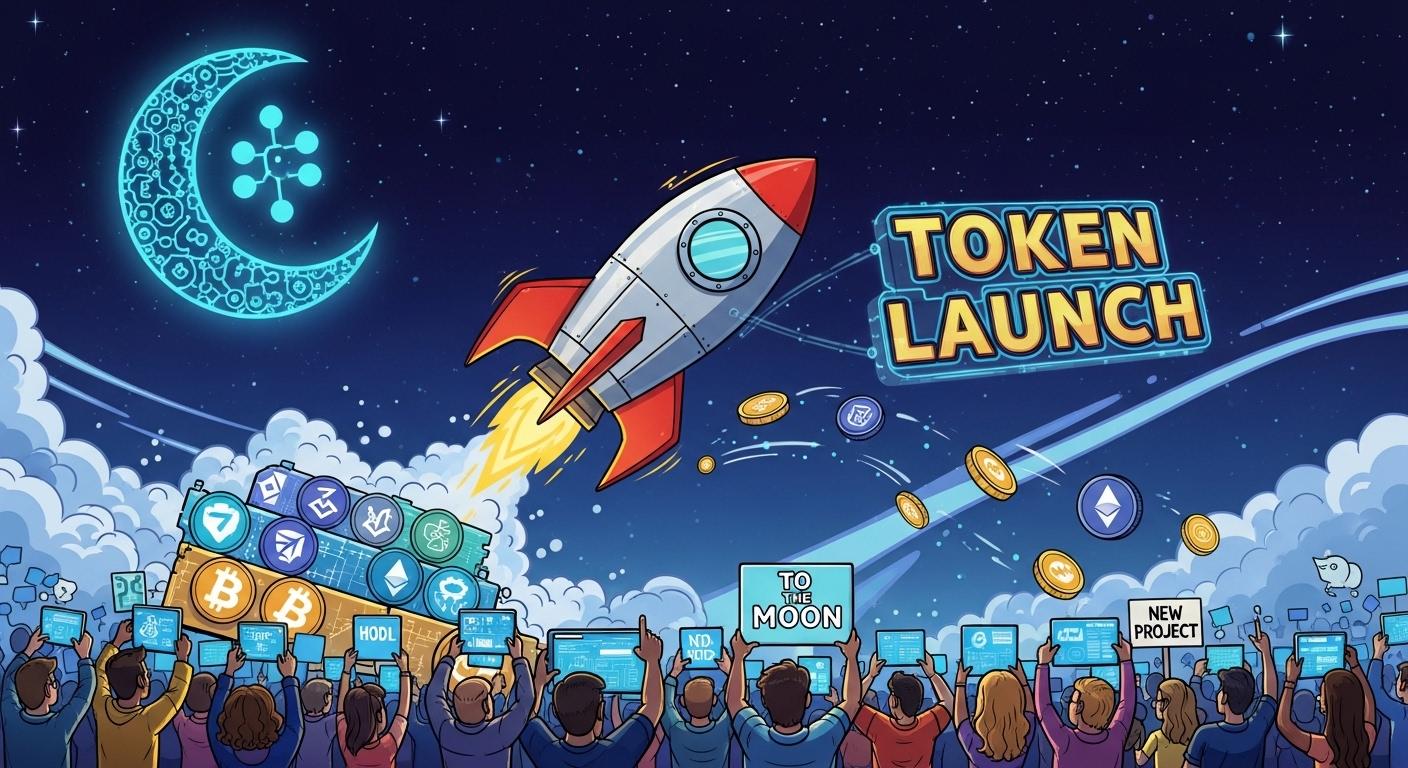
A Comprehensive Guide to Planning, Executing, and Scaling Blockchain Tokens
A crypto token launch is one of the most critical milestones in the lifecycle of a blockchain project. It is the moment when a digital token transitions from a conceptual and technical construct into a live asset that can be owned, traded, and used within an ecosystem. While the term “token launch” is often used casually in the crypto space, in practice it represents a carefully orchestrated process involving technology, economics, security, marketing, and governance.
This article provides a detailed, research-backed explanation of what a crypto token launch is, how it works, and why it plays a decisive role in the success or failure of blockchain ventures. It is written for founders, entrepreneurs, and decision-makers evaluating token development services or partnering with a professional token development company to bring a token to market responsibly and sustainably.
Understanding the Concept of a Crypto Token Launch
At its simplest, a crypto token launch refers to the process of releasing a newly created blockchain token into the public domain. This includes minting the token on a blockchain, distributing it to users or investors, enabling trading or usage, and integrating it into the project’s ecosystem.
However, a token launch is not a single event. It is the culmination of months or sometimes years of planning and development. A successful launch requires alignment between the token’s technical design, its economic model (tokenomics), the project’s long-term vision, and market expectations. When executed poorly, even technically sound projects can suffer reputational damage, price collapse, or regulatory scrutiny.
In today’s mature blockchain environment, a token launch is best understood as a strategic go-to-market initiative rather than a mere technical deployment.
Tokens vs Coins: Why Launches Matter Differently
Before exploring token launches in detail, it is important to distinguish tokens from coins. Coins such as Bitcoin or Ether are native to their own blockchains and typically emerge alongside the blockchain itself. Tokens, by contrast, are built on existing blockchains such as Ethereum, BNB Chain, Polygon, or Solana using smart contracts.
Because tokens leverage established infrastructure, launching them is faster and more accessible. However, this accessibility also means competition is intense. Thousands of tokens are launched every year, making differentiation, credibility, and execution quality essential. A well-structured crypto token launch signals seriousness and long-term intent, helping a project stand out in a crowded market.
The Strategic Purpose of a Crypto Token Launch
A token launch serves multiple strategic objectives beyond fundraising. While capital generation is often a motivating factor, modern blockchain projects use tokens to power decentralized ecosystems.
First, tokens act as economic incentives. They reward users, developers, validators, or liquidity providers for contributing value to the network. Second, tokens enable governance by allowing holders to vote on protocol upgrades or policy decisions. Third, tokens can represent access rights, ownership, or utility within applications such as DeFi platforms, NFT marketplaces, or Web3 games.
A successful token launch aligns these functions with real product utility. Projects that treat token launches purely as speculative events often struggle to sustain long-term value.
Pre-Launch Foundations: Token Development and Design
Every credible crypto token launch begins with robust token development. This phase determines whether the token can support the project’s ambitions or become a liability.
Token development involves writing smart contracts that define how tokens are created, transferred, burned, or locked. It also includes selecting the appropriate blockchain and token standard, such as ERC-20 for fungible tokens or ERC-721 for NFTs. Decisions made at this stage affect scalability, security, and interoperability.
Equally important is tokenomics design. Tokenomics governs supply, distribution, incentives, and long-term value dynamics. Research from multiple market cycles shows that poorly designed tokenomics such as excessive initial allocations or uncontrolled inflation are among the leading causes of post-launch price collapse.
Professional token development services typically combine technical implementation with economic modeling, ensuring that the token’s design supports sustainable growth rather than short-term hype.
Types of Crypto Token Launch Models
Over time, the blockchain industry has developed several token launch models, each with distinct characteristics and trade-offs.
Initial Coin Offerings (ICOs) were among the earliest models, allowing projects to sell tokens directly to investors. While innovative, ICOs suffered from lack of oversight and widespread misuse.
Initial Exchange Offerings (IEOs) introduced centralized exchanges as intermediaries, offering credibility and user access but at high costs and reduced decentralization.
Initial DEX Offerings (IDOs) leverage decentralized exchanges and smart contracts, providing transparency, immediate liquidity, and broader accessibility.
Fair launches distribute tokens without private sales or preferential allocations, emphasizing community-driven distribution.
The choice of launch model is a strategic decision influenced by regulatory considerations, target audience, and ecosystem goals. A token development company often advises clients on selecting and implementing the most appropriate model based on their objectives.
The Token Launch Execution Process
Executing a crypto token launch involves multiple interconnected steps, each requiring precision and coordination.
Smart Contract Deployment
The launch begins with deploying audited smart contracts to the target blockchain. These contracts control token minting, transfers, and any special mechanisms such as vesting or staking.
Distribution and Allocation
Tokens are distributed according to predefined rules. This may include allocations to early supporters, public sale participants, ecosystem funds, and team members with vesting schedules to prevent sudden sell-offs.
Liquidity Provision
Liquidity is critical to a token’s usability and market perception. Many launches involve adding liquidity to decentralized exchanges, enabling trading and price discovery from day one.
Integration and Accessibility
Wallet compatibility, explorer visibility, and analytics integration ensure that users can easily interact with the token. Friction at this stage can significantly reduce adoption.
Each of these steps benefits from professional token development services that emphasize reliability, security, and user experience.
Security and Audits: A Non-Negotiable Aspect
Security is one of the most vital aspects of a crypto token launch. Smart contract vulnerabilities have resulted in billions of dollars in losses across the industry. Even minor bugs can be exploited once a token is live, often irreversibly.
Reputable projects conduct third-party security audits before launch. These audits review contract logic, access controls, and potential attack vectors. While audits do not guarantee absolute safety, they significantly reduce risk and enhance credibility with investors and partners.
For this reason, many startups prefer working with an established token development company that prioritizes secure coding standards and audit readiness.
Marketing, Communication, and Community Building
A token launch is as much a communication exercise as a technical one. Clear messaging about the token’s purpose, distribution, and long-term roadmap builds trust and manages expectations.
Successful projects engage their communities well before launch through transparent documentation, regular updates, and open discussions. This approach reduces speculation-driven volatility and fosters a sense of shared ownership.
Real-world examples from leading DeFi and Web3 projects demonstrate that strong community alignment often correlates with post-launch resilience, even during broader market downturns.
Real-World Examples of Token Launch Outcomes
Projects like Uniswap and Aave illustrate how thoughtful token launches can support decentralization without undermining protocol stability. Their tokens were introduced after core products achieved market fit, ensuring immediate utility and demand.
Conversely, many failed launches highlight the risks of premature or poorly structured token releases. Excessive initial hype without corresponding product readiness has repeatedly led to rapid price declines and loss of trust.
These examples reinforce a key insight: timing and execution matter as much as technical capability.
Post-Launch Responsibilities and Long-Term Management
A crypto token launch does not end once trading begins. Post-launch management includes monitoring on-chain activity, responding to security issues, supporting governance processes, and iterating on token utility.
Projects that neglect post-launch responsibilities often experience declining engagement and market confidence. In contrast, teams that treat the launch as the beginning of a long-term relationship with their community tend to build more durable ecosystems.
The Role of Token Development Companies and Services
Given the complexity of launching a token, many organizations rely on professional token development services. A capable token development company offers end-to-end support, from concept validation and smart contract development to audits, launch execution, and post-launch optimization.
This holistic approach reduces execution risk and allows founders to focus on product development and strategic partnerships rather than technical minutiae.
Conclusion
A crypto token launch is a defining moment for any blockchain project. It is not merely about releasing a digital asset but about introducing an economic and governance mechanism that will shape the project’s future.
Successful launches are grounded in solid token development, realistic tokenomics, robust security, and transparent communication. They balance innovation with responsibility, ensuring that the token serves genuine utility rather than speculative excess.
Categorias
Leia mais
Nutrivea - Sådan bruger du Nutrivea på en enkel måde En af de største fordele ved Nutrivea er, at det er nemt at bruge. Her er en simpel guide til, hvordan du kan komme i gang: 1. Følg den anbefalede dosering Start altid med den anbefalede dosis på produktets emballage. Overdosering giver ikke bedre resultater og kan være skadeligt. 2. Tag det...

If you're searching for a reliable platform to explore online gaming services, Reddy Anna is a name you may have come across frequently. Before creating an account or using any online platform, it's important to understand its features, account process, security practices, and available support. This guide will help you learn about Reddy Anna so you can make informed decisions and...

A new growth forecast report titled Waterborne Coatings Market Share, Size, Trends & Industry Analysis Report : By Resin Type, By Application Industry (Architectural and Industrial), and By Region – Segment Forecast, 2026–2034 introduced by Polaris Market Research represents conclusive data on the overall market. It majorly targets to provide a detailed analysis of growth...

The United Arab Emirates has established itself as a global center for commerce, innovation, and international partnerships. In such a fast paced and relationship driven market, businesses must go beyond conventional strategies to maintain strong professional connections. Corporate gifts in UAE have emerged as a powerful tool for fostering goodwill, strengthening partnerships, and...

Removing large tattoos with Laser Tattoo Removal requires careful planning, patience, and realistic expectations. Unlike smaller tattoos, large designs often need multiple sessions, longer treatment times, and meticulous aftercare to achieve optimal results. Understanding the process, potential discomfort, and recovery considerations helps patients prepare both physically and mentally for...