Role of AWOS/AVIMET in Safe Aircraft Takeoff and Landing
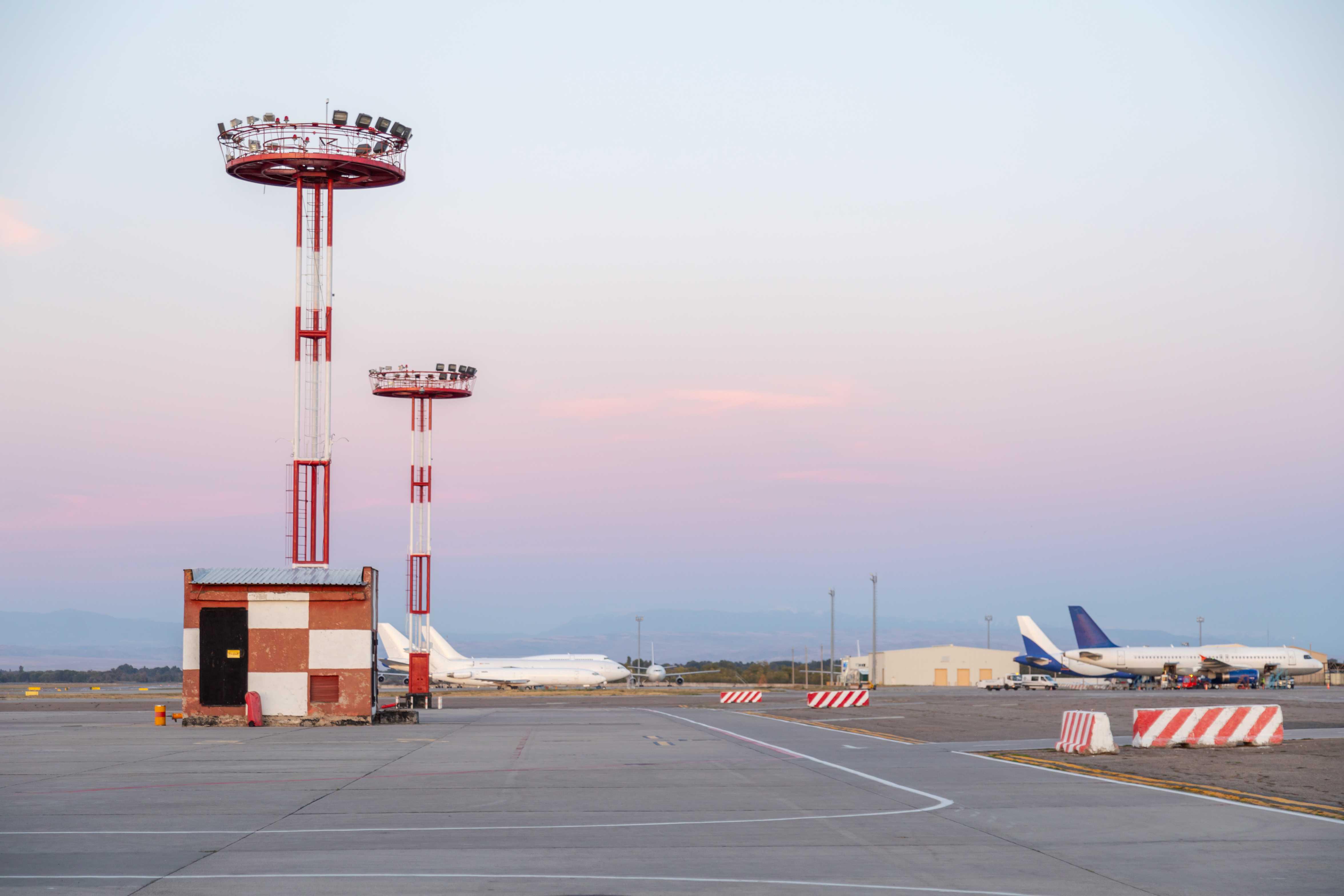
Essential Information for Safe Landings
Landing is arguably the most demanding task a pilot performs. It requires precision flying, guided by a constant flow of data about the runway environment.
Runway Visual Range (RVR)
For pilots flying in low visibility due to fog, rain, or snow, RVR is the most critical piece of data. It is not an estimate of general visibility; it is a precise measurement of how far a pilot can see down the runway from the cockpit. Automated Weather Observing Systems use sensors called transmissometers or forward-scatter meters placed at the touchdown zone, midpoint, and rollout end of the runway.
This data determines whether a landing is legally permissible. Different types of instrument approaches have different RVR minimums. If the reported RVR is below the minimum for that approach, the pilot must execute a missed approach and either hold or divert to another airport. This prevents pilots from descending into conditions where they cannot see the runway environment in time to make a safe landing.
Cloud Height (Ceiling)
A laser sensor called a ceilometer measures the height of the cloud base above the ground. This "ceiling" determines the decision altitude/height (DA/H) on an instrument approach. This is the point at which the pilot must have the runway environment in sight to continue the landing. If the cloud base is below this altitude, the pilot will not see the runway in time and must go around. Continuous, accurate ceiling data ensures that pilots do not descend below a safe altitude without visual contact.
Wind Shear Alerts
Perhaps the most dangerous weather phenomenon during landing is wind shear—a sudden, violent change in wind speed and/or direction. It can cause a catastrophic loss of airspeed and lift just moments before touchdown. Modern weather systems include Low-Level Wind Shear Alert Systems (LLWAS) that use a network of anemometers around the airport to detect these events. When a shear is detected, an alert is automatically broadcast, giving pilots the crucial seconds needed to apply full power and escape the hazard.
The moments of takeoff and landing are the most complex and demanding phases of any flight. In these critical windows, the aircraft is low, slow, and most vulnerable to the whims of the atmosphere. A pilot’s skill, combined with the aircraft's performance, is paramount. Yet, their decisions are guided by an invisible stream of data flowing from the ground—information that paints a precise picture of the immediate weather environment.
This vital data comes from sophisticated weather monitoring technologies like AWOS and AVIMET systems. These platforms serve as the sensory organs of an airport, providing the real-time intelligence needed to ensure every takeoff and landing is as safe as possible. This article explores the specific role these systems play, the critical data they provide, and how advanced airport infrastructure integrates this technology to manage risk.
The Most Critical Phases of Flight
Takeoff and landing account for a disproportionately high percentage of aviation incidents. During these phases, the aircraft is in a state of transition—from ground to air or air to ground—and has less altitude and speed to recover from an unexpected event. A sudden gust of wind, a patch of dense fog, or an inaccurate altitude reading can quickly escalate into a serious safety issue.
To mitigate these risks, pilots and air traffic controllers need more than a general forecast. They need hyper-local, second-by-second updates on the conditions directly affecting the runway. This is the primary mission of automated weather systems. They replace subjective human observation with objective, continuous electronic monitoring, providing a foundation of certainty in an uncertain environment.
Key Data for Safe Takeoffs
As an aircraft accelerates down the runway, its performance is directly influenced by the surrounding air. The data provided by weather systems is not just informational; it is used in performance calculations that determine whether a takeoff is safe.
Wind Speed and Direction
The most crucial piece of data for takeoff is the wind. An aircraft ideally takes off into the wind (a headwind). A headwind reduces the ground speed needed to achieve flight, which in turn shortens the required takeoff distance. A tailwind has the opposite effect, increasing the runway length needed.
Automated systems provide a precise readout of the wind, including any crosswind component. If the crosswind exceeds the demonstrated limit for the specific aircraft type, the takeoff is unsafe. The continuous data stream also identifies gusts, allowing the flight crew to anticipate and correct for sudden changes in wind speed during the takeoff roll.
Altimeter Setting (QNH)
Barometric pressure is used to calibrate an aircraft's altimeter. An accurate altimeter setting, known as QNH, ensures the instrument reads the correct altitude relative to sea level. Before takeoff, pilots set their altimeters to the local QNH. This ensures that their instruments are synchronized and that they have accurate information for climb-out and obstacle clearance. An incorrect setting, even by a small margin, could lead to a loss of separation with other aircraft or terrain.
Temperature and Density Altitude
Air density has a major impact on aircraft performance. Hot air is less dense than cold air, which reduces engine thrust and aerodynamic lift. This means an aircraft needs a longer runway to take off on a hot day. The temperature data from the weather system is used to calculate "density altitude"—the altitude the aircraft "feels" like it is at. In hot, high-elevation airports, the density altitude can be thousands of feet higher than the actual field elevation, requiring significant adjustments to takeoff calculations.
The Role of Advanced Infrastructure
The reliability of this safety-critical data depends heavily on the engineering of the systems and the infrastructure that supports them. In challenging climates, standard equipment can quickly fail, creating a dangerous information gap.
The sophisticated approach to airport engineering Qatar has implemented at its major international hubs provides a blueprint for resilience. The climate, characterized by extreme heat, humidity, and frequent dust storms, places immense stress on sensitive electronics and optics. To ensure flawless operation, the infrastructure is built with specific protections:
- Thermal Management: Electronics are housed in actively cooled or double-walled enclosures to shield them from ambient temperatures that can damage processors and cause data errors.
- Dust Mitigation: Visibility and cloud height sensors, which rely on optics, are equipped with powerful blowers. These "air knives" create a barrier that prevents sand from coating the lenses, ensuring RVR readings remain accurate even during a dust storm.
- Redundancy: To eliminate single points of failure, critical sensors are often installed in pairs or triplets. The system's software constantly compares their readings and can automatically discard data from a faulty sensor, ensuring the information flow is never compromised.
This level of robust engineering guarantees that pilots and controllers have access to trustworthy data, regardless of the harsh environmental conditions.
Conclusion: Data as a Safety Barrier
In aviation, safety is built in layers. The pilot's training is one layer, the aircraft's design is another, and air traffic control is a third. AWOS and AVIMET systems provide one of the most fundamental layers: a barrier of accurate information against the uncertainty of weather.
By providing precise data on wind, visibility, pressure, and runway conditions, these automated systems empower pilots and controllers to make informed, safe decisions during the most critical moments of flight. They remove the guesswork, reduce human error, and provide automated warnings against invisible threats. The continuous evolution and integration of this technology into resilient airport infrastructure remain a cornerstone of modern aviation safety.
Key Takeaways
- Takeoff and landing are the most vulnerable phases of flight, where accurate weather data is essential.
- For takeoff, automated systems provide critical wind, pressure, and temperature data needed for performance calculations.
- For landing, Runway Visual Range (RVR) and cloud ceiling data determine if an approach is safe and legal.
- Advanced systems provide life-saving alerts for hazards like wind shear.
- Robust engineering, as seen in Qatar, ensures system reliability in extreme climates, maintaining the integrity of safety data.
Categorias
Leia mais
"Global Executive Summary Digital Health Monitoring Devices Market: Size, Share, and Forecast The global digital health monitoring devices market size was valued at USD 5.19 billion in 2024 and is expected to reach USD 20.70 billion by 2032, at a CAGR of 18.87% during the forecast period The Digital Health Monitoring Devices Market analysis report focuses on...

Translation Services in Singapore: Supporting Manufacturing Safety, Compliance, and Global Expansion Translation services in Singapore have become an essential component of the country’s rapidly evolving manufacturing sector. As Singapore advances toward its Manufacturing 2030 strategy, which aims to increase manufacturing value by 50%, businesses are increasingly operating across...

United States of America – The Insight Partners is proud to announce its newest market report, “Premium Chocolate Market: An In-depth Analysis and Forecast Period.” This comprehensive report provides a holistic view of the premium chocolate market, covering the current scenario, emerging trends, and growth projections during the forecast period. Overview The premium chocolate...

Introduction: Meeting a Legend Javier Zanetti, legendary Champions League winner and key figure in Inter Milan's historic 2009/10 Treble, joined us for an exclusive conversation. We discussed his thoughts on FC 26 and explored his reactions to the stats assigned to his in-game icon card. The interview provided insight into how he feels about being represented in the game and what attributes...

In the fast-growing automotive market of the UAE, Etarat Online has established itself as a trusted and customer-oriented platform for all tyre needs. The company focuses on delivering high-quality tyres from renowned global brands to ensure that every customer enjoys safety, durability, and performance on the road. Whether you drive a sedan, SUV, or commercial vehicle, Etarat Online...