How Rubber Foot Pads Improve Operational Safety and Stability
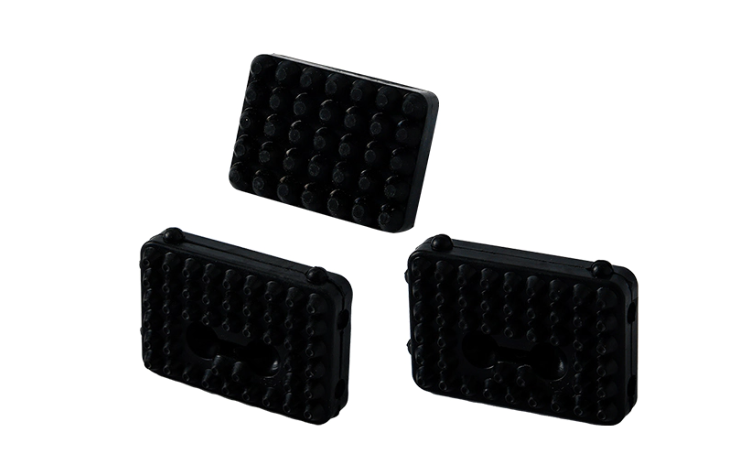
Rubber Foot Pads are engineered to protect floors, reduce vibration, and maintain stability for heavy machinery, electronics, and household equipment. By providing a resilient buffer, they prevent floor damage and equipment shifting, particularly in high-traffic or industrial environments.
The selection of rubber foot pads depends on material hardness, thickness, and surface texture. Softer pads improve grip and dampen vibrations, while firmer pads support heavier loads. Industrial-grade pads often incorporate ribbed or honeycomb designs to enhance stability and energy absorption. Proper placement ensures uniform weight distribution and minimizes the risk of uneven stress on floors.
Rubber foot pads also contribute to noise reduction. Machines and appliances that generate oscillations can transfer unwanted vibrations to the surrounding environment. Installing high-quality pads under support points reduces noise levels, enhances operator comfort, and prolongs equipment life. Compared to alternatives like felt or plastic, rubber pads offer superior longevity, non-slip properties, and resistance to compression over time.
Maintenance is straightforward: pads should be cleaned regularly, inspected for cracks, and replaced if hardened or excessively worn. Rotating pads for high-use equipment ensures uniform wear, maintaining their vibration-absorbing and protective qualities.
In summary, Rubber Foot Pads are essential for both home and industrial applications. They combine durability, grip, and shock absorption to protect surfaces, reduce vibration, and stabilize equipment. Their versatile design allows them to meet diverse operational requirements while improving overall safety and performance.
الأقسام
إقرأ المزيد
In the 2026 B2B apparel sector, the Tummy Control One Piece Swimsuit remains one of the highest-grossing categories for retail boutiques and department stores. However, it simultaneously carries a hidden burden: a return rate that often doubles that of standard swimwear. The problem is rarely the visual design; it is a fundamental failure in "Adaptive Compression." Most wholesale manufacturers...

IgA Nephropathy Market According to the latest report published by Data Bridge Market Research, the Middle East and Africa IgA Nephropathy Market The Middle East and Africa IgA nephropathy market size was valued at USD 16.52 Million in 2024 and is expected to reach USD 64.66 Million by 2032, at a CAGR of 18.60% during the forecast period This...

Expanding your business into India can be a game-changer, but it also comes with regulatory requirements that cannot be ignored. One of the most important approvals you’ll need is the BIS FMCS Certification, especially if you are a foreign manufacturer planning to sell products in India. In this guide, we’ll break down everything you need to know about BIS FMCS, including the...

" According to the latest report published by Data Bridge Market Research, the Automotive Over-The-Air (OTA) Market Data Bridge Market Research analyses that the automotive over-the-air (OTA) market is expected to reach USD 20.97 billion by 2030, which is USD 4.13 billion in 2022, at a CAGR of 22.50% during the forecast period. In addition to the market insights such as market value,...

Scripting is a core concept in modern programming that helps automate tasks, improve efficiency, and simplify complex workflows. From building dynamic websites to automating repetitive processes, scripting is widely used across industries. This guide explains what scripting is, how it works, its use cases, and why it is important for developers in 2025. What is Scripting?...