The Foresight Engine: Revolutionizing Industry with Predictive Maintenance

The transition from the industrial age to the era of digital intelligence has fundamentally altered our relationship with machinery. As we move through 2026, the concept of Predictive Maintenance has evolved from an experimental tech-driven luxury into a non-negotiable pillar of operational resilience. No longer content with reactive repairs or rigid, calendar-based service schedules that often replace perfectly functional parts, modern enterprises are leveraging a sophisticated web of interconnected technologies to listen to the "heartbeat" of their assets. This shift is deeply connected to the Predictive Maintenance landscape, where the convergence of high-speed 5G connectivity, advanced edge computing, and generative artificial intelligence is turning raw sensor data into a strategic crystal ball for the factory floor.
The Death of the Fixed Schedule
Historically, maintenance was governed by the odometer or the calendar—a "one-size-fits-all" approach that was inherently inefficient. In early 2026, this legacy model is being systematically dismantled. Predictive strategies utilize a continuous stream of data from Internet of Things (IoT) sensors to monitor variables such as vibration frequencies, thermal patterns, and acoustic anomalies. By comparing this real-time telemetry against historical performance baselines, AI models can identify the "molecular" early signs of wear long before they manifest as a visible or audible symptom.
For the automotive and aerospace sectors, this precision is transformative. Instead of grounding a fleet for a week of broad inspections, engineers can target the specific bearing or seal that is actually showing signs of fatigue. This "surgical" approach to maintenance not only reduces the risk of catastrophic failure but also maximizes the useful life of every component, ensuring that resources are never wasted on premature replacements.
Digital Twins and the Power of Simulation
A defining trend of 2026 is the widespread adoption of "Digital Twins"—virtual replicas of physical assets that live in the cloud. These digital shadows do more than just mirror their physical counterparts; they serve as a risk-free playground for simulation. By feeding real-time sensor data into these virtual models, maintenance teams can run "what-if" scenarios. They can simulate how an engine will perform under extreme heat or how a production line will handle a 20% increase in throughput.
This simulation layer allows for "prescriptive" action. When the predictive model flags an impending issue, the digital twin can be used to test various repair strategies to see which one offers the fastest return to service. This foresight is proving invaluable for hyperscale data centers and energy grids, where even a microsecond of unplanned downtime can result in millions of dollars in lost revenue and secondary infrastructure damage.
The Role of Generative AI and Edge Intelligence
Artificial intelligence in 2026 has moved beyond simple pattern recognition. We are now seeing the integration of "AI Copilots" for maintenance technicians. These specialized generative AI models can ingest complex technical manuals, historical repair logs, and real-time sensor feeds to provide technicians with step-by-step guidance in plain language. If a sensor flags an abnormal vibration in a robotic arm, the AI can cross-reference the specific model’s blueprint and suggest the most likely root cause, even recommending the specific tools and parts needed for the fix.
Furthermore, the rise of edge computing has removed the latency issues that once plagued cloud-based diagnostics. By processing data directly on the machine or at a local gateway, predictive systems can trigger autonomous "self-healing" protocols. For instance, a vehicle's software-defined architecture might detect a slight cooling inefficiency and automatically recalibrate the engine's performance parameters to prevent overheating while simultaneously booking its own service appointment at the nearest available facility.
Sustainability and the "Green Maintenance" Mandate
In 2026, sustainability is a primary driver of technological adoption. Predictive maintenance is now recognized as a key tool for achieving carbon neutrality goals. By ensuring that machines run at peak efficiency, these systems significantly reduce energy waste. An optimized motor consumes less power, and a well-maintained cooling system prevents the leakage of harmful refrigerants.
Moreover, the "Circular Maintenance" movement is gaining traction. By predicting the exact end-of-life for components, businesses can better coordinate the remanufacturing and recycling of parts. This reduces the demand for raw materials and ensures that the industrial sector is moving toward a more sustainable, closed-loop lifecycle. In a world with tightening environmental regulations and fluctuating material costs, the ability to extend the life of an asset through predictive oversight is both an ecological and economic victory.
Future Outlook: Toward an Uninterruptible Economy
As we look toward 2030, the boundaries between the physical and digital worlds will continue to blur. The predictive systems being refined in 2026 are the foundational blocks for a future of truly autonomous infrastructure—grids that balance themselves, vehicles that maintain their own health, and factories that operate with zero unplanned downtime. We are moving toward an "uninterruptible world," where the silence of a broken machine is replaced by the constant, efficient hum of a system that knows exactly when and how to take care of itself.
Frequently Asked Questions
What is the difference between preventive and predictive maintenance? Preventive maintenance is proactive but based on fixed intervals (e.g., changing your oil every 5,000 miles), regardless of the actual condition of the parts. Predictive maintenance is "condition-based," using real-time sensor data and AI to determine exactly when a specific part needs service, which prevents both unexpected failures and the waste of replacing parts too early.
How does "Edge Computing" improve predictive maintenance? Edge computing processes data locally—directly on the machine or on a nearby server—rather than sending it to a distant cloud data center. In 2026, this is crucial because it allows for near-instantaneous analysis and response. For high-speed production lines or autonomous vehicles, these few milliseconds of saved time can be the difference between a safe "work-around" and a catastrophic mechanical failure.
Can predictive maintenance be used for older "legacy" machinery? Yes. While modern equipment often comes with built-in sensors, 2026 has seen a surge in aftermarket IoT kits. These modular sensors can be retrofitted onto older machines to track vibrations, temperature, and power consumption. By connecting these sensors to a cloud-based AI platform, even a decades-old hydraulic press can be integrated into a modern predictive maintenance ecosystem.
More Trending Reports on MRO by Market Research Future
Compost and Organic Waste Processing Equipment MRO Services Market Share
Commercial Shipping Fleet MRO Services Market Share
Commercial Aircraft Cabin Maintenance and Repair Market Share
Cold Storage Equipment Maintenance and Repair Market Share
Coal Mining Equipment Repair and Maintenance Services Market Share
Categorias
Leia Mais
"Executive Summary Cleanroom Particle Counters Market Size and Share Forecast The global cleanroom particle counters market size was valued at USD 571.88 billion in 2025 and is expected to reach USD 851.38 billion by 2033, at a CAGR of 5.10% during the forecast period By considering a definite base year and historic year, calculations in the Cleanroom...

Stratégies contre le Dragon Pour affronter les épreuves du Carnage chtonien, une préparation minutieuse s'impose. Adaptez votre équipe en fonction des faiblesses élémentaires des adversaires annoncées. La synergie entre les personnages et la maîtrise des rotations d'aptitudes sont des clés fondamentales. Priorisez les buffs et les...
Football fans across the globe are witnessing history as the FIFA World Cup 2026 introduces its biggest transformation ever. With more teams, additional matches, advanced technologies, and greater fan engagement, the tournament promises excitement unlike any previous edition. Whether you're following your favorite national team or tracking every fixture, staying updated with the latest FIFA...

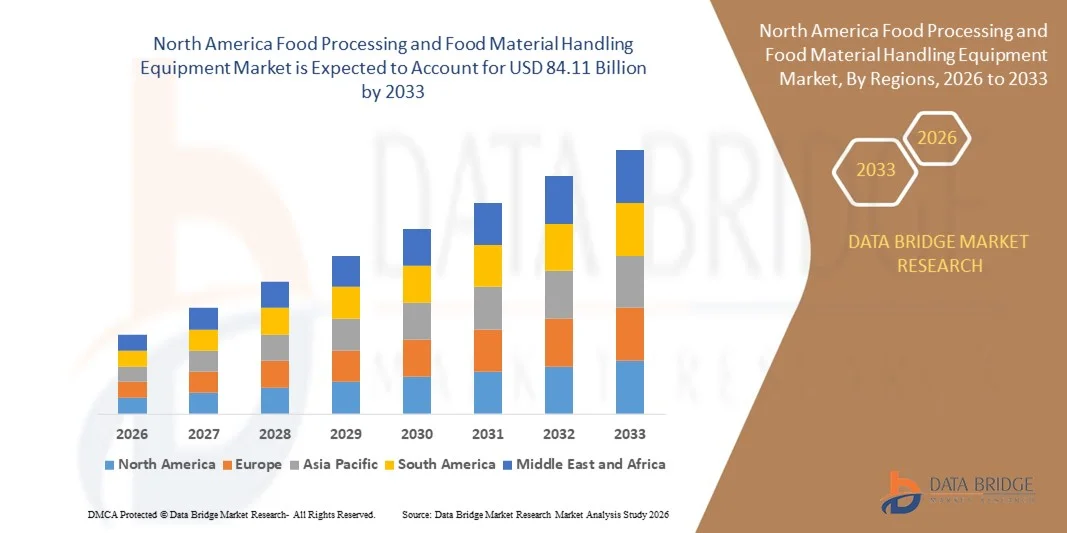
"According to the latest report published by Data Bridge Market Research, the North America Food Processing and Food Material Handling Equipment Market The North America food processing and food material handling equipment market size was valued at USD 51.20 billion in 2025 and is expected to reach USD 84.11 billion by 2033, at a CAGR of 6.40% during the...
Arrêter de fumer est un défi majeur pour de nombreux fumeurs. Grâce aux centres stop tabac Laserostop, il est désormais possible de cesser de fumer en une seule séance, sans médicaments, sans substituts nicotiniques et sans effets secondaires. Avec une technologie brevetée et exclusive, Laserostop accompagne chaque année des milliers de...